Get Full Government Meeting Transcripts, Videos, & Alerts Forever!
Get email alerts on the Remote Participation topic
No spam. Unsubscribe anytime.
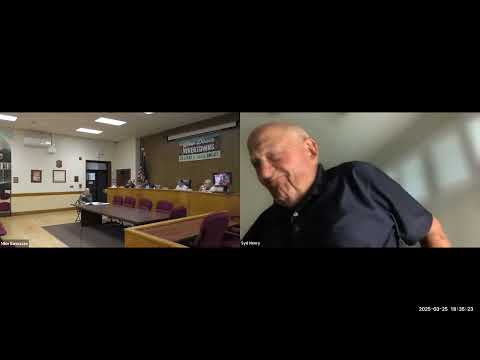
Elmsford trustees debate remote participation standards as absent member joins from Florida
Summary
At a March 25 special meeting, Village of Elmsford trustees discussed whether a remotely participating trustee met the village's "extraordinary circumstances" standard for video conferencing and clarified that remote participation and voting are permitted under current law, while noting a potential legal challenge route.
At a March 25 special meeting, the Village of Elmsford Board of Trustees debated whether a trustee participating remotely from Florida met the village's requirements for video-conference attendance and whether that participation permits voting.
The discussion centered on a village policy that mirrors state open-meetings law and allows remote participation when a trustee faces an "extraordinary circumstance" that precludes physical attendance. Trustees read and discussed the phrase "including but not limited to," which they said broadens the kinds of circumstances that may qualify, such as caregiving responsibilities, illness or other unexpected factors.
Board members emphasized that a member who participates remotely must provide notice of the extraordinary circumstance in accordance with village procedure. Trustee Henry, who joined remotely for the meeting, stated his temporary location aloud: "On that, 12913 Southwest Vermillion Circle, Port Saint Lucie, Florida." Members noted that the village policy mirrors state law and that the board had intentionally included the "including but not limited to" language to allow flexibility.
Trustees also clarified that a remote participant may vote. One speaker said a vote cast remotely could be challenged in court and that anyone disputing the validity of a remote vote could pursue an Article 78 proceeding. The board did not adopt any change to the written policy during the meeting; the discussion served to clarify existing practice and the limits of local procedure.
The exchange included reminders that a member who participates remotely must follow the village's notice requirements and that, if a remote vote is decisive and later contested, a court would determine whether the vote was valid. No formal policy amendment was proposed or adopted during the session.