Get Full Government Meeting Transcripts, Videos, & Alerts Forever!
Get email alerts on the Zoning Ordinance topic
No spam. Unsubscribe anytime.
Central Falls council gives first passage to zoning ordinance rewritten to match 2023 state law changes
Summary
City land-use counsel presented a replacement zoning ordinance to conform to 2023 state law amendments; council approved first passage and staff and council discussed discretionary items including special-use criteria and modification limits.
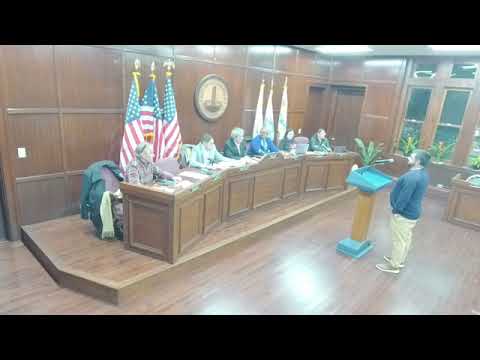
City land-use counsel presented a wholesale revision of Central Falls’ zoning ordinance intended to incorporate 2023 amendments to the state zoning enabling act and to update multiple planning and subdivision provisions. After a lengthy presentation and council questions, the council approved first passage of the replacement ordinance at the meeting.
The solicitor said the ordinance is being replaced in full and the city used municipal technical assistance funds from Rhode Island Housing, with Housing Works Rhode Island as a vendor, to prepare amendments and training for planning and zoning boards. The presentation noted many state-law-driven changes: a new land-use calendar that routes appeals to a dedicated judge; a change from certified mail to regular mail with an applicant affidavit for notices to abutters; a website posting requirement for public hearing notices; and a unified development review that allows the planning board to hear variances and waivers on the same application.
The solicitor described changes to variance standards that remove the prohibition against variance requests “primarily to realize greater financial gain” and eliminate a strict “least relief necessary” test. The revised text also clarifies the “more than a mere inconvenience” standard. On special-use permits, the solicitor said the legislature now requires “specific and objective criteria” for each use that requires such a permit; he gave examples (on-site queuing spaces and buffers adjacent to residences).
On substandard lots of record, the solicitor explained that lot-area relief is no longer required to permit development; setbacks, frontage and width are reduced proportionately, and building-coverage allowances increase proportionately. He described a merger rule change that prevents automatic merging when surrounding lots within 200 feet are equal to or smaller than the subject lot. The ordinance provides for administrative modification (state law minimum 15% to maximum 25% reduction), and planning staff recommended allowing modifications up to 20% with notice and appeal procedures.
The presentation also covered an adaptive-reuse provision: conversion of nonresidential structures to at least 50% residential would be allowed as of right, with limited parking requirements (no more than one space per dwelling unit for units under two bedrooms) and a 20% low- and moderate-income set-aside for projects at or above 15 units per acre where public water and sewer are available.
Several council members said the replacement ordinance is extensive (the draft was described in the meeting as about 93 pages) and asked for more time to review specific sections before final passage; other members supported moving forward with first passage and using subsequent meetings to refine discretionary items. The council took a first vote on the replacement ordinance; the motion for first passage was made from the dais and recorded as approved on voice/roll-call.