Get Full Government Meeting Transcripts, Videos, & Alerts Forever!
Get email alerts on the Lead Prevention topic
No spam. Unsubscribe anytime.
Central Falls reports 1,250 housing units brought into compliance under lead program
Summary
City staff and partners told the Central Falls City Council the Lead Prevention Program has inspected and helped remediate more than 1,250 housing units since the program began and urged councillors to boost outreach and referrals to financial assistance programs for landlords and homeowners.
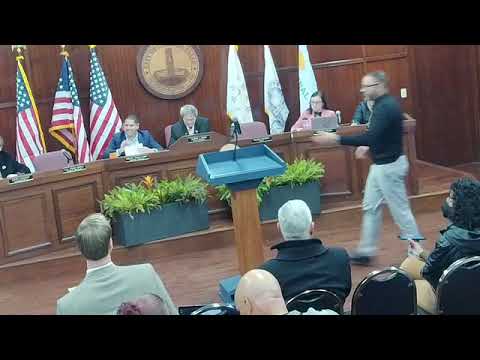
Titus Abirio, director of the Central Falls Lead Prevention Program, told the City Council on Dec. 9 that the city’s lead program has brought more than 1,250 housing units into compliance over four years — roughly 15% of the city’s housing stock — and has used outreach and enforcement to pressure noncompliant landlords to remediate hazards.
The presentation outlined how the program combines proactive housing and code enforcement, education and partnerships with state and nonprofit programs to identify and abate lead hazards in homes built before 1978. “Lead is a toxic metal that can be found in most pre-1978 homes,” Abirio said. “We focus our attention on young children and pregnant women because they are in those developmental stages.”
Abirio told the council the program has sent 557 letters of violation and has successfully abated 302 cases in housing court. He said staff aim to secure lead inspection certificates for rental units through compliance plans and, when landlords fail to comply, by pursuing fines and housing-court remedies. “Once the landlord doesn't comply, it's what we take them to housing court,” Abirio said.
The presentation traced federal and state policy milestones that undergird the program: a federal ban on consumer use of lead-based paint in 1978, Rhode Island standards for lead inspection and abatement established in 1991, and the Rhode Island Lead Hazard Mitigation Act (2002), which the presenter said established requirements for rental units built before 1978.
Diane (last name not provided), representing the Childhood Lead Action Project, summarized frequent questions the nonprofit receives from residents and contractors and said a lead inspection determines whether a home is lead-safe. “In homes built before 1978, there's likely to be lead paint, but it is possible to live in a lead-safe home, as long as it is intact,” she said.
Program staff described partnerships they said help pay for remediation and outreach, including Rhode Island Housing’s Lead Safe Homes program and the Childhood Lead Action Project. Abirio said Rhode Island Housing grants have paid for new windows and doors in some units and emphasized the program’s role in connecting landlords and homeowners to financial assistance.
On program impact, Abirio said, “We've only been doing it for four years, and in those four years we have had over 1,250 units that have been brought into compliance, which is roughly 15% of the housing stock here in Central Falls.” He also noted legislative advocacy: in 2023 the city worked with the attorney general’s office on a lead law package that included a rental registry and damages for tenants harmed by lead exposure.
Council members asked about costs and processes. A councillor asked whether there is a fee for the lead certificate; staff said inspection prices vary by private inspector and estimated a typical range of $150–$200 per unit. Abirio and Diane advised tenants who believe their unit lacks a certificate to notify landlords in writing and said anti-retaliation protections exist. Annette Martinez, identified as the city’s housing inspector, provided contact information for follow-up and said the city solicitor’s office supports enforcement actions.
The presentation closed with staff asking council members to help spread awareness, refer constituents to testing and the abatement program, and encourage landlords to enroll in available funding programs.
The council received the report; no formal vote or directive was recorded on the presentation.