Get Full Government Meeting Transcripts, Videos, & Alerts Forever!
Get email alerts on the Birth Certificates Gender topic
No spam. Unsubscribe anytime.
Senate passes bill restricting changes to birth-certificate gender markers after heated debate
Summary
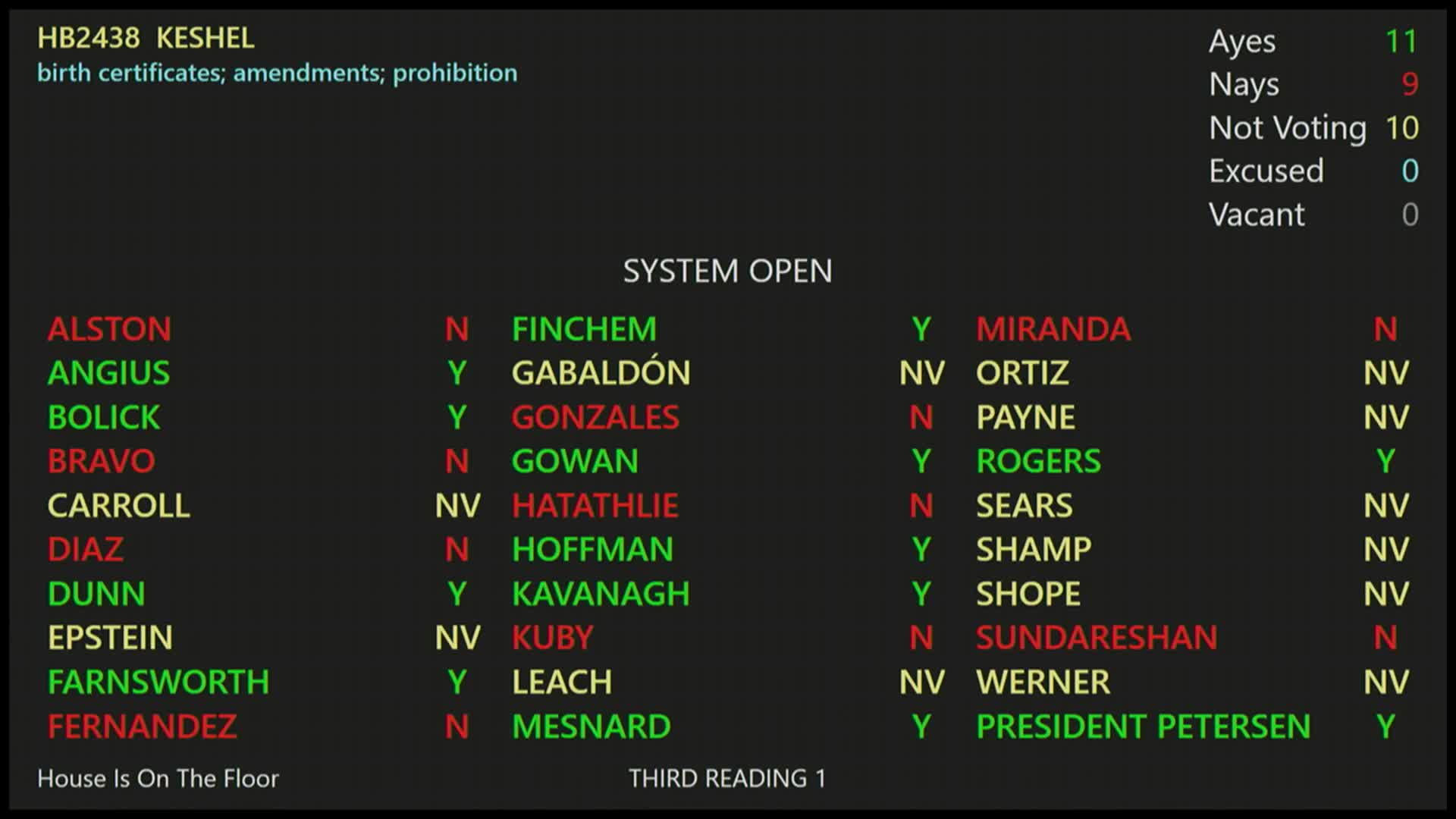
House Bill 24-38, which limits changes to gender markers and name changes on birth certificates, passed the Senate after intense floor debate that split lawmakers along civil-rights and privacy lines; final passage recorded 17-13 and the measure will be transmitted to the House for enrollment.
The Senate debated and passed House Bill 24-38 on April 14; the measure restricts methods for changing the gender marker and certain name changes on Arizona birth certificates. The clerk recorded the final passage and the bill was transmitted to the House.
Opponents described the bill as harmful to transgender and intersex Arizonans and argued it would force people to carry documentation that does not match their lived identity. Senator Gobaldon (floor name appears as "Gobaldon") said the bill "undermines the rights and dignity of transgender and intersex individuals" and added that restricting amendments to birth certificates would increase risk of discrimination and privacy harms.
Supporters framed the measure as preserving historical accuracy of birth records. Senator Kavanaugh said, "It's called the birth certificate, not an ongoing life certificate. You can't change history. I vote yes." Other senators expressed moral and constitutional arguments on both sides; several said they had constituents who felt strongly.
Senators described the legal context and recent litigation in federal court. Senator Cubpey noted a recent U.S. District Court decision (Roe v. Canucko mentioned on the floor) that had found restrictions on amending birth-certificate gender markers problematic; opponents argued the bill would invite litigation. Supporters said the policy protected record integrity.
The roll call concluded with the secretary recording the vote and instructions to transmit the bill. Floor debate included extended personal remarks and constitutional framing; no amendments were recorded on the floor transcript.