Get Full Government Meeting Transcripts, Videos, & Alerts Forever!
Get email alerts on the Gender Affirming Care Liability topic
No spam. Unsubscribe anytime.
Long floor debate as Arizona committee backs bill to let detransition lawsuits move forward
Summary
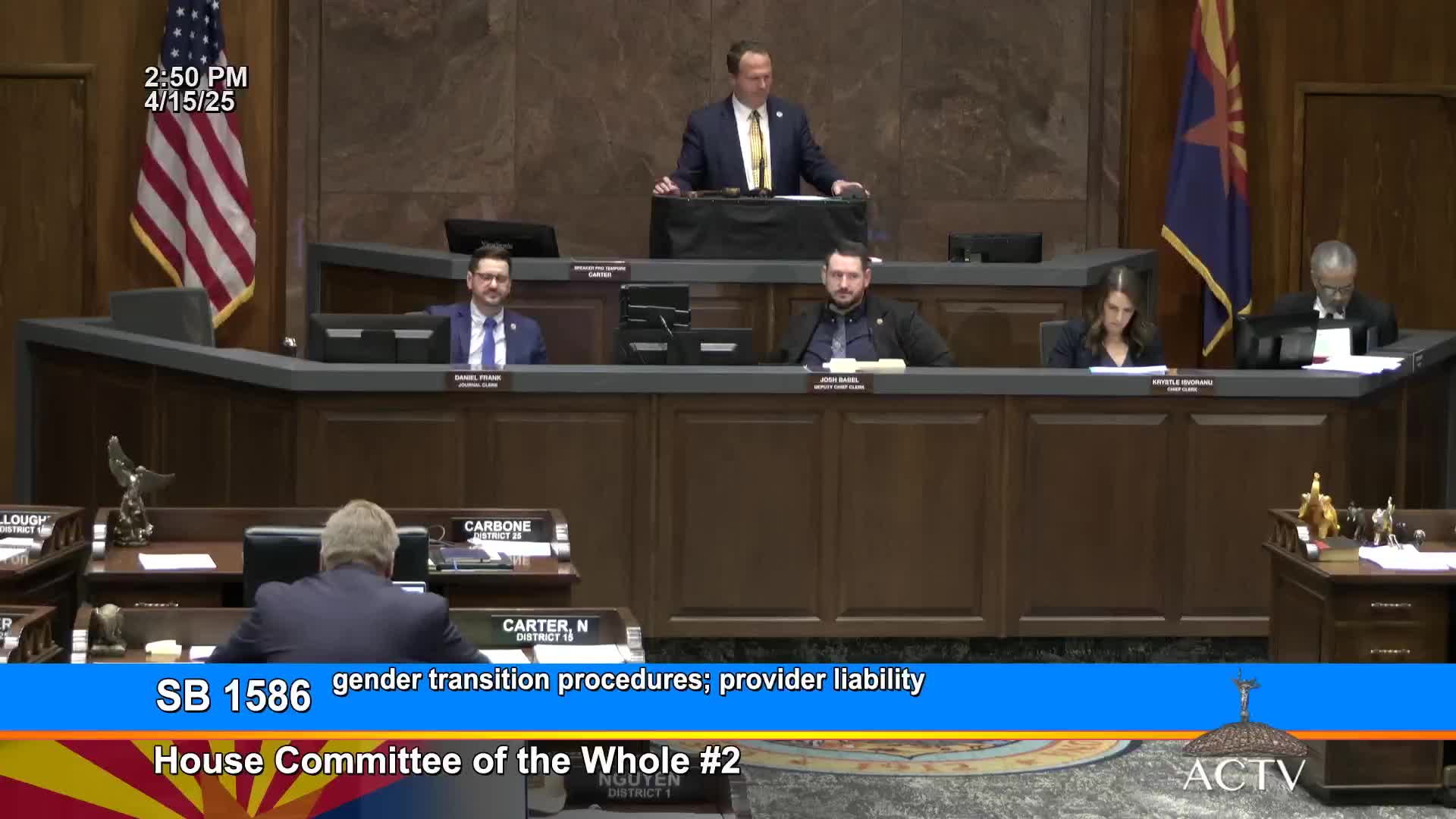
After extended floor remarks for and against, the Committee of the Whole recommended that Senate Bill 15‑86 do pass. Lawmakers split over whether the measure protects detransitioning patients or chills medical care and targets transgender people.
On April 15, 2025, the Arizona House Committee of the Whole recommended that Senate Bill 15‑86 do pass after more than an hour of floor comments from members on both sides of the issue.
Supporters of the bill said it would provide legal recourse and coverage for people who later seek to reverse gender‑affirming procedures, pointing to cases of detransitioners who say they were harmed. “This bill is about holding medical providers accountable and giving detransitioners a path to care,” Representative Keshle said during debate.
Opponents described the measure as an attack on transgender people and warned it would drive health care providers from the state. “This bill is another attack on transgender people and the practitioners who provide services to them,” Representative Contreras said. Representative Gutierrez added that the measure “threatens health care providers with lawsuits” and would worsen an existing physician shortage.
Several members raised specific concerns about the bill’s scope and consequences. Representative Contreras argued the language would make each practitioner liable for the full cost of a later detransition, even if multiple providers treated the patient. He said the bill lacked a clear definition of “gender‑transition procedure” and could be read to include pharmaceuticals that are used for other indications. Representative Daniel Santos cited medical literature supporting gender‑affirming care and warned the bill could increase suicide risk if it restricted access to care: “Gender affirming care led to a 30 percent reduction in suicidal ideation,” he said, summarizing a meta‑analysis he cited.
Proponents countered with personal accounts and references to detransitioners. Representative Diaz and Representative Fink urged the House to provide coverage and hold practitioners accountable for irreversible procedures performed on minors, citing stories such as Chloe Cole, which they said illustrate the stakes for some families.
The Committee of the Whole vote that day recommended SB 15‑86 do pass and the bill was placed on the calendar for third reading. The transcript records the committee motion and the extended debate, but the transcript excerpt provided does not show a final third‑reading vote on the House floor.
The debate repeatedly drew a line between policy arguments about parental responsibility, medical liability and state regulation, and broader concerns about whether the measure would have a chilling effect on medical practice in Arizona. Lawmakers on both sides asked how the bill would define covered procedures and which practitioners would face liability.
The bill’s future steps, as recorded in the transcript, are a committee recommendation to pass and placement on third reading; the record supplied does not include a subsequent final passage or veto.
Supporters: the committee recommendation and supporters’ comments framed the bill as providing justice and access for detransitioners. Opponents: said the bill is unnecessary, vague, and could create broad liability and worsen provider shortages.
Looking forward, the transcript shows lawmakers urged additional clarifications about the bill’s definitions, territorial reach and whether liability would extend to out‑of‑state practitioners. If the bill advances to final passage, these points are likely to shape amendments or litigation.