Get Full Government Meeting Transcripts, Videos, & Alerts Forever!
Get email alerts on the Property Tax topic
No spam. Unsubscribe anytime.
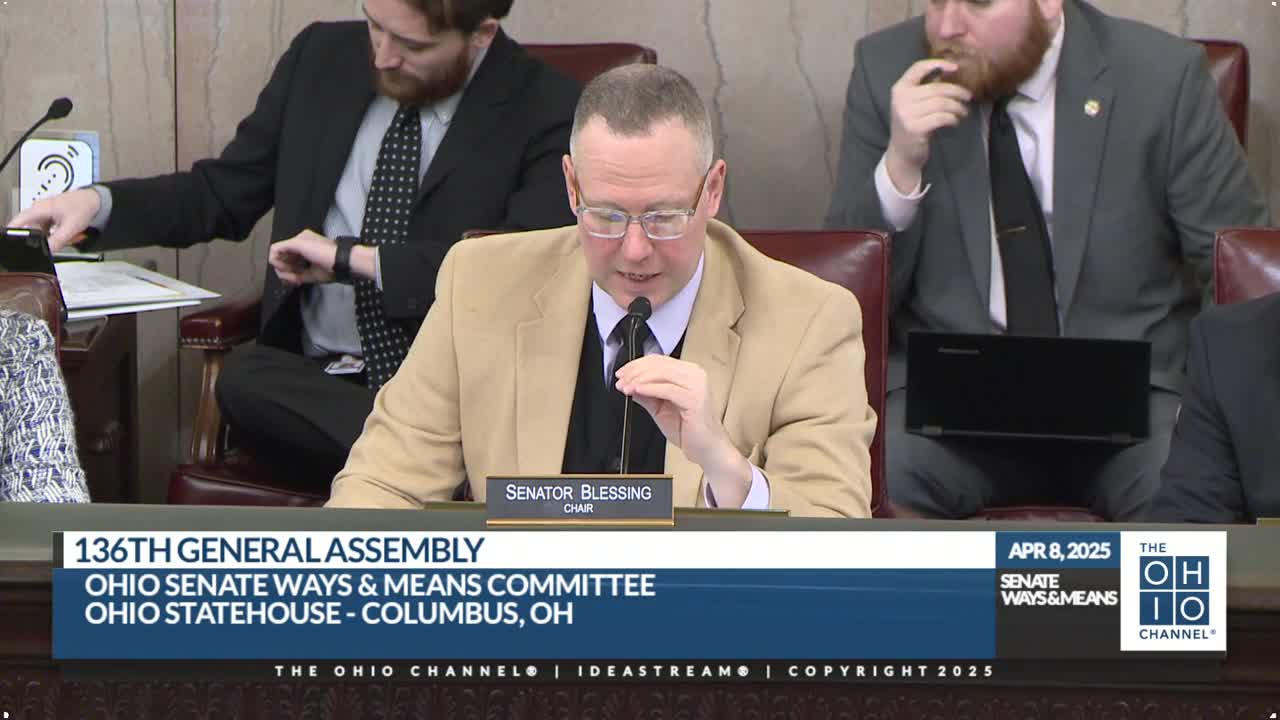
Senate committee hears bill to eliminate replacement property tax levies, sponsors say change will increase transparency
Summary
The Senate Ways and Means Committee conducted a first hearing on House Bill 28, sponsored by Representative Matthew and Representative Thomas Hall, which would eliminate replacement property tax levies and require jurisdictions to use renewals or new levies to seek ongoing local revenue.
The Senate Ways and Means Committee conducted a first hearing on House Bill 28, sponsored by Representative Matthew and Representative Thomas Hall, which would eliminate replacement property tax levies and require jurisdictions to use renewals or new levies to seek ongoing local revenue.
Supporters told the committee the change is intended to give voters clearer information at the ballot box and reduce unintended property-tax increases. "Replacements can increase the asked for amount and the taxpayer's final bill," Representative Matthew said in sponsor testimony. "Voters are also frequently unaware that there is a world of difference between the effective tax rates that they are paying on an existing levy and the official voted amount that they would be paying under a new levy."
The bill’s sponsors framed House Bill 28 as a transparency measure. Representative Thomas Hall said removing replacement levies would keep a simple choice for voters: renew the existing levy or vote to ask for more money. Hall noted the proposal was recommended by last General Assembly’s property tax review and reform committee and that the bill passed the Ohio House last month by a vote of 62 to 30.
Committee members asked about the practical effects. Senator Morin cited statistics and asked whether high passage rates for replacement levies suggested voters already understand the choice; he noted figures showing strong passage rates for renewals and replacements. Representative Matthew and Hall replied that parcel-level valuation differences and intervening levies can make it difficult for a simple ballot label to reflect what an individual homeowner will pay after a replacement, and they argued that a name change alone would not reliably convey whether a homeowner’s bill would change.
Members from both growing and non-growing jurisdictions voiced concerns and support. One senator asked whether the measure might be especially harmful in rapidly growing areas, where a replacement levy can spread costs across more parcels; Hall said he was not concerned and described the proposal as a system-level reform. Senator Roegner and others voiced support for increased clarity, and a former county auditor who spoke during the committee’s discussion said constituents often do not understand the difference when they receive their tax bills.
No committee vote was taken at the hearing. The hearing record shows back-and-forth discussion about whether the bill would remove a tool used by local taxing authorities and whether newspaper reporting and ballot language could be improved instead. Sponsors emphasized that renewals and renewal-with-increase mechanisms would remain available to ask voters for additional funds while replacing replacement levies with more transparent ballot options.
The committee adjourned the hearing without action; the agenda proceeded to the next item after the testimony concluded.