Get Full Government Meeting Transcripts, Videos, & Alerts Forever!
Get email alerts on the Education Budget topic
No spam. Unsubscribe anytime.
Senate Fiscal review: Department of Education recommends FY26 budget with $1 billion drop; LA Gator rollout depends on vendor contract
Summary
Senate Fiscal staff and Louisiana Department of Education officials outlined the FY26 executive budget recommendation, including an overall roughly $1 billion decrease driven by the end of one‑time COVID and teacher stipend dollars, and detailed rollout plans and contracting needs for the new Louisiana Gator ESA program.
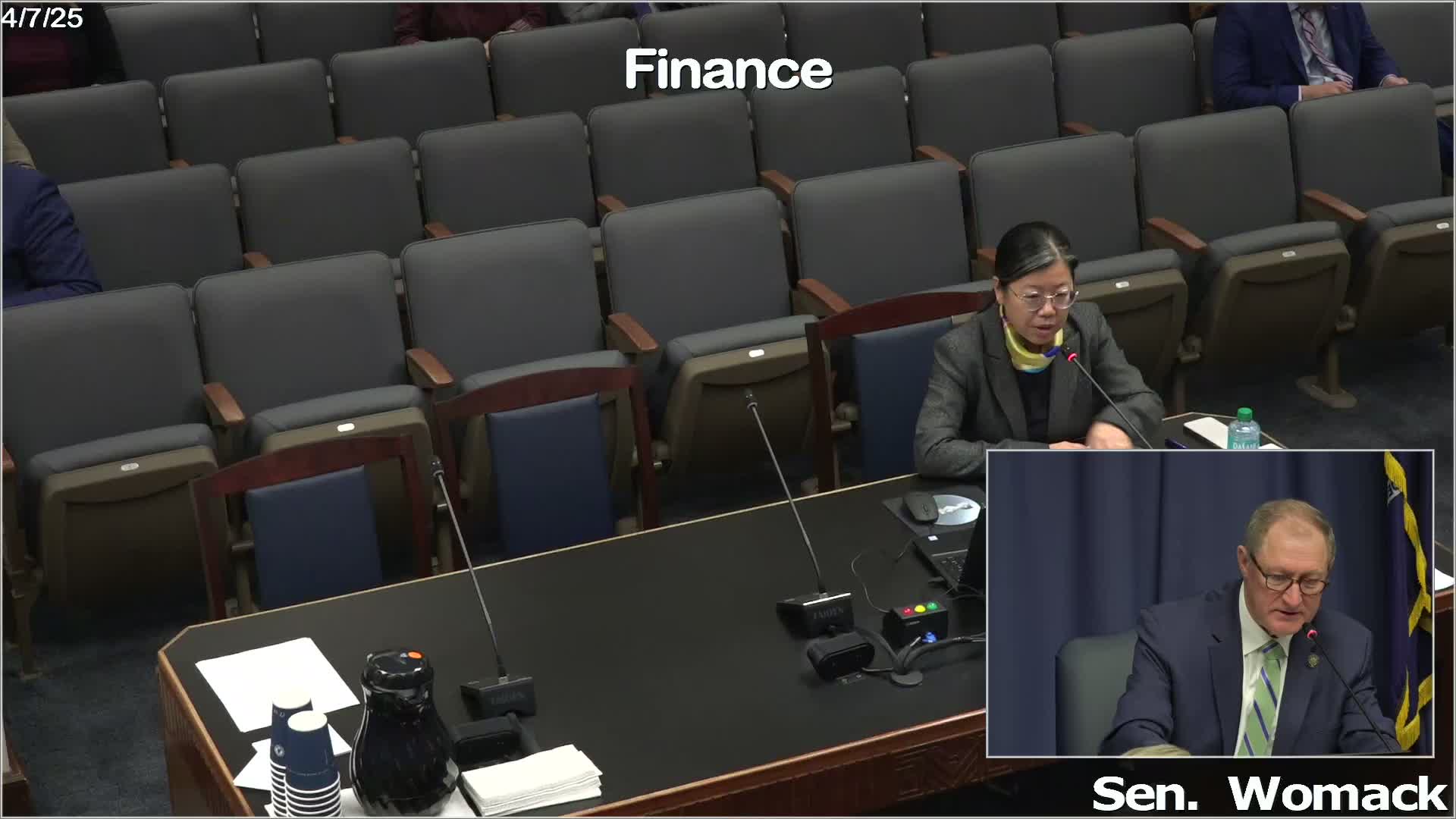
The Senate Finance Committee’s fiscal staff on April 15 presented the Louisiana Department of Education’s FY26 executive budget recommendation and answered questions about the department’s programs and the new Louisiana Gator educational savings/ESA program.
The fiscal presentation, delivered by May Sue of the Senate Fiscal Division, said the FY26 recommendation shows an approximately $1,000,000,000 decrease from FY25. May Sue attributed the change mainly to expiring federal COVID-related dollars and a $200,000,000 reduction tied to a two‑year, one‑time teacher stipend. She also summarized the department’s means of finance: about 65% general fund, 29% federal, and roughly 5% statutorily dedicated funds, with the Minimum Foundation Program (MFP) and subgrantee assistance accounting for the largest shares of spending.
The budget packet lists a number of program adjustments: removal of one‑time COVID and stipend funding; a $50,000,000 proposed increase for the LA Gator program’s awards/admin in FY26; a $93,500,000 total allocation for LA Gator in the executive presentation scenarios; and smaller increases for early childhood, apprenticeship and bus operator training items. May Sue noted carryforwards and excess authority reductions that also affect the bottom line.
Why it matters: the department’s budget is dominated by MFP payments to local districts and federal subgrantee assistance routed through local systems. Changes to one‑time federal funding therefore shift where pressure falls in future years and shape decisions about new state programs such as LA Gator.
LA Gator rollout and vendor contract Dr. Kate Bromley, Superintendent of the Louisiana Department of Education, described program administration and how the department has used a vendor to stand up the program. "As of April, we have 32,000 students that have registered for the Gator program," Dr. Bromley told senators. She said the department contracted a vendor to operate the ESA platform rather than hire a large in‑house staff, and that the vendor helps families register, helps nonpublic schools and providers participate, and administers accounts for students.
Deputy Superintendent Beth Cino explained how the initial $1.8 million appropriation for start‑up was spent: about $910,000 for the vendor technology and customization, roughly $300,000 for two full‑time operating positions (one fiscal, one program), and modest amounts for marketing and communications. "That paid for the services, the actual technology, and the guts of the system for them to customize it to what we needed here in Louisiana," Cino said.
Program prioritization and funding scenarios Dr. Bromley described the legislatively created LA Gator program (Act 1 of 2024). Program rules establish phases and prioritization; she said current registration includes voucher students who must migrate to Gator. Department staff said phase 1 priority includes existing voucher recipients, then special education students and children meeting poverty criteria. The executive budget proposed $93,000,000 for the program; the governor’s executive recommendation included a $50,000,000 addition to expand awards further. Dr. Bromley said the $1.9 million vendor contract for administration is an "up to" amount tied to the number of students served: "If the legislature only appropriates 75,000,000, then we wouldn't need that entire 1.9," she said.
Program award structure described in staff slides showed tiered award amounts at proposed levels of $15,253, $7,626 and $5,243 depending on student categories and income thresholds. The department estimated average award sizes and indicated the LA Gator award tiers are tied to multiples or percentages of the MFP average student amount.
What the committee pressed on Senators repeatedly pressed the department on whether the state could administer the ESA without a vendor, on how start‑up dollars were spent, and on the program’s prioritization and the effect of different appropriation levels on the number of students who could be funded. Dr. Bromley and Cino emphasized vendor use was intended to avoid creating a large state payroll burden and to provide the technical platform every state that runs an ESA uses. Cino said the department expects to spend the full FY25 contract amount and will continue to rely on the vendor if the program proceeds.
Budget details and programmatic changes May Sue’s presentation included the department’s long recurring and nonrecurring adjustments: MFP remains wholly state‑funded and is the largest budget line; subgrantee assistance is driven by federal funds; a number of historical carryforwards were removed; and childcare/early childhood investments were itemized across agencies. The committee was shown employee, vacancy and diversity statistics for department programs and told of various reductions tied to actuals rather than program eliminations (for example, professional development and free breakfast/lunch budget reductions labeled as "excess" based on spending trends).
Ending Committee members asked additional follow‑up questions on funding scenarios and program oversight; members signaled they expect further details as the budget moves through conference. The department said it will provide the registration and vendor contract details the committee requested and that ESA administration will remain subject to appropriation.