Get Full Government Meeting Transcripts, Videos, & Alerts Forever!
Get email alerts on the Technology Budgeting topic
No spam. Unsubscribe anytime.
State IT office outlines device inventory reviews, multi‑year mainframe replacement and tighter contract enforcement
Summary
The Senate Finance Committee heard April 15, 2025, that the Office of Technology Services plans quarterly device inventories, a multi‑year replacement of an aging mainframe and tougher vendor contract terms to reduce pass‑through costs.
The Senate Finance Committee heard April 15, 2025, that the Office of Technology Services plans quarterly device inventories, a multi‑year replacement of an aging mainframe and tougher vendor contract terms to reduce pass‑through costs.
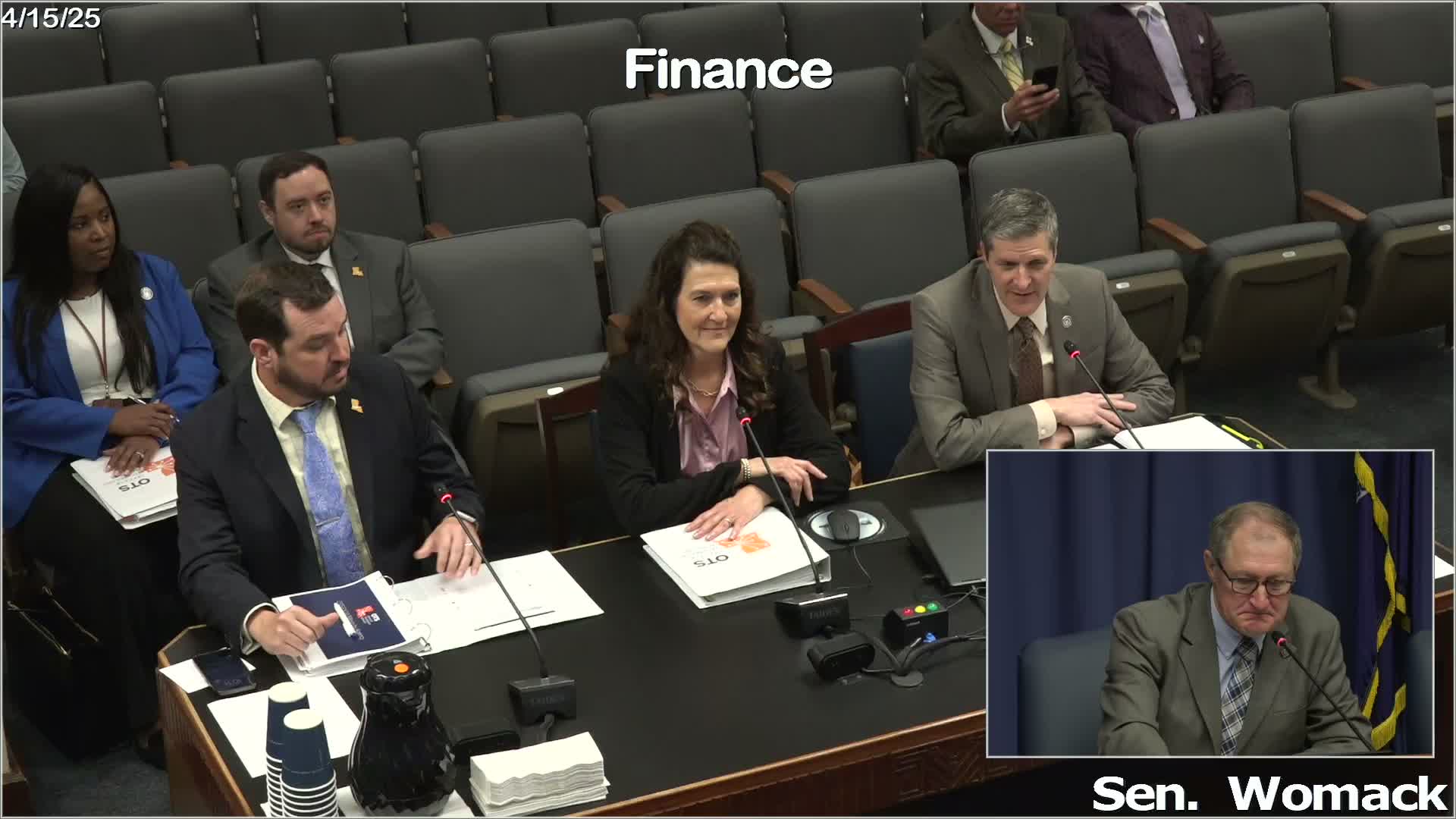
The committee was updated by Patrick Goles, Deputy Commissioner of Administration, and Evelyn Broussard, the new state chief information officer, who began work about six weeks ago and described initial changes to procurement oversight, device inventories and contract management.
Broussard said she and OTS will work with the administration’s efficiency effort and with agencies to identify excess devices and recurring savings. “We’re going to gain a bunch of efficiencies by doing that,” she said, noting OTS will run quarterly reviews to match devices to staff counts and reduce unnecessary equipment.
Goles and Broussard emphasized that the agency’s roughly $670,000,000 operating budget is largely a pass‑through for agency software, contracts and other services, and not a revenue source for OTS. “We do not make money. We can’t make a profit,” Goles said, adding the agency negotiates statewide contracts to keep rates low for all state agencies.
Committee members pressed for details on oversight. Senator Presley asked, “Are there any current checks on what is requested from an agency or department, on y’all’s end?” Broussard said OTS plans to require agency budget monitoring next fiscal year: requests that would push agencies over budget will need approval from the Office of Planning and Budget and, when authority changes, may require the Joint Legislative Committee on the Budget (JLCB).
On legacy infrastructure, Broussard said OTS is pursuing a cloud‑based replacement for the mainframe that has been in service since the 1970s. “We’re going to make sure that it’s running well. We’re doing the hardware upgrade… and then we’re gonna continue doing things to keep it running and keep it sustainable until we get the replacement, which should take a few years,” she said.
Officials said OTS will also review large contracts and put stronger enforcement provisions in new agreements so the state can seek clawbacks or other remedies if vendors underperform. Broussard described an effort to standardize quarterly reporting so agencies’ device and telecom usage can be tracked and reassessed regularly; the first round will inventory desktops and other devices, followed by telecommunications services.
Senators asked about budget drivers. Deputy CIO Matthew Benson said OTS’s budget is demand‑driven: “If next year DCFS needs a $30,000,000 system … that’s gonna show up,” he said, explaining large modernizations and grant‑funded projects flow through OTS and inflate annual totals. He added that some unit rates (for example, storage per unit) have fallen even as total consumption has risen, increasing overall pass‑through totals.
Committee members and OTS staff discussed operational changes expected in the next year: agencies will be encouraged to submit their own IT budget requests to increase ownership; finance offices within agencies will be required to sign off on purchases; and OTS will examine warehouse inventory and repurposing of existing equipment before new purchases.
No committee action was taken on the presentation; senators thanked OTS staff for their briefing and requested follow‑up information about contract lists and high‑value agreements.
Ending: Committee members asked OTS to provide further details about contract expirations and large, multi‑year procurements. Broussard and staff agreed to continue reporting to the committee as they implement quarterly reviews and renegotiation efforts.