Get Full Government Meeting Transcripts, Videos, & Alerts Forever!
Get email alerts on the Licensure Compact topic
No spam. Unsubscribe anytime.
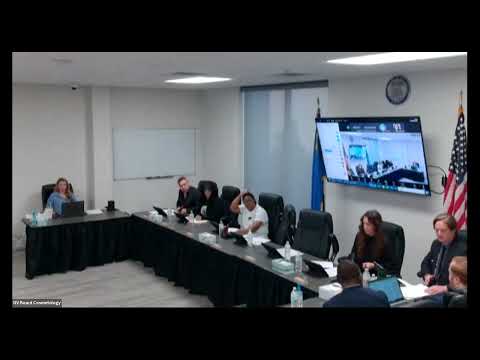
Board hears cosmetology compact presentation; after questions it votes to oppose AB371
Summary
A presentation on the proposed cosmetology licensure compact (AB371) outlined how multistate licensing would work; after extended Q&A the Nevada State Board of Cosmetology voted to oppose AB371 on March 24, citing unresolved concerns about fraud, data integration, enforcement and fiscal impacts.
The Nevada State Board of Cosmetology heard a presentation and extensive Q&A on Assembly Bill 371, which would adopt a multistate cosmetology licensure compact, and then recorded a motion opposing the bill.
Leslie Roste (presentation: Future of the Beauty Industry Coalition) and representatives from the Council of State Governments explained the compact mechanics: a multistate privilege issued by an applicant’s home state, a national compact commission to set rules and a shared database to flag adverse actions and multistate licensees. Presenters said compact membership would not require a state to adopt another state’s hour or testing standards, that each state retains sovereignty over scope, hours, testing and licensing fees, and that the commission’s bylaws would later define operational details such as database fields and rules for when a multistate licensee must make a member state their home state.
Board members and staff raised technical and policy concerns during a lengthy discussion. Staff and board members asked about (a) fiscal impacts and whether the board would be required to create a new licensing type and associated statutory fee authority, (b) how fraudulent school diplomas and license fraud would be detected and addressed across states, (c) how a multi-state licensee working temporarily in Nevada would be identified and tracked by inspectors, and (d) what the compact’s enforcement and removal mechanisms would be for a member state that failed to address systemic fraud. Leslie Roste and staff said the compact would create a separate multistate database for flagged licensees and that a commission would write rules and bylaws at its initial meeting (projected July) to answer questions about data fields, fees paid to the commission and adverse-action reporting; she said the compact commission would be self-funded through a small portion of the multistate fee and that fiscal notes in other states have often shown modest first-year costs (many under $20,000) though the board’s staff noted local fiscal uncertainty and the transcript records staff concerns about lost fee revenue and potential need to add at least one staff position to administer the new license.
After the presentation and extended board questions, a board member moved to oppose Assembly Bill 371; the motion was seconded and the board recorded the voice vote as “Aye,” and the motion carried.
Ending: Board staff reiterated that, should the legislature pass AB371, the board would implement the law and follow statutory requirements including any necessary fee or systems changes.