Get Full Government Meeting Transcripts, Videos, & Alerts Forever!
Get email alerts on the Discipline topic
No spam. Unsubscribe anytime.
Nevada cosmetology board revokes Maryland Spa license after default; fines and costs ordered
Summary
The Nevada State Board of Cosmetology found the factual allegations in complaint C2024-0884 proven by default after the respondent failed to appear; the board ordered revocation for 10 years and administrative fines plus investigation costs.
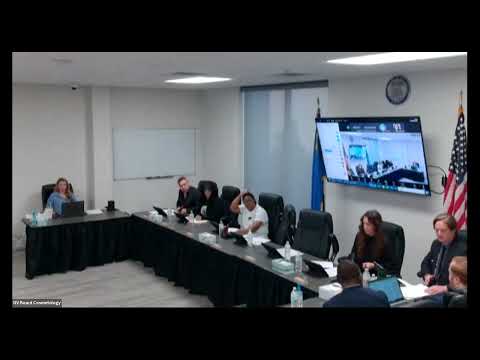
The Nevada State Board of Cosmetology on March 24 accepted the factual allegations in complaint C2024-0884 against Maryland Spa (license S709130) and voted to impose discipline after the respondent failed to appear or file an answer.
The complaint, filed March 10, 2024, named Ronald Carrera as owner and operator of Maryland Spa (business ID NB20232876572). The board’s compliance staff said the division mailed the complaint and notice of hearing and that service was ultimately completed at an address obtained via skip trace. Chief compliance officer Jamie Huggins testified that the complaint and supporting exhibits were filed and served and the respondent declined to appear.
Because the respondent failed to appear, the board proceeded on the state’s proof and accepted Allegations 1 through 41 “as presented in the complaint.” The state requested maximum administrative penalties under the cited statutes, revocation of the license for 10 years and recovery of investigation costs. The board then moved to revoke Maryland Spa’s license for 10 years, impose administrative fines of $2,000 per violation to be paid within three months, and require payment of investigative costs and attorney fees; the motion carried.
Steven McDonald, executive director for the board, noted the board’s request for fines and recovery of costs in the record. The transcript shows board members voted “Aye” and the motions carried; no individual negative votes were recorded in the transcript.
The board’s action was taken as a disciplinary sanction after default; no settlement or negotiated alternative was adopted on the record. The board record indicates staff attempted to settle the matter by agreement before proceeding, but the respondent refused to sign a proposed settlement and declined to appear at the hearing.
The board will note the revocation, fines and cost recovery in its licensing and enforcement records; the transcript does not specify any follow-up deadlines beyond the three-month payment window for fines.
Ending: The board moved on to a separate disciplinary matter after concluding the Maryland Spa default hearing.