Get Full Government Meeting Transcripts, Videos, & Alerts Forever!
Get email alerts on the City Engineering Contracts topic
No spam. Unsubscribe anytime.
Canton interviews four firms for general engineering services; pitches focus on planning, grants and flood response
Summary
City of Canton heard presentations from ISG, DGR, Banner Associates and JSA as part of a selection process for general engineering services. Firms pitched planning-led approaches, grant and funding strategies, flood/drainage work and construction management. Commissioners pressed firms on prioritization, fees and capacity.
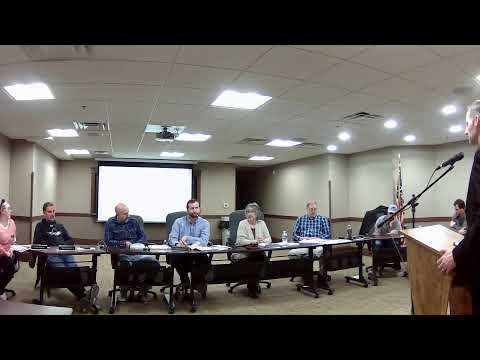
City of Canton commissioners heard presentations from four engineering firms — ISG, DGR, Banner Associates and JSA — during a public interview session for the city’s general engineering services contract. The session included firm overviews, examples of recent projects, and a question-and-answer period on fees, prioritization and flood mitigation. The meeting concluded with a motion to enter executive session to discuss next steps.
Why it matters: Canton officials said the city needs long-term planning and technical capacity to address recurring flooding, manage aging water and sewer infrastructure, pursue grants and support planned projects such as the Northwest Street work. The firms emphasized different strengths — planning and regulatory relationships, emergency response and construction management, multi‑disciplinary in‑house services, and deep local knowledge — that Canton staff and commissioners can weigh as they choose a provider.
ISG outlined a planning-first approach and pitched its municipal engineering and water/wastewater experience. Justin Heine, a licensed civil engineer with ISG, said the firm aims to pair capital improvement planning with grant‑seeking and project delivery and proposed regular coordination meetings with city staff. Rachel (no last name listed), ISG’s water/wastewater group leader, stressed proactive communication with state regulators: “We don’t want to be in a situation where we’re surprised,” she told the commission, noting ISG’s practice of early engagement with DNR and other permitting authorities. During pricing discussions ISG representatives said a typical general engineering budget could be in the range discussed with the city and that the firm sometimes proposes a discounted rate for appointed engineering services; ISG staff also referenced a standard hourly rate “$1.95” as stated in the presentation materials.
DGR (DGR Engineering) highlighted long regional experience and emergency response. Project manager Craig Lauritsen described the firm as relationship‑based and said DGR has served many nearby towns. Mary Martins and Trent Bruce walked commissioners through recent work the firm led after major floods in Rock Valley — including rapid design and construction of temporary housing utilities — as an example of emergency response capacity. Lauritsen also described DGR’s pavement‑management and sidewalk‑phasing work for small towns and its ability to pair capital plans with grant opportunities such as EDA and SRF funding.
Banner Associates emphasized multi‑disciplinary in‑house capabilities and a strong focus on communication and implementation. Department head Pat Carey said Banner’s municipal group provides planning, floodplain management, structural and construction management services and highlighted the firm’s practice of setting design milestones (30/60/90 percent) and keeping clients involved. Carey said Banner prioritizes communication during construction to limit surprises and to enforce contract compliance with contractors.
JSA made a case for continuity and local knowledge. The JSA representative (identified in remarks as Myron) and team members said decades of prior work in Canton give them a head start on current projects, including basin and drainage studies, sanitary and storm sewer records and prior flood‑response work. JSA demonstrated a 2‑D stormwater model to visualize how runoff moves through town and to test hypothetical mitigation steps. The presenter told commissioners that large drainage fixes identified in earlier studies would require public funding mechanisms (rates, bonds or grant matches) and community buy‑in to move forward.
Commissioners pressed the firms on operational details. Commissioner Garber asked what firms would bring to a proposed biweekly touch‑base; ISG and other presenters said they would provide a project list, status on active construction, documentation of hurdles and a forward look at funding or regulatory issues. Jackie (identified in the record only by first name) asked how each firm prioritizes among multiple municipal clients; firms said they staff multiple engineers per client, commit to capacity limits, and proposed standing meetings to maintain priority and transparency. Justin Heine (ISG) told the board, “We wouldn’t be here if I did not have the capacity to serve you guys.”
On fees and contract form, firms described different approaches. Several said they generally work on a time‑and‑materials basis with not‑to‑exceed design proposals and separate project proposals for construction; Banner noted many clients prefer time‑and‑materials for transparency. ISG discussed a general engineering budget example and the possibility of a discounted appointed‑engineer rate for routine calls. Firms also described how overlap with economic development or developer work is handled: the firms said they would disclose conflicts, separate project teams when necessary and prioritize the city’s interests.
Flooding and drainage drew sustained attention. JSA demonstrated model output showing how runoff collects behind Lynn Avenue and Cedar Street and used that to illustrate the effect of detention acreage and conveyance options. When commissioners asked why drainage projects identified in older studies have not been completed, the JSA presenter replied that many of the larger basin recommendations require major funding — bonds, rate changes or grant matches — and that gaining public and council support for those financing steps is often the limiting factor. Banner and DGR described similar constraints and said phasing, grant seeking and prioritization are typical next steps.
Next steps: At the end of the public presentations a motion was made and seconded to go into executive session; the transcript records the motion and second but not a recorded roll call vote or formal selection. The city will proceed from the interview phase into internal deliberations and follow up with firms as it moves toward a decision on an engineering appointment.
What was not decided: The commission did not announce a preferred firm and took no recorded formal votes on contract award during the public session.
Ending: Commissioners said they appreciated the firms’ time and asked staff to schedule follow‑up items; the public portion concluded when the board moved into executive session to discuss the selection.