Get Full Government Meeting Transcripts, Videos, & Alerts Forever!
Get email alerts on the Short Term Rentals topic
No spam. Unsubscribe anytime.
Mobridge council reopens debate on short‑term rental ordinance after public concern over impacts on housing and process
Summary
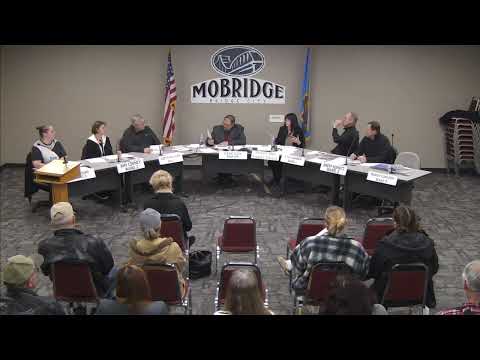
The Mobridge City Council reopened a lengthy public discussion Tuesday on a proposed ordinance to license and limit short‑term rentals, including listings on Airbnb and Vrbo, but took no vote and asked staff to return with a revised ordinance for a first reading in March.
The Mobridge City Council reopened a lengthy public discussion Tuesday on a proposed ordinance to license and limit short‑term rentals, including listings on Airbnb and Vrbo, but took no vote and asked staff to return with a revised ordinance for a first reading in March.
The ordinance under consideration would create a city licensing regime tied to the state lodging license and set limits on the number of short‑term rental licenses. Supporters said the rules would protect neighborhoods and long‑term housing supply; opponents and some local landlords said the proposal lacked outreach and risked burdening small property owners.
Why it matters: Council members debated how to balance tourism and workforce housing in a city where short‑term rentals are visible online and rental stock is tight. The discussion addressed licensing details (inspection and state lodging requirements), proposed caps, grandfathering of existing rentals, owner‑occupied exemptions, transferability, and fee methods.
What the council heard and why: Howard Bergman, a resident who said he has “no financial interest in the Airbnbs,” told the council that the proposed permit and notification language should protect neighbors and that any rules should be applied consistently. Jessica Bridal, owner of the Support Circle and a local landlord, said she was disappointed by the lack of stakeholder outreach before the first reading and questioned the data linking short‑term rentals to the local housing shortage. “Given the importance of a change such as this, I hope the community is given ample time to understand, to digest, and to consider how these changes will affect the community in which they live,” Bridal said.
Speakers and staff described several factual points the council will need to resolve if it proceeds: the city’s current zoning process relies on conditional‑use permits and mailed notices for individual applications; the proposed ordinance would require a lodging license from the state Department of Health (Title 44 administrative rules) and a city sales‑tax registration; and an annual lodging inspection would be part of the licensing process if the ordinance is adopted.
Key unresolved issues discussed by council and public - Cap and grandfathering: The draft ordinance included a numeric cap (language in the packet used a 25‑unit example). Council members and commenters questioned where that number came from; staff said the draft was modeled on an ordinance from Philip and that councils can choose a fixed number or set it by resolution. The proposed text also included a “preexisting facilities” clause that caused confusion—staff explained it was intended to let existing licensed short‑term rentals continue while preventing issuance of additional new licenses beyond the cap until numbers fall. - Owner‑occupied vs. non‑owner‑occupied: Several speakers urged exempting owner‑occupied hostings from a hard cap (for example, a separate owner‑occupied allocation), reasoning those operations have less effect on long‑term rental supply. - Transferability and inheritance: Some landlords raised concerns about nontransferable permits (for example, if an owner dies or sells). Council members noted the city’s liquor‑license practice (transfer reviewed by council) as a possible model for handling transfers or estate situations. - Safety, inspections and liability: Council members and residents pressed for clarity about safety inspections (smoke alarms, fire extinguishers, electrical, handrails), liability insurance endorsements and whether the state lodging license and health/safety codes would cover those elements. Staff said the lodging license administered under state Title 44 requires inspection and the city would require proof of appropriate insurance endorsements in the licensing packet. - Fees and implementation mechanics: The ordinance text in the packet would leave fee amounts to a resolution; several council members suggested removing a numeric cap from the ordinance and instead setting the allowable number and fees by resolution so future councils could adjust without repealing the ordinance.
Local data and context cited in the meeting - Online listings: Council members and staff noted roughly 19 properties listed on Airbnb and 11 on Vrbo during a quick check; they also said some short‑term rentals are not registered with the city. - Conditional‑use history: Council members said the city has processed four conditional‑use hearings for short‑term rentals during the current council members’ tenure; three were approved and one denied. - Housing efforts: The council and commenters said the city recently hired a full‑time housing director and that the city and county have cooperated on demolishing dilapidated properties (staff estimated about 10–12 properties previously removed). Commenters urged pairing regulation with incentives and programs from the city housing report (2010–2020 assessment referenced by public commenters).
Council direction: Rather than vote on the packet draft, councilmembers agreed to treat the meeting as a committee‑style discussion. Staff will compile the points raised—clarify the preexisting facilities language, decide whether the ordinance should include the numeric cap or leave that to a city resolution, refine owner‑occupied exemptions, and outline inspection and insurance requirements tied to the state lodging license—and return a revised ordinance for formal consideration at a first reading in March.
Next steps and timeline: The mayor indicated that, if council wants to proceed, staff will present a revised ordinance at the March meeting and a fee resolution could be prepared for the second reading in April so licensing, fees and the ordinance could come into effect together. No formal votes or ordinance adoption occurred Tuesday.
Ending note: The meeting reflected a mix of caution about unchecked short‑term rental growth and concern from landlords about process and economic impacts. Councilmembers emphasized they were seeking a balanced, workable approach and asked staff to incorporate the specific clarifications discussed before returning with a revised ordinance.