Committee questions three undersecretary nominees on arms control, public diplomacy and workforce priorities
Get AI-powered insights, summaries, and transcripts
SubscribeSummary
The Senate Foreign Relations Committee held a hearing on three undersecretary nominees — Thomas Donato for arms control, Sarah Rogers for public diplomacy, and Lisonbee for political affairs — pressing them on arms control strategy, foreign military sales, public diplomacy assets and the implications of agency restructuring.
The Senate Foreign Relations Committee held a nominee hearing for three of the president's undersecretary nominees: Thomas Donato to be Under Secretary for Arms Control and International Security, Sarah Rogers to be Under Secretary for Public Diplomacy and Public Affairs, and Lisonbee (last name redacted in the transcript) to be Under Secretary for Political Affairs.
Thomas Donato, in opening remarks, emphasized concerns over global nuclear modernization and cited China’s expanding nuclear stockpile as a central challenge. Donato said he would pursue “verifiable and enforceable arms control agreements that enhance American national security” and stressed the need to prioritize U.S. security in any negotiated limits. He told senators he would make foreign military sales reform a top priority if confirmed, arguing that FMS is “the absolute cornerstone of our extended deterrence and allied assurance.”
Sarah Rogers described public diplomacy as “the soul of soft power” and said the right to free speech is a national strength; she advocated using technology and AI to make outreach more efficient, listed exchange programs the bureau oversees (including Fulbright and Gilman), and highlighted the State Department’s planned participation at Expo Osaka. Rogers acknowledged a department review of public diplomacy programs and said she would steward resources to ensure taxpayer dollars advance U.S. interests. During questioning she addressed concerns about dismantling the U.S. Agency for Global Media (USAGM) and the Global Engagement Center (GEC), saying the public diplomacy function has multiple channels to reach audiences and that she would, if given any oversight role, act as a responsible fiduciary.
The third nominee, identified in the transcript as Lisonbee of Georgia, told the committee she would strengthen the diplomatic workforce, reinforce bilateral and multilateral relationships, and apply experience in the Indo‑Pacific to global responsibilities if confirmed.
Senators questioned nominees on several recurring themes. Ranking Member Jeanne Shaheen pressed Donato on arms control strategy and verification; she and other senators asked how to address China’s nuclear expansion and whether China should be brought into future arms control arrangements. Donato emphasized enforceability and said he was "cautiously optimistic" that presidential-level engagement could advance agreements. Senators also pressed nominees on foreign military sales backlogs and allied reassurance; Donato committed to working with the committee to reduce bureaucratic delays in FMS.
On public diplomacy, senators raised the administration's reported restructuring of USAID, the reported dissolution or transfer of components of USAGM, and the effect of recent tariff announcements on alliances in Asia and Latin America. Rogers said she would analyze program reviews and report back to the committee and said public diplomacy also manages many regional and social‑media channels and partner relationships that can be scaled. Senators warned that eliminating broadcast and targeted channels could reduce reach to audiences in closed societies.
Questions also covered the Quad and Indo‑Pacific partnerships, China's growing presence in Latin America, the role of exchange programs in building long-term ties, and the importance of counterterrorism and humanitarian assistance. Several senators said that program cuts should be evaluated for national security effects and urged nominees to keep the committee informed.
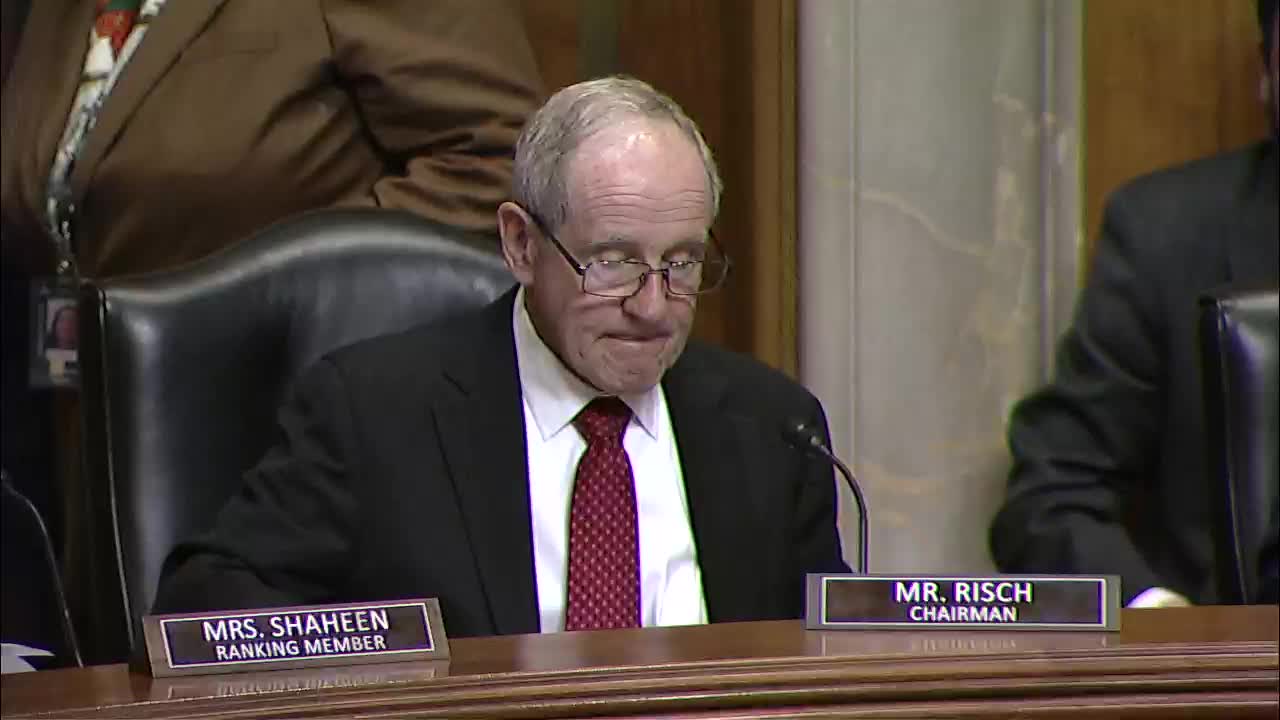
Chairman Risch closed the hearing and left the record open for additional questions and supporting letters until close of business the next day.
No formal committee vote on these nominations was recorded in the hearing transcript; the committee left the record open for additional written questions and materials.