Whistleblower tells Senate Meta built censorship tools for China and planned data access

3019083 · April 9, 2025

Get AI-powered insights, summaries, and transcripts

Subscribe
AI-Generated Content: All content on this page was generated by AI to highlight key points from the meeting. For complete details and context, we recommend watching the full video. so we can fix them.

Summary

At a Senate Judiciary Subcommittee hearing, former Facebook executive Sarah Wynne Williams testified that Meta developed censorship tools for Chinese authorities, sought data access in China that could expose U.S. users, and briefed Chinese officials on AI — allegations senators said contradict prior testimony to Congress.

A Senate Judiciary Subcommittee hearing on claims about Meta’s dealings with China devolved into sharp allegations on national security after Sarah Wynne Williams, a former director of global public policy at Facebook, testified that company executives worked with Chinese officials to build censorship systems and sought access to user data stored in China.

Williams told the subcommittee that “Meta executives repeatedly undermine US national security and betray American values” and that the company “built an $18,000,000,000 business in China.” She said Meta developed “custom built censorship tools” for Chinese authorities and “provided the Chinese Communist Party with access to meta user data, including that of Americans.”

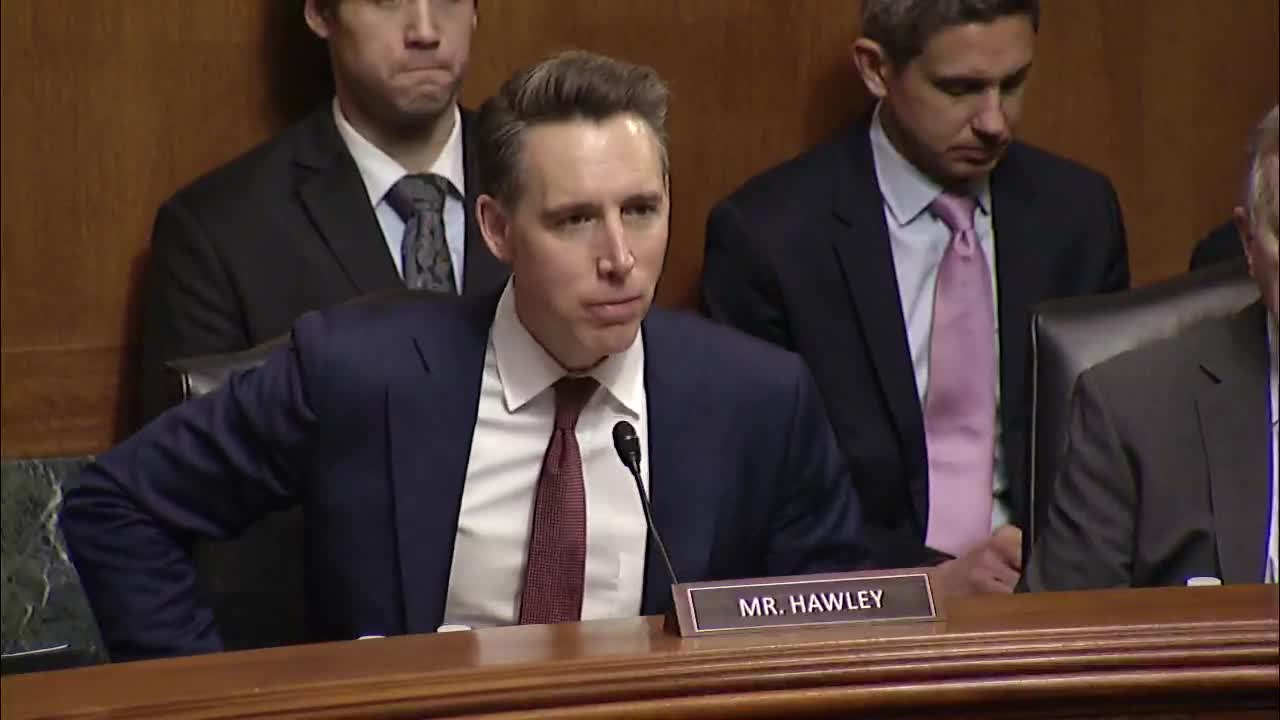
The testimony echoed opening remarks from Chairman Josh Hawley, who described the witness as “a whistleblower” and said the company had sought to block her testimony through litigation and other measures. Hawley noted earlier in the hearing that Meta had “threatened her, get this, with $50,000 in punitive damages every time she mentions Facebook in public.”

Why it matters: senators from both parties said the allegations raise national-security concerns because China’s state apparatus can use censorship and data access to surveil dissidents and foreign contacts, and because technical briefings on artificial intelligence could accelerate adversarial capabilities.

Most senators pressed Williams for documentary evidence and pledged further investigation. Ranking member Dick Durbin and others said the statements mirror disclosures from past whistleblowers and suggested the committee would pursue subpoenas and document requests. Senator Chuck Grassley said the panel would ask Meta to “fully cooperate.”

Key assertions from Williams and supporting documents cited at the hearing included: - Internal notes and chats describing plans to identify and block content that China already blocked as a “test” and to “build trust” with Chinese officials by taking additional steps. - A referenced initiative called “Project Aldrin,” described in testimony as a restricted effort to expand Meta’s footprint in China, including infrastructure that could route data through Chinese servers. - Discussion of “pop servers” and data localization that Williams said would mix Chinese and non-Chinese data on Chinese soil; she testified that “you can’t segregate data” on those servers and that the configuration could allow Chinese access to messages exchanged with Americans. - Briefings to Chinese officials on emerging technologies, including artificial intelligence models; Williams testified that Meta briefed Chinese researchers and officials about AI and that “Llama has contributed significantly to Chinese advances in AI technologies like DeepSeek.”

Senators repeatedly contrasted Williams’s account with prior public testimony from Meta executives. Senator Richard Blumenthal said the evidence shows Meta “lied to Congress” about the scope of its China activity and its technical readiness, and he described internal tools (for example, a “virality counter” that routed high‑view content to a “chief editor”) that Williams said were deployed in Hong Kong and Taiwan.

Williams also described internal security concerns raised by engineers and said those concerns were overridden. “My understanding is that the risk is the hardest part of the plan, so it’s unthinkable that [Zuckerberg] was unaware of the risk,” she testified when asked whether Mark Zuckerberg understood the risks.

No committee vote or formal action was taken at the hearing. Senators from both parties said the committee would pursue further document review and investigative steps; Grassley and others indicated that the Permanent Subcommittee on Investigations would also press the matter.

The committee accepted Williams’s offer to provide documents; senators asked for production of the internal chats, engineering notes, and other records she cited. Williams also said she had filed shareholder resolutions and whistleblower complaints with the Securities and Exchange Commission and the Department of Justice.

The hearing closed with repeated calls from senators for Meta executives to answer questions under oath. Chairman Hawley told the company to “stop trying to gag her. Come to this committee. Take an oath. Sit there. Let us question you and give the American people the truth.”