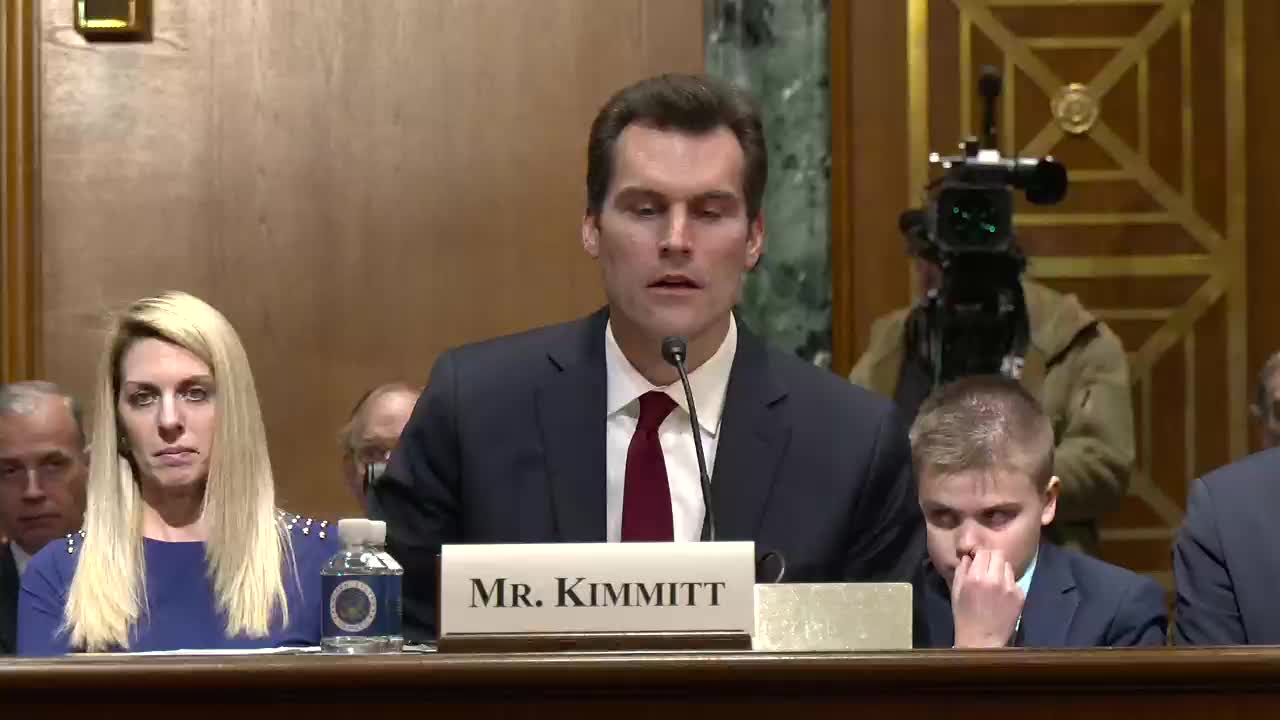
Nominee for commerce trade post pressed on tariffs, enforcement and market access

3018194 · April 10, 2025

Get AI-powered insights, summaries, and transcripts

Subscribe
AI-Generated Content: All content on this page was generated by AI to highlight key points from the meeting. For complete details and context, we recommend watching the full video. so we can fix them.

Summary

William Kimmitt, nominee for undersecretary of commerce for international trade, faced sustained questioning about recent tariff announcements, short‑term relief for small businesses, circumvention and anti‑dumping enforcement, and whether trade actions would help U.S. exporters.

William Kimmitt, President Trump’s nominee to be undersecretary of commerce for international trade, told the Senate Finance Committee he would prioritize export promotion and enforcement if confirmed, but senators pressed him repeatedly about the administration’s recent tariff decisions and their effects on prices and market certainty.

Kimmitt described the International Trade Administration’s global markets and export assistance centers, saying, “the global markets unit in the International Trade Administration plays a bridal, export promotion function” and that he would “give a comprehensive look to those programs” to improve efficiency and benefit farmers and ranchers.

Ranked Member Ron Wyden and others sought concrete relief for small businesses that face higher import costs and immediate uncertainty. Wyden asked, “what's the plan to provide relief now for the small businesses who have to decide between paying tariffs and keeping staff?” Kimmitt responded that the administration’s measures are intended to prompt domestic investment and said he believed some indicators, such as inflation, were improving; he added that tariff decisions are part of a broader economic strategy that includes lower taxes and deregulation.

Several senators raised enforcement concerns. Senator James Lankford and others described circumvention and transshipment (for example, diversion of Chinese goods through Vietnam) that can allow underpriced imports to reach U.S. markets. Kimmitt said he would oversee the Enforcement and Compliance Division at ITA if confirmed and said that he would work with Customs and Border Protection and Congress on legislative and administrative solutions, referencing the Leveling the Playing Field Act and circumvention authority.

Senator Maria Cantwell pressed Kimmitt on integrating environmental competitiveness into trade enforcement; Kimmitt said he viewed low environmental standards as a “trade issue” that can create a non‑tariff advantage and said leveling the playing field could yield related environmental benefits.

No committee action was taken; questions for the record remain open. Senators repeatedly requested that ITA prioritize quicker relief and stronger front‑line enforcement to protect U.S. small and medium‑sized manufacturers and exporters.

Ending: The committee will review Kimmitt’s written answers for the record and later hold a vote on his nomination.