Get Full Government Meeting Transcripts, Videos, & Alerts Forever!
Get email alerts on the K 12 Education And Doe Budget topic
No spam. Unsubscribe anytime.
BESE, DOE and special schools: LA Gator applications surge; early‑childhood, tutoring and school funding dominate hearing
Summary
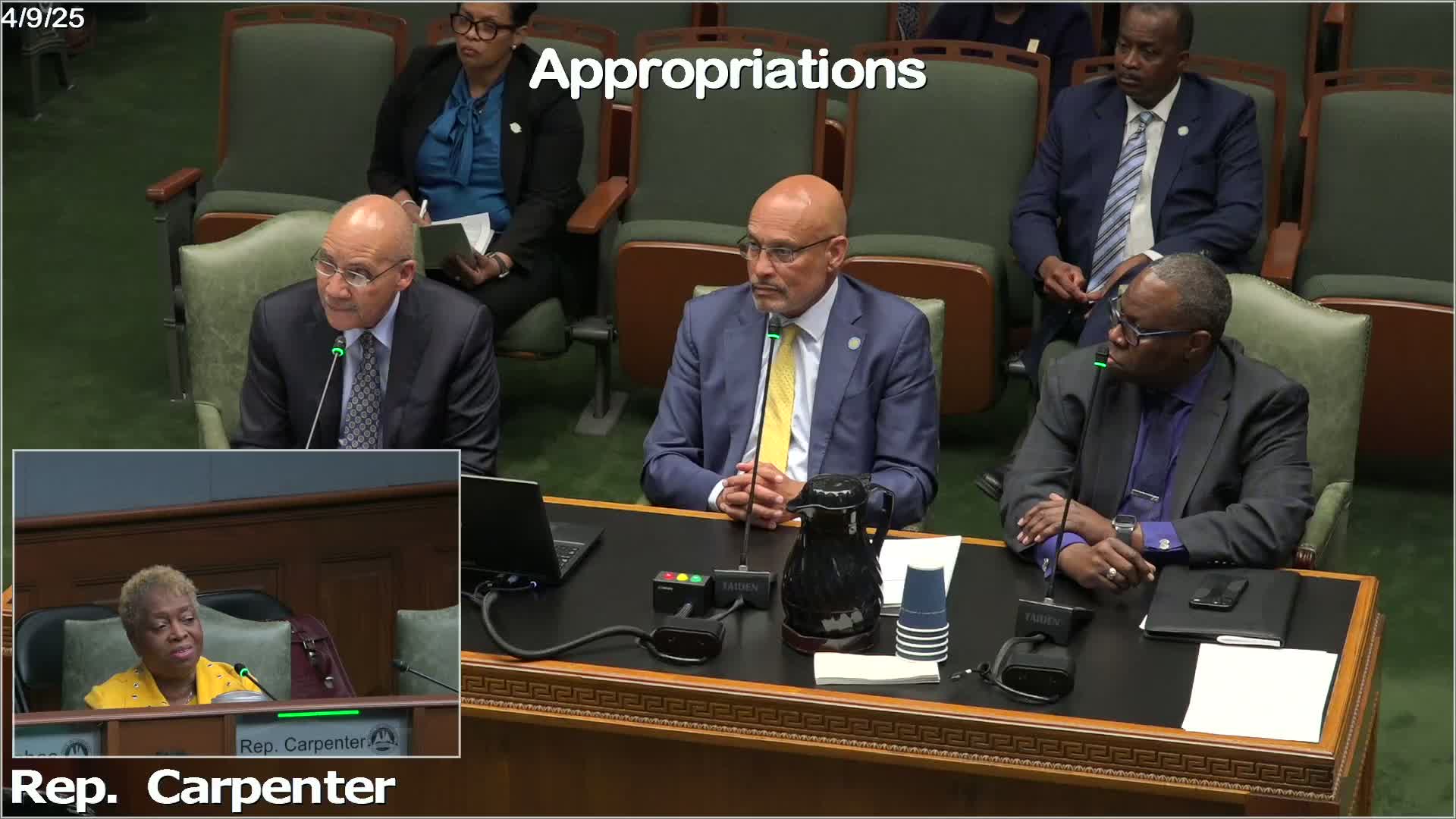
House Appropriations heard a Department of Education FY‑26 overview and updates from BESE and the department’s programs. Officials reported 33,000 applications for the new LA Gator scholarship marketplace and said early‑childhood demand remained high — about 4,800 children were on the childcare assistance waiting list in early April.
The committee shifted to K‑12 and education commissions later in the hearing as House fiscal staff summarized the Department of Education FY‑26 executive budget. The department’s staff emphasized that most state support for K‑12 education flows through the minimum foundation program (MFP) and that the FY‑26 picture also reflects the final winding down of pandemic relief grants.
DOJ/DOE overview and early‑childhood funding House fiscal staff framed the department’s recommended FY‑26 budget as focused on subgrantee support and implementation of state priorities in early education and school improvement. State Superintendent Cade Brumley told members that statewide results have improved: he cited national rankings and Louisiana’s recovery after pandemic learning loss, but he and staff stressed that the state still needs to raise reading and math fundamentals in many classrooms.
Early‑childhood programs: demand and seats Members spent time on early‑childhood funding and seat availability. Fiscal staff presented FY‑26 totals that combine state and federal early‑childhood funding sources and noted roughly $40.4 million in state early‑childhood allocations. Department staff said about 4,800 children remained on the state childcare assistance waiting list as of early April, and some lawmakers asked whether centers and school districts have seats available for additional investments.
LA Gator scholarship marketplace: applications surge One of the hearing’s most‑commented items was a new scholarship marketplace law (the “LA Gator” scholarship). The Department reported 33,000 families had submitted applications by early April; roughly 5,000 of them were existing recipients of an older voucher program. Committee members asked whether the state had sufficient funding and how the application pool would be prioritized.
How the marketplace works, and the committee asked for details Department staff explained the LA Gator design in two parts: applicants register and, if an appropriation is made, approved accounts are funded and families use an online marketplace to select schools, tutoring vendors or services, and funds are paid out quarterly to providers. The law defines phased priorities—existing voucher recipients and families below income thresholds and other categories—so distribution follows the statute and department rules. Members pressed the department on allocation timing and whether enough provider seats would be available in every locality; department staff said providers and schools must opt in and the application portal timestamps will determine eligibility if appropriated funding runs out for a given priority.
Tutoring, MFP and teacher pay The department described several recurring requests captured in the Board of Elementary and Secondary Education (BESE) and executive proposals: targeted funding for sustained high‑dosage tutoring, continued differentiated compensation pools to retain teachers in shortage areas, and a modest appropriation for internships and apprenticeships. Lawmakers pressed for recurring commitments for teacher pay and asked staff to model the fiscal tradeoffs; Superintendent Brumley and others said they support continuing targeted pay pools and tutoring as long as the legislature can provide ongoing funding.
Special schools and commissions Committee members also heard from the special‑schools and special‑commissions units that appear under the committee’s jurisdiction. Testimony included: - Thrive Academy (a state‑sponsored five‑day boarding school) reported improved test gains and said its class of 2025 will include students who earned college credit and planned postsecondary or work options. - Louisiana School for Math, Science and the Arts (LSMSA), the governor’s schools, and the Special School Districts described budgets, capital and operational needs. - Public broadcasting (LPB) and the New Orleans Center for Creative Arts (NOCA) reviewed their FY‑26 requests; LPB noted it now administers the statewide Dolly Parton Imagination Library partnership.
What lawmakers asked for and next steps Committee members requested follow‑up details on several items, including: the number of LA Gator applicants by parish and how many local seats are available at participating schools; the scope and timing of centers or districts that could absorb additional early‑childhood seats; and detailed counts of vacant instructor positions affected by a possible hiring freeze. Members signaled support for targeted investments in tutoring and differentiated compensation but asked for scenarios showing recurring costs and fiscal tradeoffs.
Ending The education segment concluded with department and special‑schools officials offering to provide updated LA Gator application counts and detailed follow‑ups on early‑childhood seat utilization and district‑level staffing needs. Lawmakers said decisions will depend on final revenue estimates and competing priorities across state agencies.