Get Full Government Meeting Transcripts, Videos, & Alerts Forever!
Get email alerts on the Vocational Rehabilitation Lrs Funding topic
No spam. Unsubscribe anytime.
Providers, advocates ask legislature to fully fund Louisiana Rehabilitation Services to expand employment supports
Summary
A coalition of providers and people with disabilities urged the Appropriations Committee to appropriate $11 million in state funds to fully fund Louisiana Rehabilitation Services (LRS), which advocates said would allow the state to serve tens of thousands more people and draw down larger federal matching dollars.
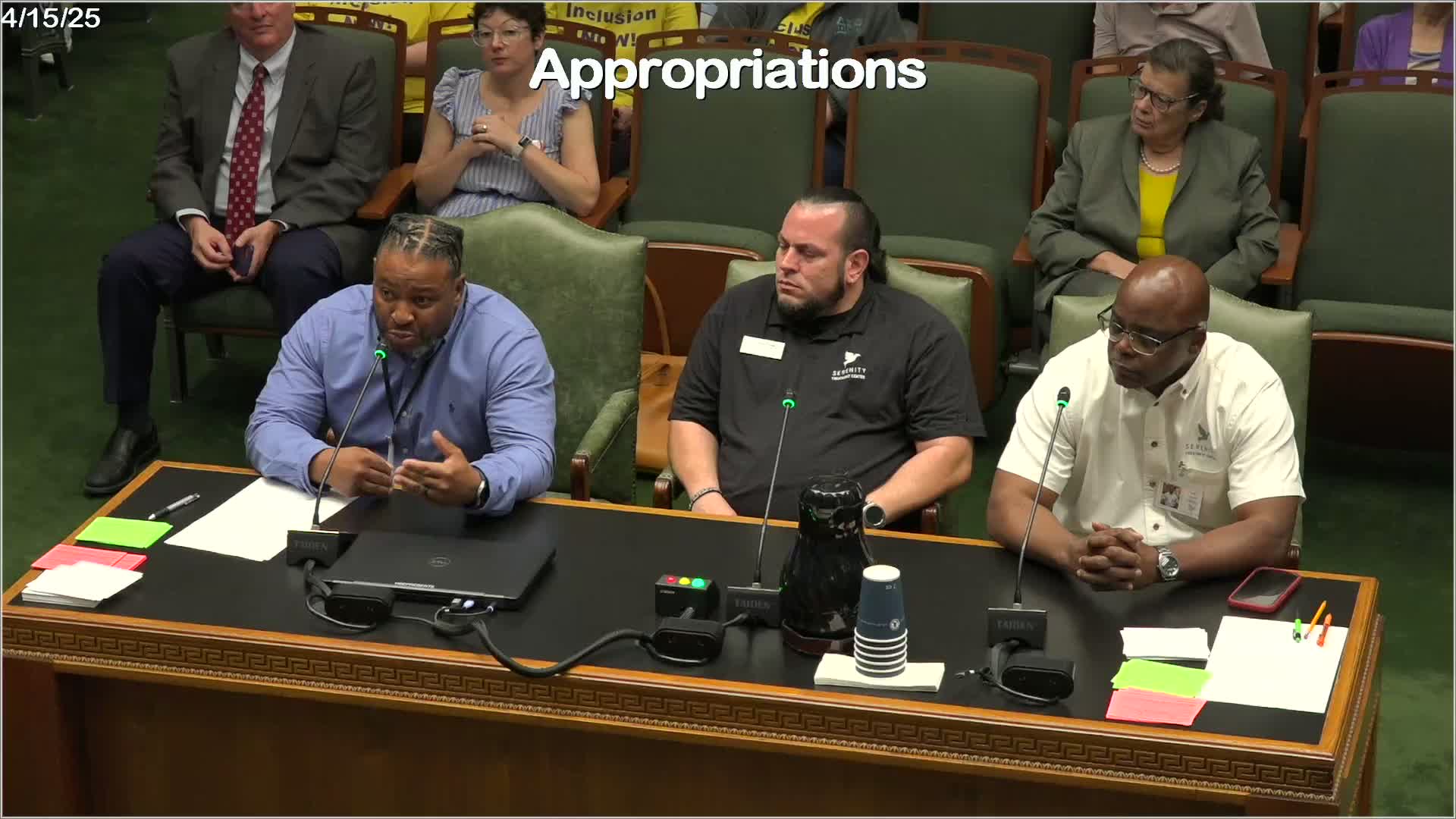
A coalition of disability service providers, employers and people with disabilities told the Appropriations Committee that fully funding Louisiana Rehabilitation Services (LRS) is a cost‑effective step to expand employment supports and draw down additional federal dollars.
The nut graf: witnesses said a one‑time or recurring $11 million SGF investment would allow LRS to serve more people seeking employment support and to hire additional vocational rehabilitation counselors; fully funding LRS, they said, unlocks federal funding and improves long‑term employment outcomes for people with disabilities.
Dee Budgwater, president and CEO of Lighthouse Louisiana, described the state’s vendor network and urged full funding so LRS can serve an additional 30,000 people and draw down roughly $35 million in federal funds that currently go unclaimed. "The appropriation that we're asking for is $11,000,000 of state general funds to fully fund Louisiana rehab services," she told the committee.
Jamie Duplichat and other service recipients gave personal testimony on how LRS funded education, work readiness and placements in private firms. Employers who hire LRS clients described the business benefit; one manufacturer said on‑site hires helped productivity and workplace culture and that supported employees have been "hardworking, dependable, and consistent." Several witnesses said the return on investment is high because employment reduces public costs and increases tax revenue.
Ending: The committee heard detailed personal stories and economic rationales in favor of fully funding LRS; no committee appropriation vote was recorded in the transcript. Advocates requested the $11 million state investment so the program can expand services and draw down additional federal funds.