Get Full Government Meeting Transcripts, Videos, & Alerts Forever!
Get email alerts on the Higher Education Budget topic
No spam. Unsubscribe anytime.
Higher-education budget review: Regents, system presidents praise gains and warn federal grant cuts, hiring freeze could harm campuses
Summary
Balair LeBlanc of the House Fiscal Division presented the FY‑26 executive higher‑education budget and Board of Regents Commissioner Kim Hunter Reed told lawmakers she supports continued state investment but warned that a state hiring freeze and uncertain federal grant funding could undercut campus operations and research programs.
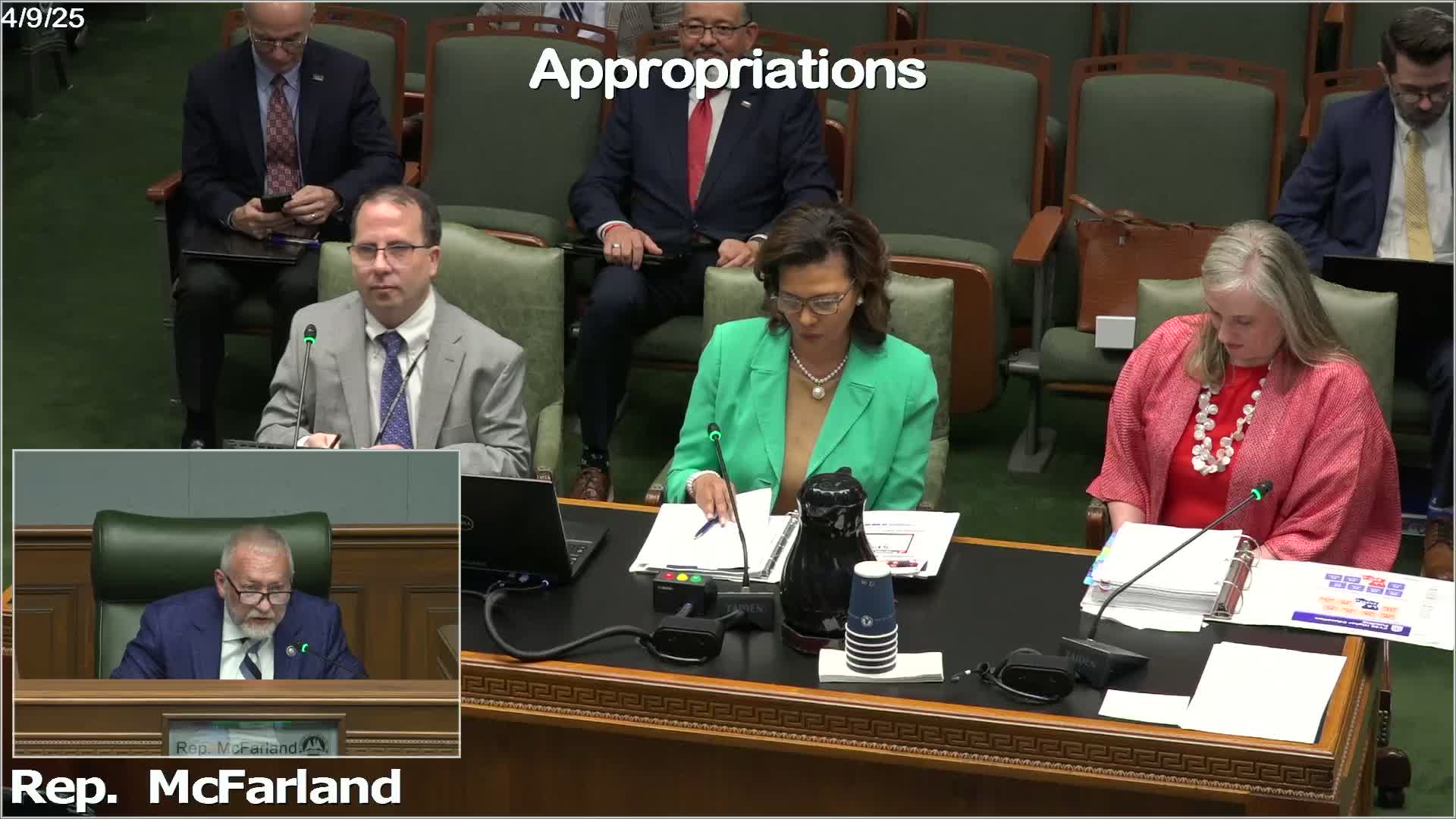
Balair LeBlanc of the House Fiscal Division opened the committee’s higher education briefing with the executive budget numbers and a system overview. “Balair LeBlanc with the House Fiscal Division, and I will be presenting the fiscal year 26 executive budget review for higher education,” he told the panel, laying out means of finance and the Regents formula allocation.
The Board of Regents’ commissioner, Kim Hunter Reed, told lawmakers Louisiana’s institutions educate “over 200,000 students across our colleges and universities in Louisiana” and that the sector now faces two immediate threats: a state hiring freeze and uncertainty in federal research funding. “We are currently at 51% educational attainment, trending positive,” Reed said, and urged continued state support for deferred maintenance, financial aid and workforce training initiatives such as the MJ Foster program.
Why it matters: the higher-education budget depends heavily on tuition and other self‑generated revenue as well as the state formula. System leaders said the sector has made gains but is still underfunded per student compared with regional peers; they warned cuts or hiring limits would slow recovery and affect revenue generation, student access and research capacity.
Budget and formula details LeBlanc’s slides showed the FY‑26 recommendation of roughly $3.04 billion for higher education by all means of finance, with the state general fund and self‑generated revenue (largely tuition and fees) making up the largest shares. He and later presenters emphasized that Regents’ outcomes‑based formula assigns base funding plus a metrics‑based outcomes component; FY‑26 uses a 65% base/35% outcomes split.
Commissioner Reed and Regents staff outlined recurring and one‑time requests the Board approved last fall, and asked the committee to prioritize deferred maintenance, performance funding and financial aid increases — including higher funding for the MJ Foster workforce program. Reed cited a Regents study of MJ Foster that found participants who could be matched to earnings records increased earnings by roughly $20,000 on average after completing training.
System presidents: enrollment, research and business models University presidents who testified described enrollment gains and economic impact on their regions while flagging vulnerabilities.
- LSU President William Tate said system enrollment had reached record highs in several campuses and that LSU research activity had grown to nearly $488 million, but he urged lawmakers to see the sector as a business that must compete for students and research dollars. “Every out‑of‑state student we take … generates net revenue,” Tate said, describing how out‑of‑state tuition helps subsidize in‑state students and institutional mission priorities.
- University of Louisiana System President Rick Gallo highlighted UL’s high share of in‑state students (about 88%) and said 75% of UL students who received TOPS scholarships remain in Louisiana after graduation.
- Southern University System President Dennis Shields noted gains in nursing and agricultural research programs and said recurring state support remains critical after a period of heavy one‑time investments.
Risks flagged by witnesses Several presenters warned that two policy changes at the state and federal level threaten campus operations: - State hiring freeze: Commissioner Reed and system presidents said higher education hiring is in a peak season for adjuncts, faculty searches and student services staff; a freeze could reduce course offerings and slow financial‑aid processing, putting tuition revenue at risk. - Federal grant uncertainty: presenters from LSU, Pennington Biomedical Research Center and other research units reported paused or reduced federal grant awards and changes to overhead allowances. Pennington’s CEO later told the committee a recent NIH policy change on indirect costs cut reimbursements sharply and would reduce Pennington’s budget by $2 million this fiscal year and $5 million next year if not resolved.
Student aid and competition for high school graduates TOPS and GoGrant aid drew sustained questioning. Committee members pressed presenters on why Louisiana continues to lose recent high‑achieving graduates to other states despite TOPS. LOSFA staff explained TOPS covers tuition amounts set in earlier years and that when the full cost of attendance (tuition plus fees and living costs) is compared, TOPS covers a smaller share now than in the past. Regents staff and presidents said rival states often recruit top students with larger packages, which can make TOPS—without additional institutional aid—less competitive.
Commissioner Reed and school leaders asked the committee to consider proposals before the legislature to expand and reshape scholarship categories, as well as additional funding for GoGrant (need‑based aid) and a proposed new “excellence” supplement in TOPS that would carry a recurring price tag if enacted.
What the committee asked for Members pressed presenters on the size and timing of requests, the use of one‑time dollars, and how Regents and systems would respond to a state hiring freeze. Several lawmakers said they supported continuing targeted investments — such as high‑impact deferred maintenance and workforce training — and asked for additional detail on the systems’ hiring needs.
Ending The higher‑education section closed after more than two hours of testimony from the Regents’ commissioner and presidents across LSU, UL, Southern and the community‑college system. Lawmakers said they were grateful for the briefings but urged caution as state revenues and federal grants remain uncertain.
(Reporting in this article combines the House Fiscal Division presentation, remarks by Commissioner Kim Hunter Reed, and prepared testimony and answers from university presidents.)