Get Full Government Meeting Transcripts, Videos, & Alerts Forever!
Get email alerts on the State Police Revenue Shortfall topic
No spam. Unsubscribe anytime.
State Police face multi‑million dollar shortfall after Office of Motor Vehicles collection changes, lawmakers told
Summary
State Police budget will face a projected shortfall — initially estimated at $50.8 million and described as likely higher — tied to under‑collections in OMV reinstatement/fee handling after statutory changes and system downtime. Leaders warned services and personnel could be cut if funds are not restored.
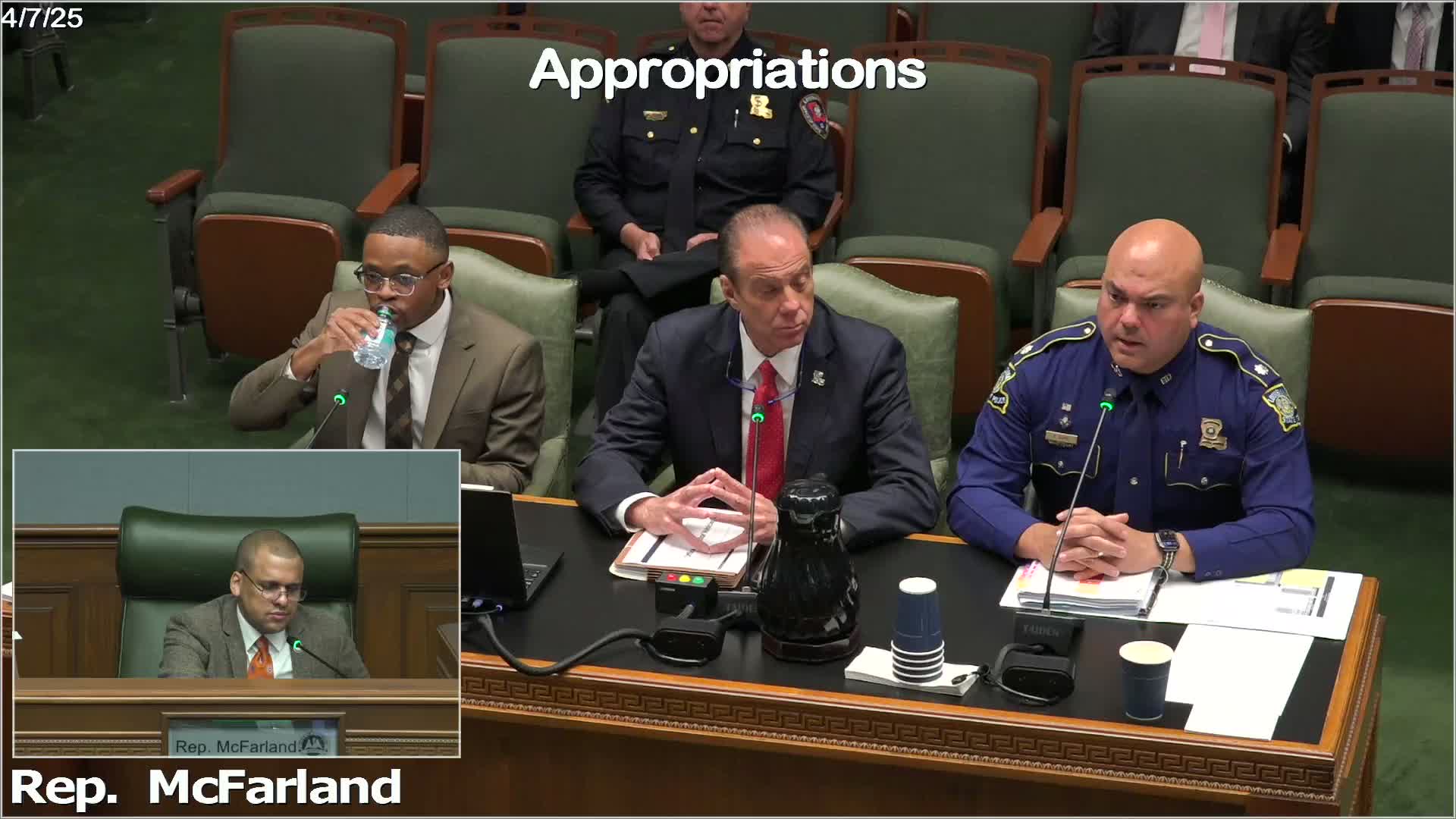
Lieutenant Colonel Robert Burns and other State Police leaders told the House Appropriations Committee that State Police face a large revenue shortfall driven by changes to reinstatement fee collections from the Office of Motor Vehicles (OMV) and by system outages at OMV. The presentation by the House Fiscal Division described a $50,800,000 projected under‑collection that reduces fees and self‑generated revenue and increases reliance on the state general fund; department staff said that number has grown in subsequent calculations.
“Without that funding … all the services that state police provides across the board — traffic, investigations, or support — are all detrimentally impacted,” Burns said, describing the shortfall’s effect on personnel funding, equipment, and major repairs. Burns and Commissioner Adams explained to lawmakers that the under‑collections follow revisions tied to Act 629 language allowing OMV to settle debt referrals to avoid litigation and to reduce amounts; the result reduces OVM collections that flow to State Police as reinstatement fees.
The Fiscal Division’s slides allocated the estimated shortfall across expenditure types, showing that other charges (including wireless network costs, utilities, crime lab contracts) and acquisitions were the most exposed. State Police told the committee that a $24.1 million net decrease across expenditures between FY25 and FY26 is concentrated in those categories; personnel services showed a small net increase tied to pay adjustments.
Lawmakers asked how deep the impacts could be. Burns said the agency would have to “cut personnel, to cut services” if the shortfall is not resolved and noted that State Police responded to recent high‑cost events including hurricanes, a terrorist attack and the Super Bowl. The department pledged to provide a troop‑by‑troop impact estimate to the committee.
Committee members discussed Troop NOLA and overtime: Burns said funding for some overtime details was removed because HB1 dedicated 43 full‑time positions to Troop NOLA and the unit is transitioning from overtime detail to a funded dedicated posture. Lawmakers also asked about crime lab outsourcing, vehicle replacements and overtime (in FY24 overtime totaled about $29.9 million), all line items highlighted as vulnerable to the collections shortfall.
Ending: State Police leadership described the hole as “precarious” and asked for follow‑up materials; appropriators indicated the shortfall may require supplemental requests or budget adjustments.