Get Full Government Meeting Transcripts, Videos, & Alerts Forever!
Get email alerts on the Wastewater Infrastructure topic
No spam. Unsubscribe anytime.
Orange County advances permit and financing steps for Hammond-Layswater plant upgrade as public comments are answered
Summary
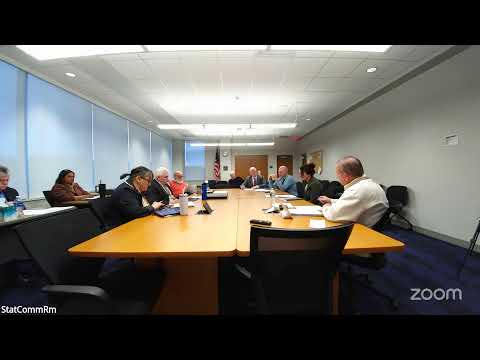
Orange County Sewer District No. 1 advisory committee members received a technical and financing update April 15 on the proposed upgrade of the Hammond‑Layswater wastewater treatment plant, including recent submissions to regulators, outstanding site surveys and a plan to seek state and federal grants and low‑cost loans.
Orange County Sewer District No. 1 advisory committee members received a technical and financing update April 15 on the proposed upgrade of the Hammond‑Layswater wastewater treatment plant, including recent submissions to regulators, outstanding site surveys and a plan to seek state and federal grants and low‑cost loans.
The committee heard that Delaware Engineering submitted key permit materials on March 21 and is preparing combined Clean Water State Revolving Fund and Bipartisan Infrastructure Law applications due at the end of May. County staff also circulated draft written responses to public comments made at a March 24 County Law 5‑a hearing and said a legislative resolution finding the project to be in the public interest will be brought forward in May before a separate Office of the State Comptroller (85‑a) review.
Why it matters: the project budget figure has been updated in recent materials from about $156 million (the number on an older intended use plan) to roughly $185 million to reflect inflation and other changes. Committee members and commenters repeatedly raised the potential cost impact on typical households — estimates presented at the hearing ranged from roughly $500 to $1,000 per household per year in early operation — and asked how commercial uses and out‑of‑district connections would be charged.
Mary Beth Bianconi, partner at Delaware Engineering, summarized recent technical and permitting work. “We submitted the SPDES application form as well as the basis of design report, the preliminary outfall design, the DEC jurisdictional determination information, [and] a notice of anticipated noncompliance and a supplemental climate risk form, all back on March 21,” she told the committee. She said those materials are now with the New York State Department of Environmental Conservation and staff will ask for a technical review meeting to walk through the permit.
On technical tasks, consultants reported the site survey is complete, an asbestos and lead survey contractor (selected via RFQ) had indicated a mid‑April mobilization date but had not yet given a firm start date, and a geotechnical RFP (including buoyancy mitigation and shoring design) was issued the day of the meeting with responses expected in about two weeks. The design workshop on March 19 reviewed upgrades to 3‑D filter building improvements, sludge handling and disposal, and the proposed sequencing batch reactor (SBR) layout; coordination with utilities and access was flagged as critical.
Access and construction logistics were a key discussion point. Staff and consultants said the planned expansion will effectively cut off rear access to parts of the existing plant, so the county is working with the state Department of Transportation on acquiring either an easement or other permission for a new entrance off Route 17 to move heavy equipment and eliminate truck traffic on River Road. Consultants said DOT has in some cases granted long‑term easements or leases for excess right‑of‑way; the county’s real property and DPW staff will meet with DOT to negotiate terms.
On regulatory status, the committee was told that a variance application (NOIA 2) tied to the current permit (the plant’s 6 MGD permit) was acknowledged by DEC after a February 3 filing, but the DEC process is expected to be iterative. The existing plant permit currently is administratively extended; renewal materials requested by DEC were submitted March 17. Committee members noted that permitting and DEC review will affect schedule and design details, particularly phosphorus limits that influence treatment choices.
Financing and next steps: county staff reiterated that the principal near‑term deadlines are a combined SRF/BIL application due at the end of May and concurrent state grant programs that often solicit applications in summer. Staff identified two state programs they intend to pursue in addition to SRF/BIL: a Water Infrastructure Improvement Act (state grant program providing roughly 25% of net construction costs, with awards commonly in $5 million increments up to $25 million) and the Water Quality Improvement Program (DEC run, up to $10 million for construction). The county also submitted a hardship application to the Environmental Facilities Corporation (EFC) to document that a large share of district users would be economically disadvantaged by the project; staff reported the preliminary hardship analysis shows about 56% of users would be negatively impacted by the projected costs.
Committee members described the financing sequence the county will follow: (1) the legislature is expected to adopt a finding at its May meeting that the expansion is in the public interest; (2) the county will prepare and submit an 85‑a application for Office of the State Comptroller review (the OSC process is documentary and iterative); and (3) SRF/BIL and grant applications will proceed. Consultants estimated OSC review and follow‑up would likely push earliest final approval into the autumn (September–October) given the typical back‑and‑forth.
Public comments and county responses: staff reviewed a package of written responses to comments received at the March 24 County Law 5‑a hearing and in timely emails. The packet addresses recurring topics raised by residents and municipal representatives: why the cost figure changed (an update for inflation and project scope), how operation and maintenance (O&M) costs are shown for the first year only in the county law filing, which municipalities are inside the sewer district and which have separate intermunicipal agreements for capacity, how sewer units are calculated and charged (single‑family equivalent unit is the baseline; commercial and industrial users are assigned multiple units based on measured or estimated use), and concerns about South Blooming Grove’s assignment of excess capacity to private developers (staff noted the village’s legal right to assign excess capacity and characterized the question as a matter between the village and the private party). The committee voted no formal action on those responses; staff said they will attach the sewer‑unit schedule to the responses to clarify billing methodology.
What was not decided: the advisory committee did not vote to approve the project or financing at the meeting. A proposed legislative resolution titled (in staff materials) “Approving proposed increase in improvements to the facility at Orange County Sewer District Number 1, pursuant to County Law §268” was described as the next formal step; staff said that resolution and a separate authorization to submit financing applications will be routed through relevant legislature committees in May and then to the OSC 85‑a review.
The meeting closed after routine business; the committee agreed to continue preparing permitting and financing materials and to pursue the identified state and federal funding tracks.
Ending: County staff and consultants left the committee with a near‑term checklist — firm dates from the asbestos contractor, geotechnical proposals in about two weeks, the end‑of‑May SRF/BIL application deadline, and the May legislative package — and said they would circulate the finalized hearing response packet and the sewer unit schedule before the next meeting.