Get Full Government Meeting Transcripts, Videos, & Alerts Forever!
Get email alerts on the Composting Organic Waste topic
No spam. Unsubscribe anytime.
Composting facility presentation: Rockland Soil Ends outlines odor controls, water management and market plans
Summary
Rockland Soil Ends presented plans for an 18‑acre compost facility on Walmart/Balm Hart Road, describing windrow methods, a multi‑stage settling pond and a bagging/blending operation; staff said Ohio EPA permit standards and local ordinance apply.
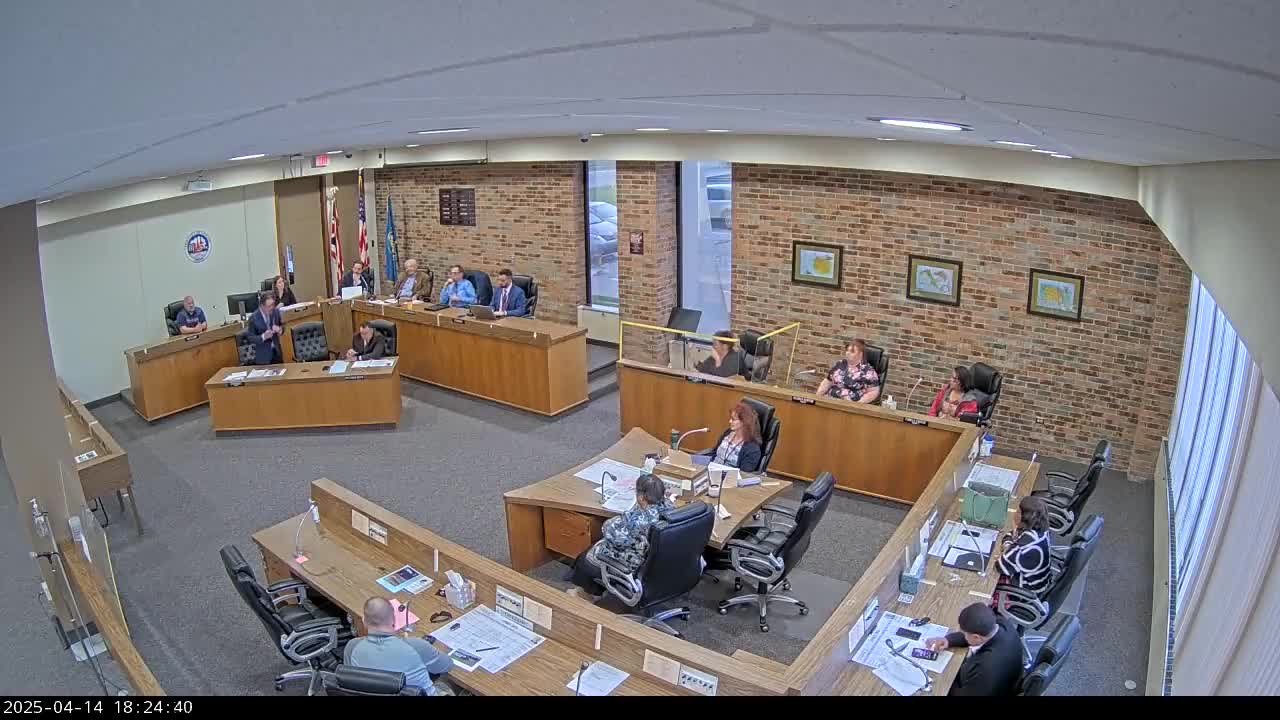
Representatives of a proposed composting operation, Rockland Soil Ends, presented an informational update to Lorain City Council’s Buildings & Lands subcommittee on June 11 about plans for an organic‑waste processing facility on Walmart/Balm Hart Road.
The presenter described a windrow composting process that mixes food waste, manures and green waste, uses mechanical turners and maintains regulated temperatures to control pathogens and odors. He emphasized site design features intended to limit off‑site impacts, including a paved pad and a three‑stage settling pond to capture and treat runoff from the active compost area; staff and the presenter said proper water management is critical for odor control and regulatory compliance.
Kate Golden of the City of Lorain Engineering Department told the committee the city adopted a composting standard in 2017 (codified ordinance chapter cited by staff) that requires commercial compost facilities to hold the appropriate state licensure and meet surface‑water and nuisance protections. The presenter said the company has applied for Ohio EPA permitting and has designed a surface‑water handling system that routes runoff from the active processing area to the settling facility.
The plan includes an on‑site blending and bagging line (presenter identified Agrinomics as the equipment supplier) to produce retail potting mixes and private‑label bagged product; the presenter said automated bagging and robotic palletizing are part of the buildout and that the operation expects modest employment in the first year (the presenter estimated roughly a dozen employees as the operation scales up). He also noted co‑location interest from another recycling/business partner on the site.
Council members asked about vector control, complaint response and staff/owner responsibilities. The presenter said the operation will be managed to limit vectors (flies, rodents and birds) by controlling inputs, maintaining temperature profiles in the windrows, working under cover where practicable and responding to complaints directly. Kate Golden reiterated that the state licensure and Ohio EPA permitting are primary enforcement tools; if a facility loses permit authorization, it would not be allowed to operate in the city.
No formal committee action was taken; the presentation was informational. Council members and several audience speakers expressed cautious support while asking staff to continue monitoring permitting, odor‑control plans and water‑management measures.
What this means: Rockland Soil Ends plans a regulated compost facility with on‑site controls and a downstream bagging/blending business; the city’s existing ordinance and state Ohio EPA permitting will govern allowed operations and enforcement.