Get Full Government Meeting Transcripts, Videos, & Alerts Forever!
Get email alerts on the Urban Agriculture Food Access topic
No spam. Unsubscribe anytime.
Lorain officials outline plan to use urban agriculture, controlled‑environment farms to expand local food access
Summary
City and nonprofit partners described a USDA‑funded planning effort to assess local food systems and recommend zoning, site and market strategies aimed at increasing fresh‑food access and local food production, emphasizing controlled‑environment (greenhouse/vertical) models rather than backyard gardens.
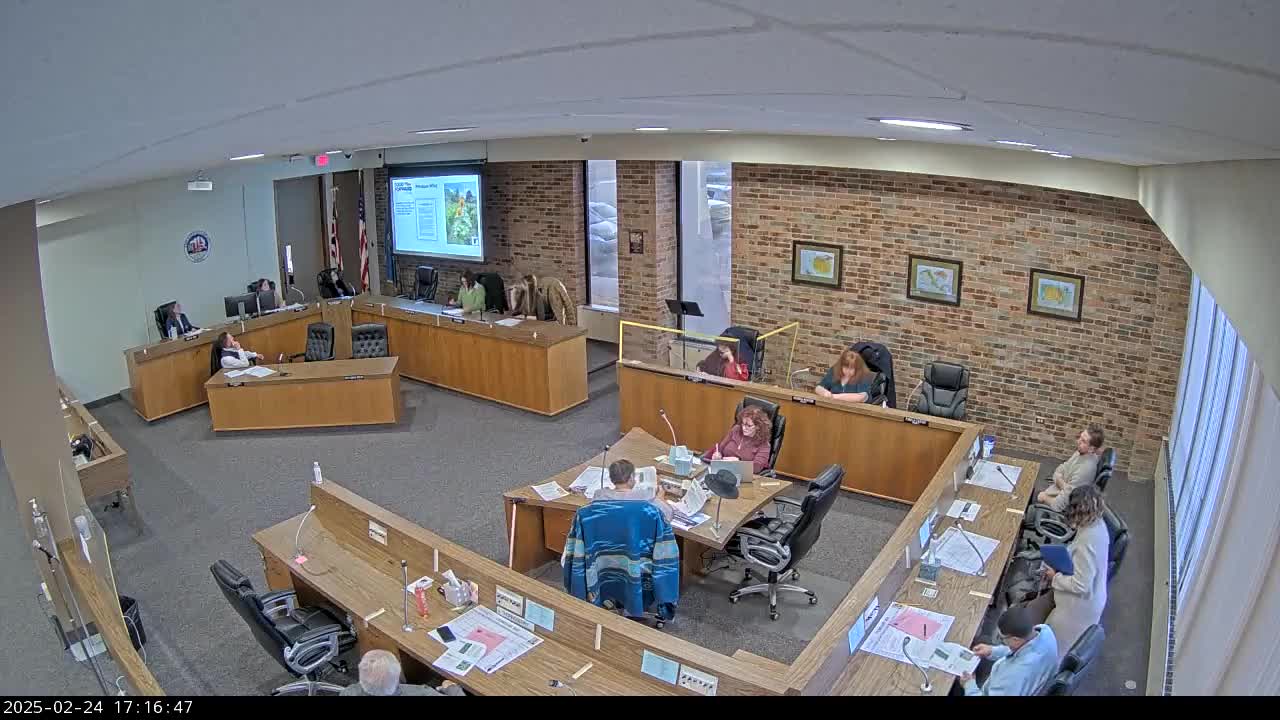
Pamela Carter, chair of the Federal Programs Committee, opened a presentation on a partnership called Food Forward Lorain that city staff and nonprofit partners described as a coordinated, multi‑partner plan to expand local food access and local food production.
The partnership — led by the city, Lorain County Public Health and Second Harvest Food Bank of North Central Ohio — is using a 2023 USDA urban agriculture planning grant “of just over $200,000” to evaluate the local food system, identify zoning and policy barriers, assess sites and recommend implementation steps, city and health‑department staff said. "We work to evaluate the local food system, increase coordination, identify solutions to problems, help with implementation, and, of course, promote positive outcomes," said Catherine Laveridge, population health strategist at Lorain County Public Health.
The discussion matters locally because presenters framed urban agriculture as both a food‑access strategy and a potential economic development tool that could produce jobs and taxable economic activity if implemented at scale. "We see this as an economic driver," said Hannah Correlli, program manager of community and economic development for the City of Lorain. "We're thinking about controlled‑environment agriculture, greenhouses and vertical farming — not just backyard gardens."
City staff described three focus areas emerging from stakeholder research: urban farm and retail expansion (the item highlighted at the meeting), health‑care partnerships and "food as medicine" programming, and technology/transportation networks to improve distribution. Presenters said the project includes two planning consultants: TSW, Inc., which will assess zoning and policy recommendations and produce an implementation framework, and an urban‑ag planning consultant (referred to in the presentation as "Agriculture LLC") that will perform site assessments, market analysis and resource evaluation. The slide deck given to the committee listed a contractual budget of about $145,000 for consultant work, with one contract shown at $62,500 and another at $80,000.
Council members raised repeated operational questions that the consultants will be expected to address: whether the program would permit for‑profit enterprises; how to avoid unintended expansions (for example, people seeking to keep livestock inside city limits); how sites would be chosen; how contamination on vacant lots will be handled; and how produce grown would reach residents. Councilwoman Smazowski said many constituents asked whether the program would "include for‑profit enterprises" and voiced worries about front‑yard plantings, fertilizer runoff, and expansion to animals. Councilwoman Henley and others emphasized volunteer and long‑term maintenance challenges for community garden models.
Julie Chase Marfield, president and CEO of Second Harvest Food Bank of North Central Ohio, said the intention is to grow production that can be sold locally and also distributed through hunger‑relief channels. "From Second Harvest's standpoint, we want to see food in the city of Lorain ... that if someone has SNAP benefits that they can use," Marfield said, adding that some urban farms already sell produce that Second Harvest can distribute to partners.
Residents and community partners who spoke during public comment largely supported the plan while reiterating concerns about scale, maintenance and nuisance issues. Dan Arredondo, a local produce industry professional and resident, urged the city to pursue larger, controlled‑environment projects in industrial or vacant parcels and highlighted partnerships with regional distributors and educational institutions.
Presenters and council members agreed on one practical next step: use the consultant work and public engagement to produce zoning recommendations, a site map of candidate locations, and an implementation playbook. Correlli said zoning changes would go to the planning commission and then to council for any code amendments. "They're going to provide zoning code recommendations that will have to go before planning commission and then have to be seen, and approved by council," she said.
The presentation closed with committee members and the public invited to future engagement sessions with the consultants; no formal vote or policy change occurred at this meeting.
For now, the project remains in planning and public‑engagement phases; presenters said final policy proposals, any site selections, and precise funding terms will be presented to planning commission and council later in the process.