Get Full Government Meeting Transcripts, Videos, & Alerts Forever!
Get email alerts on the Superfund Program topic
No spam. Unsubscribe anytime.
Senate EPW Hearing Flags Delays, Bureaucracy and Funding Gaps in Superfund Cleanups; Committee Reports Three EPA Nominees
Summary
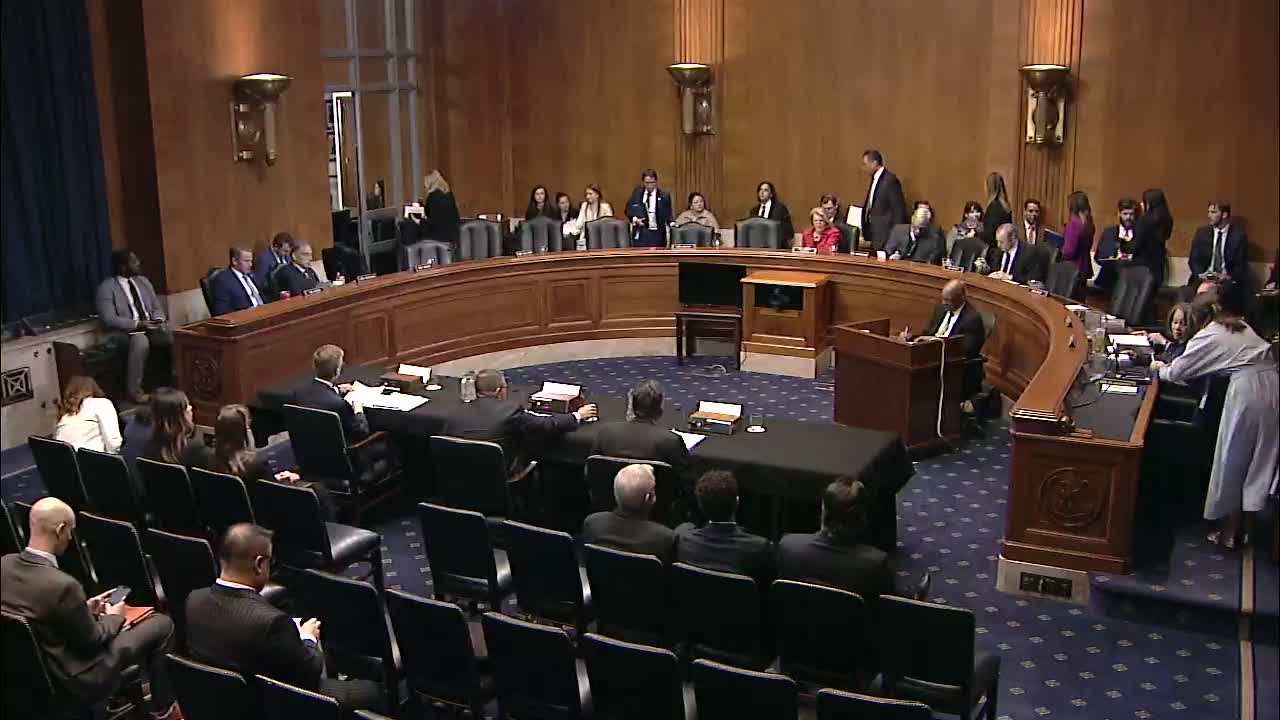
The Senate Environment and Public Works Committee convened a business meeting and hearing that combined votes on three presidential nominees with a substantive panel on the EPA Superfund program, where lawmakers and outside experts said the program often prioritizes process over timely cleanup.
The Senate Environment and Public Works Committee convened a business meeting and hearing that combined votes on three presidential nominees with a substantive panel on the EPA Superfund program, where lawmakers and outside experts said the program often prioritizes process over timely cleanup.
Senator Shelley Moore Capito, chair of the Senate Environment and Public Works Committee, told the panel that Superfund cleanups “directly improve public health, and can revitalize struggling communities,” but said the program’s management has produced lengthy timelines that leave contaminated sites listed but not remediated for years.
The hearing drew testimony from three witnesses: Robert Fox, senior partner at Manko, Gold, Katcher & Fox; Steven Riddell, president of Industrial Development Advantage; and Jay Alfredo Gomez, director for Natural Resources and Environment at the U.S. Government Accountability Office (GAO). Each described causes of delay and possible reforms.
“First, incentivizing the prompt voluntary cleanup of the nation’s most contaminated sites and second, ensuring that polluters pay for those cleanups,” Robert Fox said, arguing that “the Superfund program has strayed from meeting those goals.” Fox recommended stronger use of statutory tools—such as mixed funding authorities and the orphan-share policy—and deadlines for agency review of private parties’ reports.
Steven Riddell described private-sector approaches that he said accelerate cleanup and redevelopment. “We can take a site from a streamlined but still comprehensive remedial investigation straight to remedial action,” Riddell said, recommending earlier ‘‘end-state’’ planning (what he called the cleanup’s “last chapter”), greater use of state-led voluntary programs, liability-assumption deals and environmental insurance to encourage redevelopment.
Jay Alfredo Gomez summarized GAO findings showing long-term trends in program resources and site complexity. He said appropriations for the Superfund program have generally declined since fiscal 1999 and that staffing levels have fallen, adding that certain site types—especially contaminated sediments and mining sites—are inherently more complex and costly to remediate. “There is no doubt” that extreme weather events such as flooding, storm surge and wildfire can disperse contamination and complicate remedies, Gomez said, citing GAO field work.
Lawmakers of both parties pressed witnesses on remedies. Ranking Member Sheldon Whitehouse said he supports speeding cleanups but cautioned: “Speed must not come at the cost of efficacy.” Several senators described sites in their states that have been on the National Priorities List for decades and asked whether EPA should select and begin remedies earlier, with cost recovery pursued afterward.
Witnesses and senators converged on several recurring prescriptions: give private parties clearer incentives to perform cleanups (for example, through mixed funding and orphan-share settlements), set enforceable timeframes for agency reviews, empower states and voluntary cleanup programs where appropriate, streamline certain procedural requirements that contribute little to protection, and preserve or restore regional staffing and scientific capacity so remedies can be executed.
Panelists also raised implementation barriers. Fox and Riddell said EPA oversight costs and indirect cost charges assessed on private parties can be large disincentives; Riddell called for clearer guidance on lien negotiations and more frequent, less burdensome delisting reviews. Gomez warned that while additional appropriations from the Infrastructure Investment and Jobs Act and other sources have started remedial actions at some sites, long-term capacity and the complexity of some sites (for example, sediment and mining sites) remain central challenges.
Votes at a glance: The committee also held roll-call business votes before the hearing and favorably reported three presidential nominees to the floor: Sean Donahue, Jessica (Jess) Kramer and Brian Nesbick. Each nomination was moved, seconded and reported favorably by the committee; the committee clerk announced the yays and nays and the clerk reported the nominees “favorably reported.” The transcript of the meeting records the votes and final favorable reports but does not give a complete, consolidated numerical tally for each nominee in the excerpt provided.
What this means: Witnesses told senators that many tools to speed Superfund cleanups already exist in statute and policy, but are underused or implemented in ways that lengthen timelines and raise costs. GAO testimony pointed to declining appropriations and staff as contributing constraints; private-sector witnesses argued that procedural burdens—sometimes described as a ‘‘Superfund premium’’—inflate cost and discourage voluntary cleanups.
What’s next: Senators said they will follow up with questions for the record and consider legislative and oversight options. Committee members and witnesses identified areas for near-term reform that Congress and EPA could pursue, including improving agency review timelines, expanding appropriate use of mixed funding and orphan-share compromises, clarifying oversight cost practices, and bolstering regional capacity and climate-resilience planning for vulnerable sites.
The hearing record will include witness statements and answers to questions for the record; senators may use that material to shape oversight requests or legislation aimed at shortening the timelines and transaction costs that, in witnesses’ testimony, now often defer remedial action.