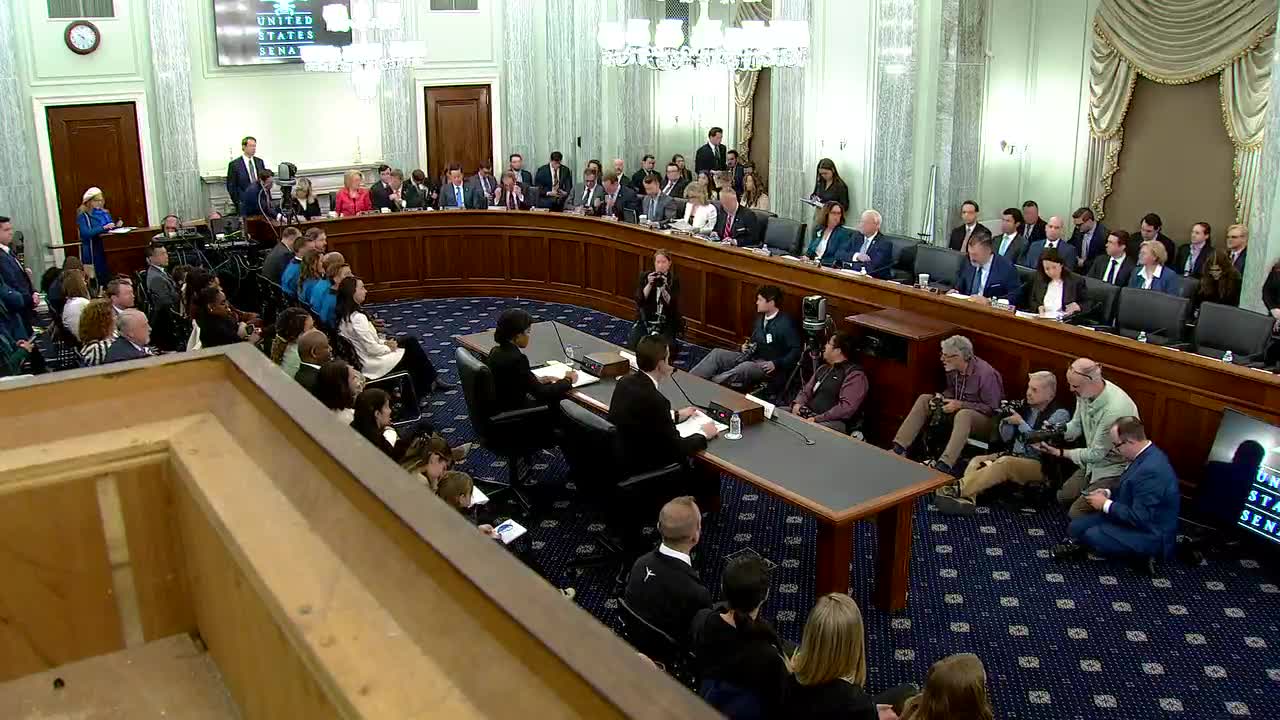
Senate Commerce Committee favorably reports Ariel Roth to lead NTIA after 15–13 vote
Get AI-powered insights, summaries, and transcripts
SubscribeSummary
The Senate Committee on Commerce, Science and Transportation on April 10 voted 15–13 to favorably report the nomination of Ariel Roth to be assistant secretary of commerce for communications and information and head of the National Telecommunications and Information Administration.
The Senate Committee on Commerce, Science, and Transportation on April 10 voted 15–13 to favorably report the nomination of Ariel Roth to be assistant secretary of commerce for communications and information and head of the National Telecommunications and Information Administration.
Chairman Ted Cruz (R-Tex.) opened the markup with praise for Roth, saying, “Ariel is an exceptional candidate for this position, and if I may say so, an exceptional person,” and noting her experience on telecommunications policy in both the House and Senate. Cruz also acknowledged a personal milestone for Roth, announcing that she had given birth to a daughter earlier that morning.
The markup produced pointed questions and criticism from Democrats led by Ranking Member Maria Cantwell (D-Wash.). Cantwell said she was not satisfied by Roth’s answers on several matters, including evidence‑based spectrum policy and commitments to previously authorized federal broadband funding. “At this point in time, I cannot support Ms. Roth’s nomination to be the director of NTIA,” Cantwell told the committee during debate.
Why it matters: NTIA coordinates federal spectrum policy, represents U.S. positions at international radio conferences and implements major broadband programs. Senators on both sides of the aisle pressed Roth’s fitness to manage those responsibilities at a time when the agency faces decisions about mid‑band spectrum, upcoming international negotiations and the implementation of large federal broadband grants.
Key points from the markup - Chairman praise and biography: Cruz walked through Roth’s prior roles on Capitol Hill and at the Federal Communications Commission, saying she understands telecommunications law and policy and “will pursue a win‑win solution on spectrum that addresses both commercial and national security concerns.” - Ranking member opposition: Cantwell said Roth did not commit to waiting for or honoring evidence‑based studies and stated agreements when making spectrum or grant decisions, and raised questions about conflicts of interest. She announced she could not support the nomination. - Motion and vote: Senator Roger Wicker (R‑Miss.) moved to report the nomination favorably. The committee agreed by roll call; the committee recorded 15 yes votes and 13 no votes and ordered the nomination favorably reported to the full Senate.
Roll call and outcome: The motion to report the nomination favorably was moved by Senator Roger Wicker and seconded (second not specified on the record). The committee recorded 15 yes votes and 13 no votes; the motion carried and the nomination was ordered to be favorably reported.
What the committee did not decide: The markup forwarded the nomination to the full Senate; there was no final confirmation vote on the Senate floor during the committee session. Committee members said they plan to pursue additional questions for the record.
Where to read the record: The committee held the markup and then proceeded to a full hearing on other nominations. Senators were given until April 11 to submit questions for the record.
Members and speakers: The hearing record includes statements and roll‑call entries from multiple senators and the nominee; the committee transcript lists the full roll call and debate on the motion to report.
Looking ahead: The nomination advances to the full Senate, where floor consideration and a confirmation vote could follow after members review the record and responses to questions for the record.