Get email alerts on the Cyber Operations Modernization topic
No spam. Unsubscribe anytime.
Cyber Command details Cybercom 2.0, AI pilots and workforce shortfalls to Senate panel
Summary
Lieutenant General Hartman told the Senate Armed Services subcommittee that Cyber Command is pushing Cybercom 2.0, accelerating AI pilots and seeking hiring relief as it integrates new authorities and works with partners to defend critical infrastructure.
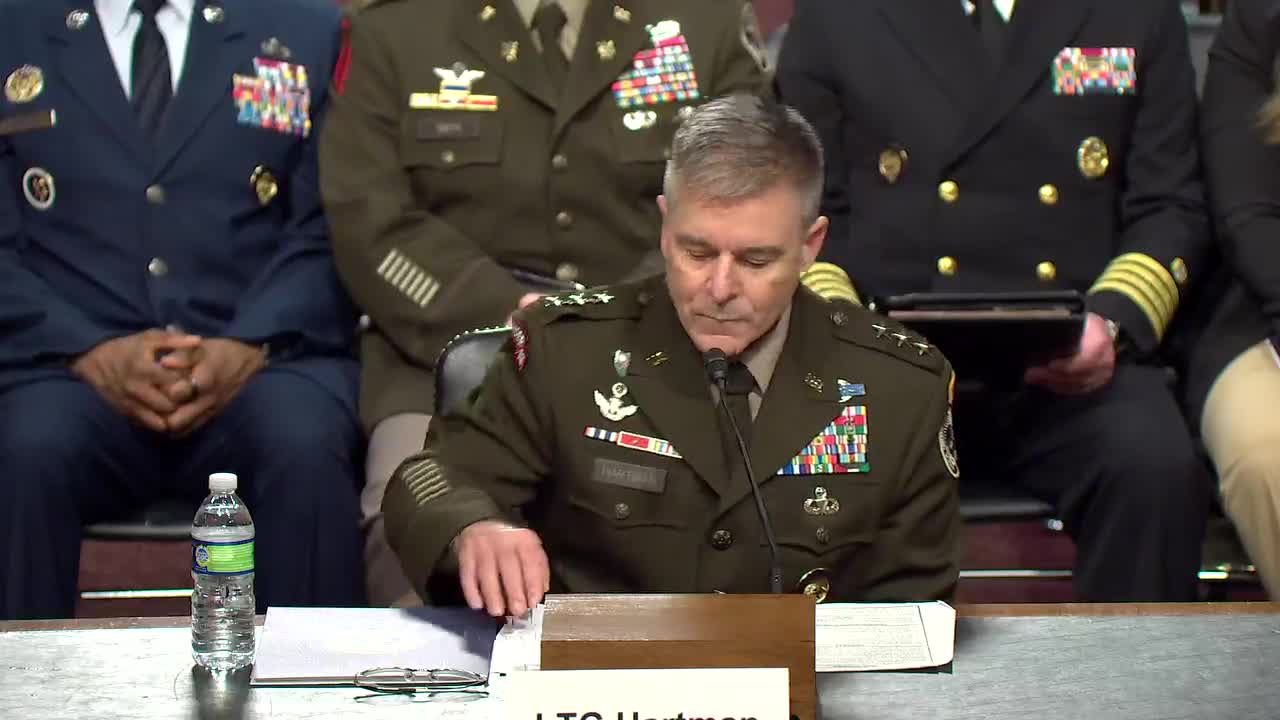
Lieutenant General Hartman, representing U.S. Cyber Command, told the Senate Armed Services Cybersecurity Subcommittee that Cyber Command is executing a multi‑front modernization effort that centers on Cybercom 2.0, accelerated artificial intelligence pilots and an expanded talent pipeline.
Hartman said Cyber Commands mission is "straightforward. We defend the nation from cyber threats." He described a recently delivered Cybercom 2.0 package of recommendations that focuses on talent management, advanced training and rapid capability insertion. "We've delivered it to the department. The department is going through a very reasonable process, and we're pending the results of that feedback from the department, chairman," he said.
Why it matters: Cyber Command said it needs to accelerate acquisition and training to keep pace with state actors and rapidly evolving commercial AI tools. The command told senators it has new ‘‘service‑like’’ authorities and acquisition control that it says are already helping it field capabilities faster, but that implementation depends on departmental decisions and congressional support for resourcing and hiring flexibility.
Hartman defended the dual‑hat arrangement with the National Security Agency and credited NSPM‑13 with enabling faster, authorized offensive cyber operations. "NSPM 13 is a repeatable, sustainable, agile process ... and it has increased our ability to execute cyber operations tenfold," he said.
On artificial intelligence, Hartman said Cyber Command moved staff into operational units to run 90‑day pilots and has integrated large language models into tools used for both defense and offensive operations. "We have integrated large language models into our hunt for kits. We have integrated large language models into our offensive capabilities," he said. He also said the command is partnering with DARPA and transitioning AI capabilities to the force.
Hartman described workforce constraints as a central hurdle. He said recent authorities such as the Cyber Excepted Service (CES) reduced civilian hiring lag times by about 45% and that new authorizations have allowed the command to recruit high‑end talent, but he added that an active hiring freeze has slowed onboarding. "We're only a little over 50% man with our civilian force," he told senators, and said Cyber Command has sought department exemptions where possible.
On defending U.S. critical infrastructure, Hartman cited work in Guam and a memorandum of understanding with the U.S. Coast Guard as tangible examples of interagency cooperation. He said Cyber Command executed six cooperative research and development agreements in Guam over six months and assessed a roughly 25% reduction in threat for participating organizations.
On acquisition and integration, Hartman said Cyber Command has consolidated six JCWA (Joint Cyberwarfighting Architecture) programs under a program executive office and is using its expanded budget and acquisition authorities to field agile capabilities to geographic combatant commanders.
Senators used the hearing to press for specifics on policy obstacles and resourcing needs. Chairman Rounds asked how Cybercom 2.0 will be implemented; Hartman said the command compressed a planned six‑month implementation timeline to 45 days to generate recommendations and is awaiting departmental feedback. Senator Rosen and others questioned the impact of hiring freezes and continuing resolutions on the commands ability to retain and recruit specialized personnel.
The command requested continued congressional support for authorities and appropriations that enable hiring, training, and rapid fielding of AI and other emerging capabilities. Hartman closed by saying the new authorities are "allowing us to really increase our ability to get after all the things that we've talked about here," and asked the committee for sustained partnership to carry implementation forward.
Ending: The subcommittee asked for additional briefings and said members may seek more detailed or classified follow‑ups; Hartman offered to provide more information in closed sessions where appropriate.
AI generated
The text on this page is AI generated. Summaries, highlights, analysis, and video transcripts are all produced from the original source material.
AI can make mistakes, so if you spot one, and we will fix it for everyone.
Note: the source content is unaltered by us. Any content source we link to, be it a video, an audio recording, or a document, is presented exactly as its publisher released it. That publisher is usually a government body, sometimes an individual official or another organisation.