Get Full Government Meeting Transcripts, Videos, & Alerts Forever!
Get email alerts on the Public Transit topic
No spam. Unsubscribe anytime.
Columbia County committee approves resolution to pursue $200,000 Chatham–Hudson pilot transit route
Summary
The Columbia County Transportation Committee voted to develop a resolution to accept state funding and launch a two‑day pilot bus route between Chatham and Hudson, pending final state budget approval and DOT reimbursement rules.
The Columbia County Transportation Committee voted to develop a resolution to accept state funding and prepare to launch a pilot bus route between Chatham and Hudson, the committee heard at a March discussion on the Chatham–Hudson route.
Michael Shamidas, chair of the Transportation Committee, said the county’s legislators had “secured, $200,000 in funding to establish this new route between Chatham and Hudson,” and that the money is structured as a reimbursement through the state Department of Transportation.
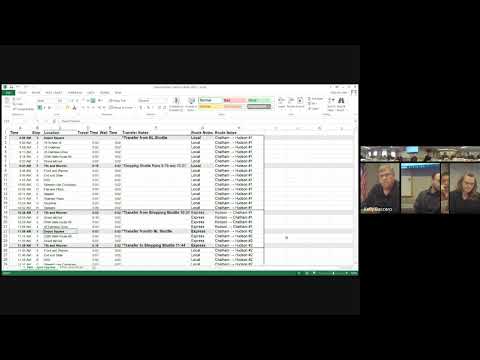
The pilot would run two days a week during a mid‑day window (roughly 9 a.m. to 2 p.m.) and follow a looped schedule that begins at Depot Square in Chatham, serves shopping and service points on Warren Street and in Ghent, continues to Hudson stops including DSS and Walmart, then returns to Chatham. The committee and vendors described the service as a short loop repeated until early afternoon so riders could make mid‑day trips and return the same day.
Why it matters: Committee members stressed the route targets seniors, Department of Social Services clients and other rural residents with limited transit options. Officials said the pilot could reduce county costs tied to individual transportation trips if it allows more efficient group or shuttle trips to DSS and other services.
Committee discussion and logistics: The committee reported a 278‑response resident survey; about 40 respondents said they would ride once a month if service ran from 9 a.m. to 2 p.m. Members described the state funding as flexible — DOT told them the reimbursement could cover operating expenses, some capital costs, printed materials and a portion of vehicle costs — but officials said DOT rules left open whether an extension to New Lebanon (and small vehicles operated by the Health Care Consortium) would qualify.
Claire Purdy, director of the Health Care Consortium, and other participants said the consortium is interested in providing connecting service from New Lebanon and Canaan but that DOT regulations could require different vehicle and driver certifications than the consortium currently uses. Mike Johnston of Johnson Transportation said a 9 a.m.–2 p.m. window works for a Chatham–Hudson run but is too tight to add a New Lebanon leg.
Capacity and operations: Committee members noted typical county buses seat about 20–28 passengers and commonly include space for up to four wheelchairs; the committee said a backup bus and driver are available for the two days proposed. The pilot would use flag stops and a three‑quarter‑mile advance deviation option for accessibility. The county also plans brochures, stop signage and an eventual bus‑tracking app to inform riders.
Next steps and contingency: The committee asked staff to draft a resolution to accept the state funds and forward it to the finance committee and then to the full board; members said any launch would be contingent on formal confirmation of the state budget and DOT guidance. The committee voted in favor of moving ahead with that resolution; members said the route could be launched as soon as mid‑April if the budget and approvals align, but the schedule remains contingent on final state budget action.
Votes at a glance: The Transportation Committee held and passed a motion to develop a resolution to accept state funding and prepare to launch the Chatham–Hudson pilot route, contingent on confirmation of funding and applicable DOT requirements. The transcript records the committee vote as “Aye” with no roll‑call names recorded; the motion passed at the committee level.
What remains unresolved: Officials flagged three contingent items: (1) whether DOT will allow the New Lebanon extension or reimbursement of services run by smaller vehicles; (2) final budget approval timing (the committee said the extension is currently in the governor’s draft and legislative budgets but is not final); and (3) whether county or DSS funds would be needed if DOT restrictions prevent non‑DOT vehicles from participating. Committee members asked staff to collect utilization data during the pilot to inform any long‑term county funding decisions.
The committee’s action advances the paperwork and outreach steps (resolutions, signage, brochures, and public notice) needed to stand up the pilot if the state budget and DOT guidance permit.