Get Full Government Meeting Transcripts, Videos, & Alerts Forever!
Get email alerts on the School Technology topic
No spam. Unsubscribe anytime.
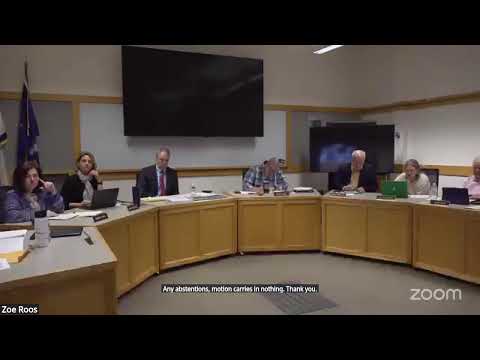
Parents, students and experts press Madison School District for stricter cellphone rules and tighter Chromebook controls
Summary
Public commenters, parents and a Daniel Hand High School student urged the Madison School District Board of Education to adopt stricter cellphone rules, lock down school-issued devices and pilot a weekly screen‑free day. The board asked staff to study options but took no formal vote on a districtwide ban.
Public commenters and a Daniel Hand High School student urged the Madison School District Board of Education to adopt stricter cellphone rules and strengthen security on school‑issued Chromebooks during the meeting, citing safety, distraction and student mental‑health concerns. The board discussed a possible trial day but did not take formal action.
Supporters of stronger rules said phones and unsecured school devices create safety and behavioral problems. “Using phones during an emergency distracts students from following critical safety instructions given by school staff,” resident Jim McDonald said during public comment. “If a phone lights up or dings while a student is in hiding, it could alert an intruder to their location.”
The issue drew multiple speakers and a classroom perspective. Beth Azeveda, a parent of students in Madison, told the board that phones have been used to make threats, to cyberbully and to escalate on‑campus incidents. She urged a districtwide phone‑free policy and said some schools already pair phone rules with locked‑down device controls. “Cell phone use in schools by students can negatively impact school safety in a number of ways,” Azeveda said.
Other parents and community members described technical fixes and policy gaps. Julia Phillips, who said she helped parents with the Securly parent app rollout, called Securly “a good tool” but said the district’s rollout lacked guidance and that students still find ways around single protections. She and others cited the Country School’s use of two protections — GoGuardian and Bark — as an effective example: “having 2 security programs on school issued Chromebooks is the only way to go,” Phillips said.
Shelley Grosso read material from the Social Media Victims Law Center, arguing social platforms were engineered to increase youth engagement and that the resulting harms justify limits: “Big tech knows children are in developmental stage that leaves them particularly vulnerable to the addictive effects of these features, but they target them anyway in pursuit of additional profit,” Grosso said.
A Daniel Hand student, David Jacoby, gave a prepared speech proposing a weekly test: “No WiFi Wednesday.” Jacoby described the near‑constant presence of screens in his day and asked the board to trial one day a week when phones and in‑class screens would be collected and classes run without Chromebooks, slideshows or Promethean boards. “No WiFi Wednesday. Every Wednesday, let's collect the cell phones of all students and faculty,” Jacoby said. He suggested the district pair the day with structured reflection and survey students and staff afterward to measure effects.
Superintendent Dr. Cook acknowledged the board has been asked before to consider cellphone and technology rules and said staff will examine the idea. Cook said administrators and teachers need time to plan lessons that rely less on technology and that a staged trial tied to an existing half‑day or wellness event would be easier for teachers to implement. “We have a lot of questions to work through with staff,” Dr. Cook said, adding the proposal had already been placed on a council agenda for further discussion.
District communications staff also addressed how students reach blocked sites. Kent, the district communications lead, said social platforms are blocked by the district firewall but acknowledged students can reach them using anonymizing sites. “We block those what we know about, but they keep coming up in different ways,” Kent said, describing an ongoing technical challenge.
What happened after the conversation
Board members praised the student’s presentation and told Jacoby they would consider trials or pilot days. Several members suggested pairing any trial with reflection or measurement so the district can assess effects on student engagement and wellbeing. No formal motion or vote to change district policy was taken at the meeting; instead, the board directed staff to discuss options with administrators and report back. Jacoby offered to share his speech and related materials by email.
Why it matters
The discussion brought parents, a clinical psychologist speaking for a parent, a student, and district staff into the same conversation about safety, equity and curriculum. Parents sought both policy changes (phone limits for all students, bans on social platforms for team communications) and technical improvements (additional filtering and multiple monitoring tools on Chromebooks). Staff identified operational and instructional constraints that make a sudden, districtwide removal of screens complicated, and the board opted for further study rather than immediate policy change.
Ending
The board asked staff to explore a limited trial and to return with implementation details. Parents requested district data on what sites students access and how long they spend online; the board said it would seek that information from the technology department. No vote was held on a districtwide cellphone ban at the meeting.