Get Full Government Meeting Transcripts, Videos, & Alerts Forever!
Get email alerts on the School Construction topic
No spam. Unsubscribe anytime.
Board mandates two community outreach sessions before voting on single‑high‑school educational specs
Summary
After months of discussion, the Wallingford Board of Education voted to hold at least two community outreach sessions before it will vote on educational specifications for a proposed single high school. Board members and the superintendent debated timing, consultant roles and site selection during a prolonged discussion.
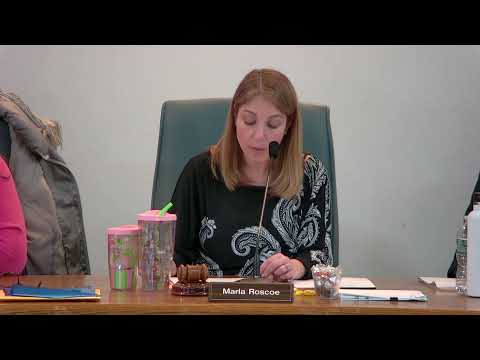
The Wallingford Board of Education on Feb. 24 voted to require at least two community outreach sessions before the board will vote on educational specifications for a proposed single high school.
The motion, made by Board member Versace and seconded from the floor, passed by roll call after several board members said community engagement must precede final action on the education specifications prepared by SLAM Architects and Colliers. The superintendent and staff said the consultants have provided draft documents and offered to support forums; Colliers representative Chuck Warrington was named as a contact but the firm advised additional hours and fees would likely be required if it attends every outreach meeting.
Board discussion spanned the process, the timeline and dependencies that affect site selection and cost estimates. Administrators and consultants cautioned that approving final educational specifications is typically needed to produce a reliable construction cost estimate; superintendent Belizzi explained that the specifications drive building size and therefore the project’s estimated cost and allowable state reimbursement levels. Colliers and SLAM have already gathered input from staff via 19 topical meetings the district ran with department leaders; several board members said they want broader public engagement and suggested a mix of in‑person and virtual sessions, plus outreach to PTOs, Rotary and community organizations.
Board members also discussed whether consultants should facilitate the forums. Some board members argued the consultants’ expertise in community engagement makes their presence desirable and worth paying for; others argued district staff could run sessions using consultant guidance. Versace asked Colliers to provide an exact accounting of hours already used in their contract and any additional cost for further outreach, and the superintendent said staff would obtain that breakdown.
On dates for outreach, the superintendent proposed several Wednesday evenings (March 12, March 26, April 9 and April 23) and suggested a combination of Sheehan and Lyman Hall auditoriums with virtual options. The board passed the motion that outreach sessions must occur before a vote on the ed specs; members said they expect staff to schedule and advertise the sessions and to seek timely consultant participation where possible.
Board members also reiterated that site selection is a related but distinct process: potential property negotiations will be handled in executive session to avoid compromising purchase price and because public disclosure of a prospective site can prompt competing bids. The board agreed to receive an executive‑session update on the sites considered when staff have a briefing to share.
No final decisions about pools, planetariums, or other add‑ons were made at the meeting; board members noted those choices affect the reimbursement rate and overall price and said such tradeoffs will be part of later deliberations after community feedback and site analysis.