Get Full Government Meeting Transcripts, Videos, & Alerts Forever!
Get email alerts on the Arts Education topic
No spam. Unsubscribe anytime.
Wallingford board hears widespread public opposition after plan to reduce middle‑school art staff
Summary
Dozens of parents and students urged the Wallingford Board of Education to keep middle‑school art staffing intact after district officials said one art teacher will retire and not be replaced, leaving three teachers to cover both middle schools. The superintendent said programming will be maintained but class sizes will rise.
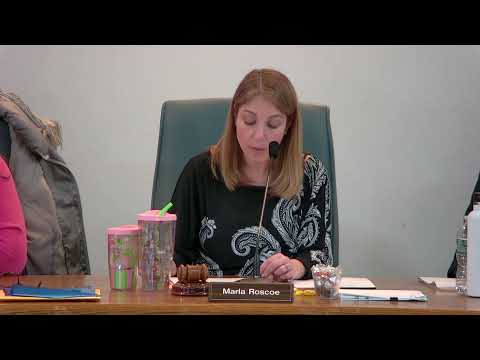
Dozens of parents, middle‑school students and the Wallingford Education Association pressed the Wallingford Board of Education on Feb. 24 to reverse a staffing decision they said will reduce access to art instruction at the district’s two middle schools. The most repeated plea: keep the current number of art teachers in place.
The public comment session began with Anne Veron Letterly, president of the Wallingford Education Association, who described teacher volunteers visiting board meetings to “talk about what's going on in our classes” and highlighted student achievements and extracurricular learning tied to arts instruction. Several students and parents followed with first‑hand accounts of how art courses influenced academic performance, career interests and extracurricular success.
The comments came in response to a central office staffing decision explained that evening by Superintendent Belizzi: one middle‑school art teacher is retiring and the district will not replace that position, so an art teacher will now travel between the two middle schools. “We are not looking to cut any of the programs,” Belizzi told the board, adding that the district plans to maintain current offerings while consolidating the staffed positions.
Belizzi and district administrators said the change is an attrition decision tied to enrollment and budget planning. They told the board there are currently four middle‑school art teachers; after retirement, three will remain and the average class size is expected to rise from about nine students to roughly 13. District staff emphasized that course offerings and program access are not being eliminated and that the schedule change was made with administrators after reviewing student numbers.
Concerned parents and students pressed several follow‑ups at the meeting. Students said combining classes has already affected course content and the variety of instruction available; one student said an AP and a drawing/painting class were combined and “we are losing valuable parts of each curriculum.” Parents asked whether the change would mean some students might never get art if they select band or chorus, and administrators explained how the middle‑school quarter system and encore block affect students who choose year‑long music programs.
Central office staff and building administrators described how the new quarter‑based schedule provides 16 encore opportunities over middle school and said most students who do not take band or chorus are able to access every encore offering. Mrs. Latour, a district staff member who explained the schedule details, said band and chorus are full‑year encore selections that occupy several encore slots and that administrators normally ask music students to prioritize art among their remaining choices.
Board members who spoke acknowledged the public concerns and promised follow‑up: the superintendent said the district will not cut programs, the central office will confirm scheduling impacts with building principals, and the open art position created by the resignation of elementary art teacher Sarah Bambaka will be posted and filled. Board members also encouraged families to stay engaged and asked staff to provide clearer communications about which classes students could expect to find under the revised staffing.
The board did not vote on any change to programming at the meeting. The administration said it will continue to monitor course enrollment and adjust scheduling where feasible, and that the retained three‑teacher staffing model is intended to preserve program breadth despite higher class averages.
Community members left the meeting urging the board to revisit the staffing decision if enrollment or scheduling changes make the consolidation of teacher time a barrier to student participation in art classes.