Get Full Government Meeting Transcripts, Videos, & Alerts Forever!
Get email alerts on the Land Use Solar topic
No spam. Unsubscribe anytime.
Mecklenburg County bans new utility-scale solar in zoning code, allows three pending projects to proceed
Summary
The Board of Supervisors voted to amend Article 20 of the county zoning ordinance to remove utility-scale solar as a permitted use, while allowing three projects with applications already before the county to continue through the process.
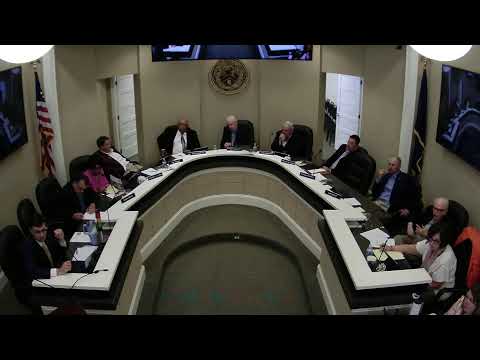
The Mecklenburg County Board of Supervisors voted unanimously April (date in record) to remove utility-scale solar from the county zoning ordinance and to allow three projects that already have applications in process to continue through the county’s review.
The vote implements a resolution the board adopted on March 10 directing the planning commission to review Article 20 — the section of the Mecklenburg County zoning ordinance that addresses solar facilities. The board’s action removes utility-scale solar as a permitted use in any zoning district and provides grandfathering for three projects that have applications in the county’s queue so they may complete the zoning process under the current rules.
Why it matters: the change halts future county approval of new utility-scale solar projects while preserving the entitlement process for projects already underway. Board members and staff repeatedly emphasized that allowing applications already filed to proceed does not guarantee final approval; those projects still must complete public hearings and satisfy zoning criteria.
The planning staff outlined three practical options for the board: adopt the amendment as drafted to ban utility-scale solar; adopt the amendment but grandfather two already-filed projects; or adopt the amendment and grandfather three projects (the latter option was the board’s action). Staff and the planning commission had recommended removing utility-scale solar and recommended grandfathering pending applications to avoid legal fairness claims for applicants who had already spent time and money preparing filings.
In discussion, staff said the grandfathering applies only to projects that have submitted special-exception-permit or 2232 review materials to the county before March 10, 2025. County staff noted the filings are at different stages: some projects have complete SEP submittals while others are more preliminary. The board discussed whether the county’s stated maximum acreage cap for solar (2,325 acres countywide, as drafted in the ordinance) could be reached by the grandfathered projects and whether that would unintentionally block smaller residential or rooftop installations; staff said they would monitor and if necessary the board could amend the ordinance later.
The resolution adopted by the board is lengthy and staff said it was written to document the board’s rationale should the amendment be challenged in litigation. The motion carried on a roll-call style affirmation; supervisors present recorded their votes affirmatively during the roll call.
What’s next: the ordinance language will be entered into the county code as amended. Projects grandfathered by the action will continue through the public-hearing and SEP process; final approval for any of those projects is not automatic and remains subject to the usual public hearings and county zoning requirements.