Get Full Government Meeting Transcripts, Videos, & Alerts Forever!
Get email alerts on the Student Health Safety topic
No spam. Unsubscribe anytime.
Panel OKs school anaphylaxis measure with amendments to require FDA‑approved epinephrine and K–8 applicability
Summary
CS for CS for SB 1514, sponsored by Senator Smith, would establish minimum standards for responding to anaphylactic reactions in public schools, require emergency action plans and training for personnel, and—per an adopted amendment—limit the statute to K–8 schools and require FDA‑approved, weight‑based epinephrine devices.
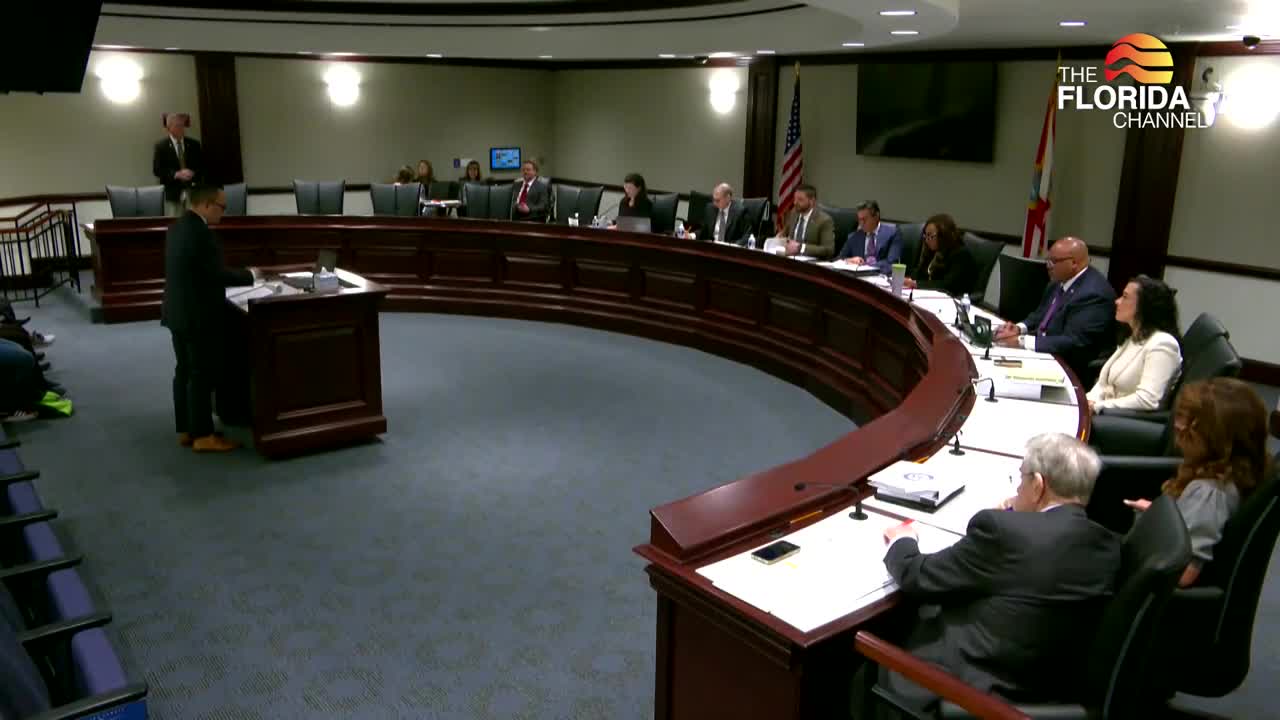
The PreK-12 Appropriations Subcommittee on Tuesday reported favorably on CS for CS for SB 1514, a bill sponsored by Senator Smith that establishes minimum standards for responding to anaphylaxis in public schools and clarifies training and applicability rules.
Senator Smith told the committee anaphylaxis is a “severe life-threatening allergic reaction” and that prompt use of an epinephrine auto‑injector can be critical. She cited Department of Education figures reported in the staff analysis that roughly 76,000 students in Florida have life-threatening allergies and an additional 12,000 students diagnosed with asthma may be at risk of severe allergic reactions when exposed to allergens.
The sponsor presented a delete‑all amendment that, among other changes, places the anaphylaxis policy in Florida statute section 1002.2, narrows applicability to K–8 schools, and requires training for an “adequate number” of school personnel and contracted personnel so emergency action plans are accessible at all times while a student is on campus. The committee also considered and adopted a late amendment to the amendment clarifying that epinephrine devices must be FDA‑approved and provide an appropriate pre‑measured, weight‑based dose for the recipient.
Senator Smith said staff analysis estimated training costs as indeterminate but “likely insignificant,” and that free and low‑cost training programs are available. The committee received an appearance form indicating Orange County Public Schools was “waving in support” of the bill; there was no recorded debate opposing the amendments on the floor.
After the sponsor closed, the clerk called the roll on the committee substitute for the committee substitute. The roll recorded affirmative votes from Senators Bradley, Collado (Rodriguez/Collado spelling appears in transcript), Gates, Jones, Simon, Yarbrough, Vice Chair Pizzo and Chair Burgess; CS for CS for SB 1514 was reported favorably.
The bill now moves forward with the amendments enacted in committee: statutory placement in section 1002.2, K–8 applicability, training requirements for an adequate number of personnel (including contracted personnel), and the requirement that emergency epinephrine devices be FDA‑approved, weight‑based auto‑injectors.