Lifetime Citizen Portal Access — AI Briefings, Alerts & Unlimited Follows
LDWF expands feral hog removal on wildlife management areas; agency exploring broader hunter permit options
Loading...
Summary
Officials told lawmakers the department has increased trapping, aerial gunning and night‑hunting contracts on wildlife management areas, removing thousands of feral hogs annually, and said it is evaluating ways to expand hunter access and permitting for targeted control.
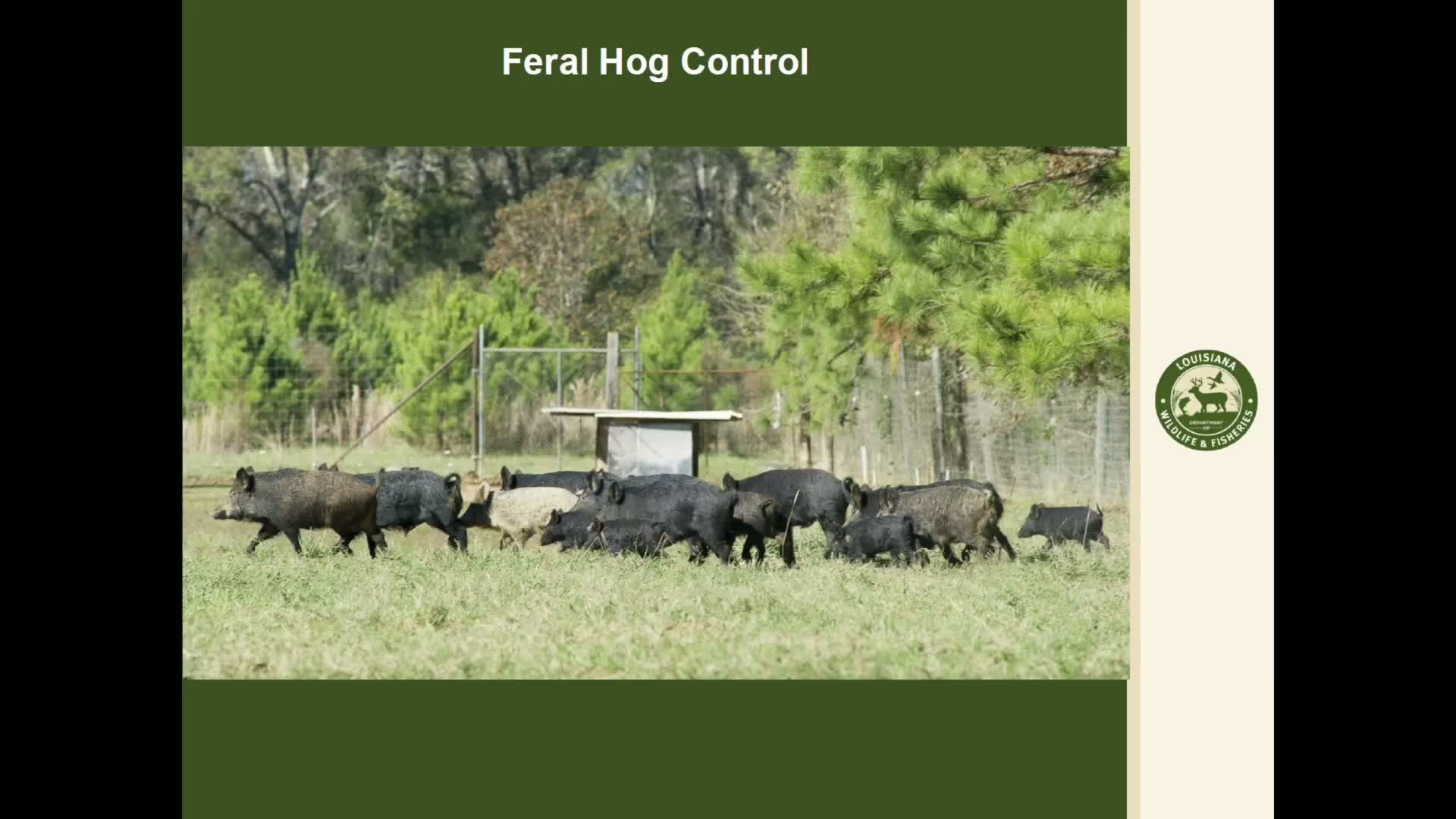
The Department of Wildlife and Fisheries said it has stepped up active feral hog control on state wildlife management areas (WMAs) through trapping, aerial gunning and partner night‑hunting contracts and is evaluating permit changes to expand hunter access for targeted removal.
Cole Garrett told the committee that the department has intensified on‑WMA activities and removed, on average, about 2,400 hogs per year through those contracts, with about 4,000 removed in the most recent year. Incidental take by hunters during open seasons on WMAs historically yielded roughly 2,100–2,200 hogs annually, Garrett said, but those incidental numbers have declined as department removal efforts have increased.
Agency staff said the state permits night hunting on certain contracted operations and has expanded contracts for aerial gunning and trapping where vegetation and access allow. The department also noted it manages about 1.6 million acres in WMAs statewide and has conducted targeted increases in active management in places where WMAs were acting as refuges for hogs that then bred and dispersed to adjacent private lands.
Lawmakers asked about permitting options and safety concerns: several members said private landowners near WMAs want more consistent removal opportunities and urged a permitting route to enable trained hunters to conduct targeted daytime or nighttime hunts on WMAs where appropriate. Garrett said staff are exploring permit structures and training/qualification requirements but had no immediate rulemaking to announce.
No formal regulatory action was recorded during the committee hearing; the department said it would continue to work with legislators and stakeholders on potential changes to allow more managed removal while protecting public‑safety and recreational uses of WMAs.