Get Full Government Meeting Transcripts, Videos, & Alerts Forever!
Get email alerts on the Recovery Residences topic
No spam. Unsubscribe anytime.
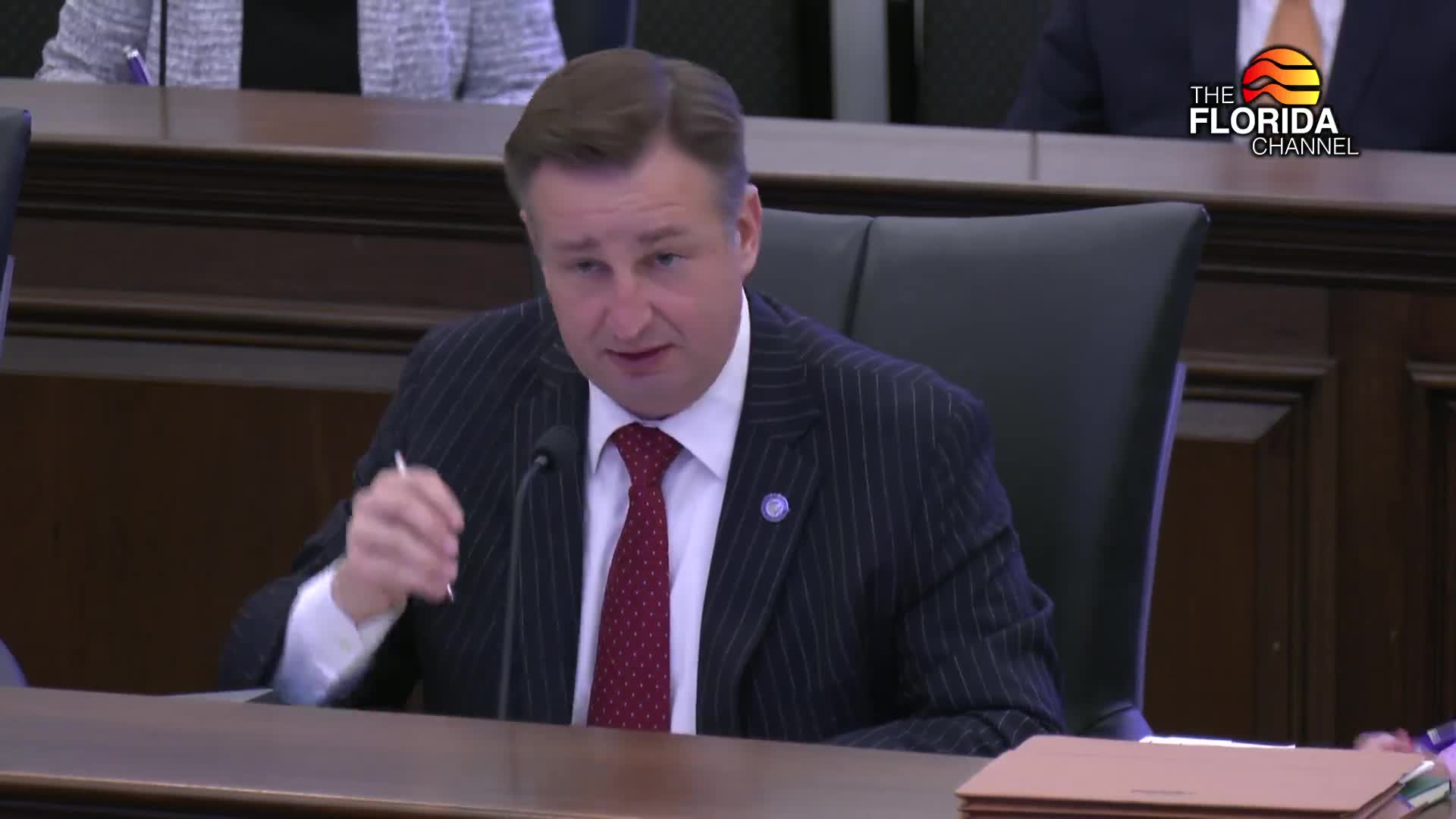
Senate panel approves Gruters bill to ease zoning limits for recovery residences, adds staffing and population limits after amendment
Summary
The committee approved CS/SB 954 after lengthy debate and a late amendment that reduced an active‑patient threshold and adjusted staffing ratios for recovery residences. Municipal governments and some county officials opposed preemption of local zoning; supporters argued the bill would expand access to recovery housing.
The Appropriations Committee reported CS/SB 954 favorably after extensive public testimony and debate over local zoning, clustering of recovery residences and staffing safeguards.
Sponsor Senator Gruters said the bill addresses a statewide shortage of substance‑use treatment and recovery housing and aims to prevent localities from excluding treatment centers under zoning rules. He described two main provisions: prohibiting localities from blocking treatment centers on the basis of health diagnosis and easing limits on recovery‑residence capacity if staffing levels are increased (moving from a 1:10 staff‑to‑resident ratio to a proposed 1:6 ratio in higher capacity settings). A late amendment reduced the cap on active patients cited in one provision from 500 to 300.
Public testimony split - Cities and counties (Plantation, Delray Beach, Florida League of Cities, Florida Association of Counties) opposed the bill as written, saying federal disability and housing law already constrain zoning but noting municipalities can adopt separation distances and other reasonable measures. Plantation cited a 660‑foot separation policy used locally and argued clustering can harm neighborhood character. - Recovery‑housing advocates, operators and some recovery residents supported the bill. Proponents said clustering studies are dated and newer research does not show harms; they argued the law removes discriminatory barriers that deny treatment access and contributes to long wait lists. - Certification and treatment organizations urged a lower cap and stronger oversight; a late amendment lowering the cap to 300 was adopted.
Key committee action The committee adopted a late‑file amendment reducing the active‑patient threshold from 500 to 300 in a specified provision, then voted to report the measure favorably. Several senators voiced continued concerns and said they expected additional changes ahead of later stops.
Why it matters: Sponsors said the bill would expand access to recovery housing and treatment; opponents warned it could allow institutionalized concentrations of residents and reduce local control over land use and community protections.
Ending: The bill passed the committee with the amendment and will go to further Senate consideration. Sponsors pledged follow‑up conversations with municipalities and task‑force stakeholders.