Get Full Government Meeting Transcripts, Videos, & Alerts Forever!
Get email alerts on the Nursing Education topic
No spam. Unsubscribe anytime.
Senate panel advances Harrell bill to tighten nursing‑program accountability, add provisional licenses and preceptorships
Summary
The Appropriations Committee on Health and Human Services advanced CS/SB 526 after extended debate. The measure requires standardized exit exams, remediation, publication of program NCLEX passage rates and establishes a three‑month graduate preceptorship for low‑performing programs; it also authorizes provisional licenses for new graduates.
The Appropriations Committee on Health and Human Services voted to report CS/SB 526 favorably after an extended presentation and public testimony from nursing‑education stakeholders.
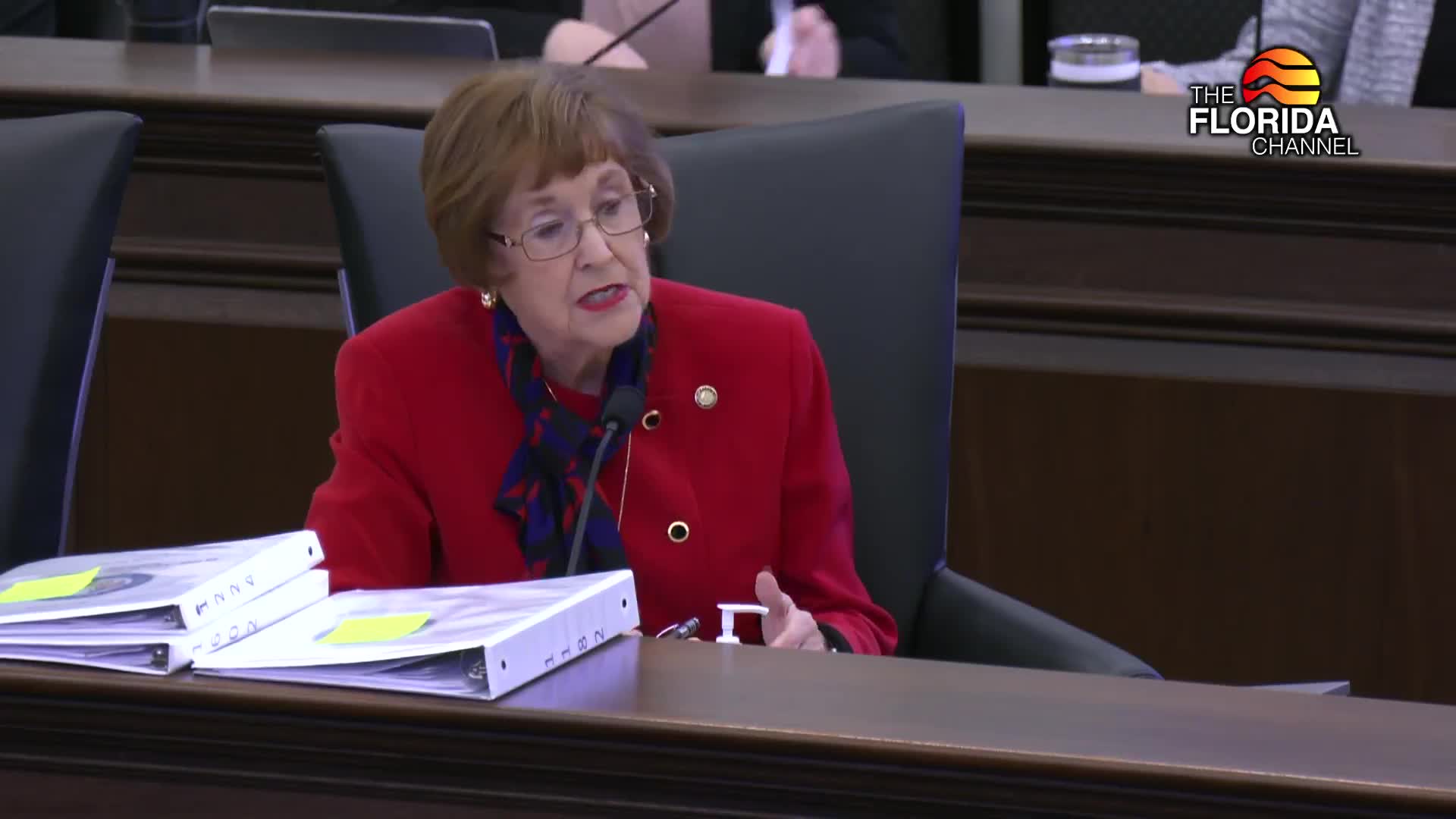
Sponsor Senator Gail Harrell said the state’s emergency is reflected in persistently low NCLEX pass rates among some programs and argued the bill would raise education and patient‑safety standards. “What this bill does is really look ... how we can make sure we have nursing programs ... that are going to pass,” Harrell said.
What the bill would do - Require professional and practical nursing programs to set admission criteria, administer a standardized exit (predictor) exam and offer remediation for students who fail the exit exam. - Require programs with NCLEX pass rates more than 10 percentage points below the national average to offer a three‑month graduate preceptorship for their graduates, with supervision by clinical preceptors; the Florida Center for Nursing must develop standards for those preceptorships. - Allow the Department of Health to issue provisional licenses to graduates who have completed program requirements but have not yet passed the NCLEX; provisional licensees must be supervised by clinical preceptors and expected to sit for the NCLEX at the end of the preceptorship. - Require programs to publish NCLEX passage rates on their institutional websites and require the Board to publish program passage rates as well.
Public testimony and objections Representatives of private and independent nursing schools told the committee they share the goal of improving pass rates but warned the bill’s accountability structure could have unintended consequences. Bob Harris of the Florida Association of Independent Nursing Schools said the measure’s statutory changes were limited to non‑accredited programs as drafted and could disproportionately affect private institutions, creating closures and loss of access in some areas. He urged more narrowly tailored remedies and additional implementation support.
Assurances and next steps Harrell and supporters said the bill includes a remediation requirement and funding options for preceptorships through existing line items; she said the goal is to graduate nurses who are ready to practice. The committee adopted a strike‑all amendment that added the preceptorship provisions and clarified definitions before voting to report the bill favorably.
The bill now advances to later Senate stops where sponsors said they will work with stakeholders on implementation details, including accreditation interactions and transitional timelines.
Ending: Supporters said the changes are aimed at improving patient safety by ensuring nursing graduates are prepared to pass licensure exams and enter the workforce; critics urged careful drafting to avoid unintended closures of educational programs.