Get Full Government Meeting Transcripts, Videos, & Alerts Forever!
Get email alerts on the Foreclosure Prevention topic
No spam. Unsubscribe anytime.
Mass. residents, advocates urge enactment of statewide foreclosure‑prevention mediation program
Summary
Homeowners, tenant and housing advocates testified in support of S.765 / H.1090, saying a statewide foreclosure‑prevention program that requires servicers to participate in pre‑foreclosure mediation would keep families in their homes and reduce displacement.
Supporters of a proposed Massachusetts foreclosure‑prevention program told a legislative committee that requiring loan servicers to participate in pre‑foreclosure mediation would keep families in their homes and reduce community displacement.
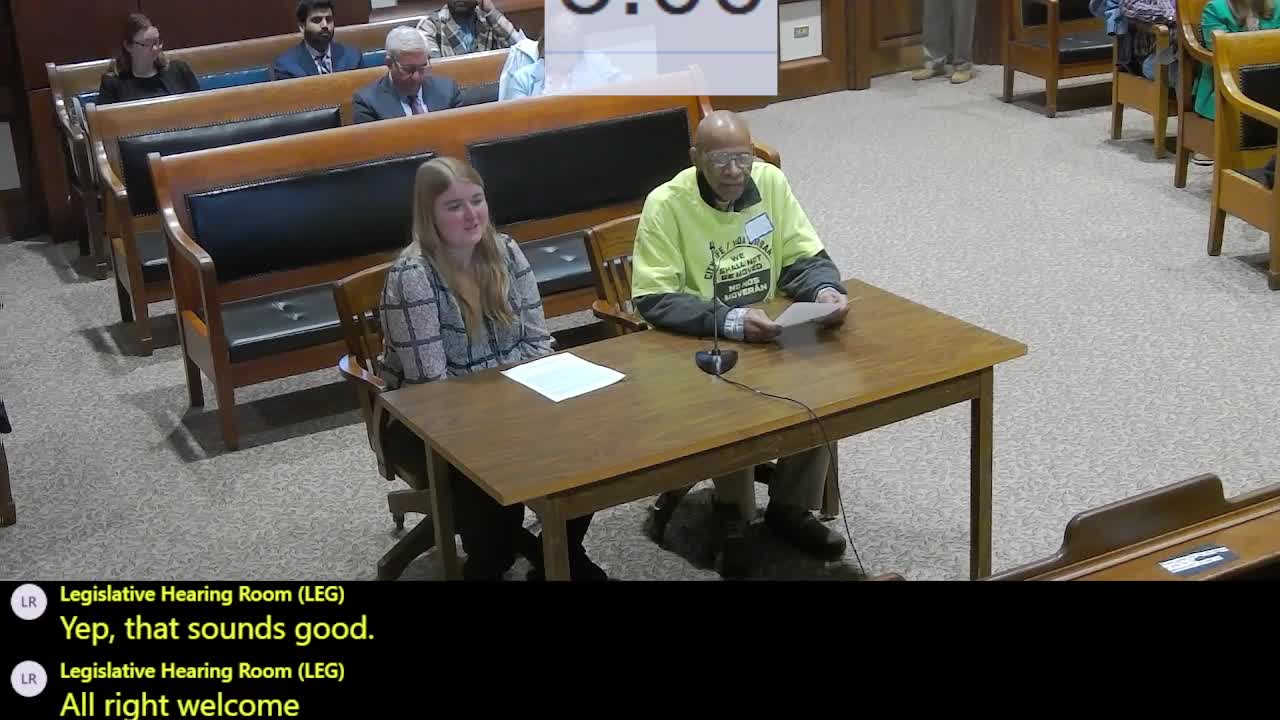
Derwin Gordon, a lifelong Dorchester resident, told the committee “this bill would establish a statewide foreclosure prevention program to require servicers to participate in pre foreclosure mediation with homeowners to explore alternatives to foreclosures that would make it possible for homeowners like me and my family to stay in our homes.”
Advocates said the program — carried in S.765 and H.1090 — would require servicers to hold good‑faith conferences with eligible homeowners to review options such as loan modification, assistance funds, or placing missed payments at the end of the loan. They described the proposal as a targeted, self‑funded program that preserves lenders’ ability to recover money while adding an extra step to identify alternatives before foreclosure.
City Life/Vida Urbana community organizer Katie McCann testified that many foreclosure cases could be resolved if lenders were willing to mediate and that displacement has demonstrable negative health impacts on families and communities.
Rose Webster Smith, director of Springfield No. 1 Leaves, described her experience: after five years of fighting eviction she “won my house back” and said mediation would remove confusion about who to contact when servicers and note holders are different entities.
Local organizers and legal advocates pointed to prior local programs as evidence the approach works. Isaac Simon Hodes, executive director of Lynn United for Change, said the city’s mediation pilot showed strong results: “they found that while the program operated 97 percent of the cases that reached an in person mediation, were concluded with a foreclosure alternative, typically keeping the families in their homes.”
Witnesses also described common barriers for homeowners: confusing notices, delayed or contradictory information from multiple servicer representatives, language access issues and difficulty reaching decision‑makers with authority to offer alternatives. Several said mortgage servicing practices and the sale of loans among servicers and trusts make it difficult for homeowners to identify the correct counterparty.
Speakers urged the committee to move S.765 and H.1090 forward as part of a broader set of housing protections, including tenant protections and measures to prevent displacement. They said a statewide program would standardize a process that some cities have adopted locally and would extend mediation’s benefits to communities across Massachusetts.
Committee chairs accepted testimony and closed the hearing without taking formal action on the bills at that session.