Get Full Government Meeting Transcripts, Videos, & Alerts Forever!
Get email alerts on the Education Pedagogy topic
No spam. Unsubscribe anytime.
House approves changes to mastery‑based pilot; members spar over bargaining, assessments
Summary
Lawmakers amended Senate Bill 373 to expand flexibility for mastery‑based pilot schools and remove taxing authority for pilot boards; floor debate focused on whether collective bargaining rights and year‑end assessments should be suspended or correlated for research comparisons.
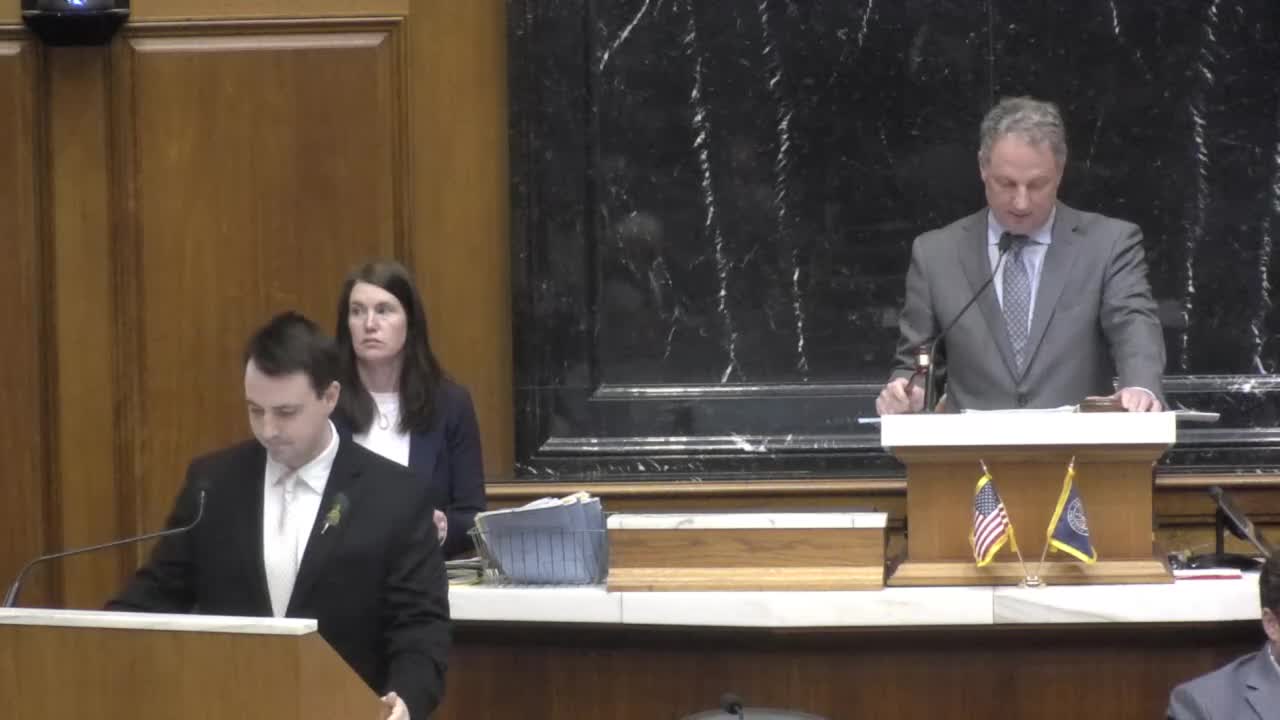
Representative Behning presented amendments to Senate Bill 373 that narrow taxing authority for pilot boards and add flexibility for mastery‑based education pilots. He said one amendment "strictly removes the taxing authority" for pilot boards so they cannot levy new taxes, and another would restore flexibility in code for teacher‑preparation and other provisions.
Representative Behning and others described the pilot as "mastery based" instruction that emphasizes students demonstrating competency at different paces. The floor debate centered on two areas: suspension of statutory provisions (including whether provisions related to collective bargaining, teacher preparation and staff‑evaluation could be waived for pilot schools) and whether the pilot should be permitted to use alternative year‑end assessments in lieu of state tests.
Representative Delaney and Representative Smith urged caution on waiving statutory protections and stressed the need for research‑quality comparison groups. "When you're doing research, you want a control group and then you do use some other forms of methodology with the other students. But you gotta have the same evaluation tool. Otherwise, you compare apples to oranges," Representative Smith said, arguing that different assessment tools would make results incomparable. Representative Delaney proposed an amendment (amendment 2) to defer decisions on which statutes could be waived until the end of a study year; that amendment was defeated by a roll call which the transcript records as "27 voting ayes, 66 voting no."
Advocates for flexibility argued that pilot schools need the ability to pursue alternative assessments and operational calendars that match mastery‑based scheduling. An amendment to allow the department to apply to the U.S. Department of Education for a waiver permitting alternative assessments for pilot schools passed on the floor after representatives described intent to correlate alternative exams with traditional tests for comparability.
Other committee amendments removed taxing authority for pilot boards and adjusted statutory language on teacher prep and performance evaluation. The bill was ordered to engrossment after floor action.
Ending note: The record shows the House accepted several amendments and defeated at least one that would have broadly deferred statutory waivers until after a research year; supporters framed changes as limited, committee‑based flexibility for a contained pilot while opponents pressed for safeguards for collective bargaining and standard comparators.