Get Full Government Meeting Transcripts, Videos, & Alerts Forever!
Get email alerts on the Hospital Pricing Study topic
No spam. Unsubscribe anytime.
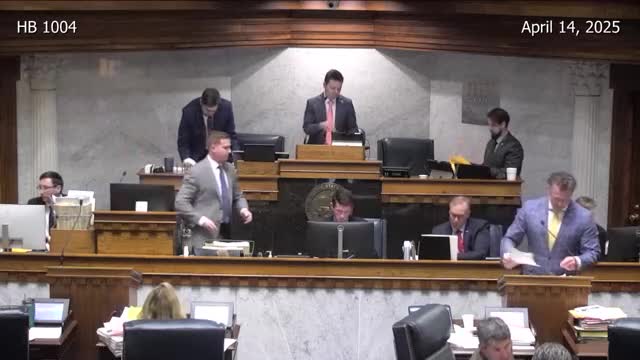
Senate approves hospital-pricing study and reporting changes after heated debate over possible price controls
Summary
Senators approved Amendment 23 to House Bill 1004, directing the Office of Management and Budget to study hospital pricing statewide and requiring insurers and TPAs to report commissions to the all-payer claims database; the amendment passed after a roll-call division, 34-12.
INDIANAPOLIS — The Indiana Senate adopted a contentious amendment to House Bill 1004 that strips proposed price caps and penalties from the bill and instead directs the Office of Management and Budget (OMB) to conduct a statewide hospital-pricing study.
Sponsor Senator Erin Garten described Amendment 23 as a compromise that removes the bill’s earlier price-limit provisions and creates a data-driven study to determine a statewide aggregate average of inpatient and outpatient hospital prices based on at least 85% of paid claims. Garten said the study would be completed by June 30, 2026, and would calculate a statewide average price expressed as a percentage of Medicare that could be used for future policy discussions.
"What it does is it puts a hospital pricing study under the Office of Management and Budget," Garten said on the floor. "If you want to remain a nonprofit, then you should act like it and you should be competitive in your pricing with the average in the state." Garten emphasized the amendment does not set a statutory price ceiling but would instead produce data for policymakers and review market impacts.
Senator Brown strongly opposed the approach as written, saying the amendment in practice would set a cap on nonprofit hospitals and risk unintended consequences for rural care and the community services hospitals provide. Brown outlined concerns about rural access, community benefits hospitals provide (including school nursing, clinics and residency programs), and the operational challenges if a large nonprofit system converted to for‑profit status. "It's a cap. You can call it say it's something else, but it's a cap," Brown said during floor remarks.
Other provisions adopted as part of the amendment package included increased transparency for broker and third‑party administrator (TPA) compensation. The amendment requires agents and TPAs to provide signed quotes listing commissions and fees at the time of sale for group health policies and requires insurance companies and TPAs to report commissions paid to the state’s all‑payer claims database.
A division vote followed the floor debate. The clerk reported 34 ayes and 12 nos; the amendment passed. Sponsors said the study-based approach gives the legislature time to assess market effects and to revisit policy changes based on standardized data rather than imposing immediate statutory price limits.
The bill also received further amendments addressing pharmacy benefit manager (PBM) transparency and rebate disclosure; senators described these as complementary measures intended to reduce hidden costs in prescription pricing and to return more rebate value to consumers. Those PBM- and rebate-related amendments were adopted by voice vote. After the amendment votes, the bill was ordered to engrossment.
Supporters said the OMB study and the reporting requirements would create more public data on hospital prices and insurer/TPA compensation; opponents argued the language could pressure nonprofit hospitals’ tax statuses and agreed to watch implementation closely.
Senator Garten and other sponsors said they will monitor OMB’s study results and the new reporting filings to determine whether future legislative steps are warranted.