Get Full Government Meeting Transcripts, Videos, & Alerts Forever!
Get email alerts on the Budget Finance topic
No spam. Unsubscribe anytime.
Danville City finance staff present FY24 results and FY25 outlook; commission discusses restaurant tax, garbage fund and opioid dollars
Summary
Finance staff reported FY24 revenues and expenses, estimated FY25 year-end figures, and led a detailed discussion about revenue sources including occupational and insurance-premium taxes, the restaurant tax option, the underfunded garbage fund and restricted opioid abatement funds.
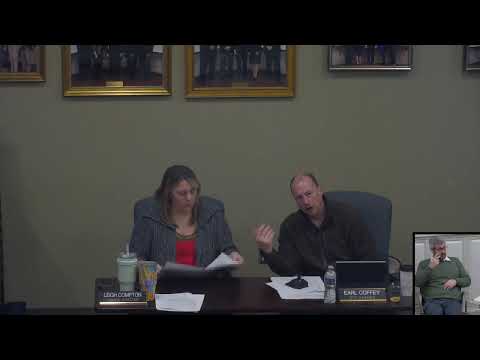
Lee [last name not specified], the city’s finance director, presented a detailed recap of fiscal year 2024 results and the current estimates for fiscal year 2025, telling the commission that total FY24 general fund revenue ended at $24,335,000 against a budget of $20,752,000 and that total general-fund expenses for FY24 were $32,162,955.
Lee said higher-than-budgeted licensing and fees — which she identified as the primary driver — produced about $19,000,000 in FY24 for those categories. She also said the city recorded capital transfers and other non-departmental transfers that increased the total spending picture; parks and public-safety salaries were among the areas that received larger investments.
Why it matters: the presentation laid out where the city’s revenue growth came from, what funds show pressure (notably garbage/recycling and some parking operations) and options staff are studying to close gaps in future years, including tax-rate changes and a possible restaurant/tourism tax.
Key FY24 and FY25 figures cited in the meeting - FY24 general fund revenue (actual): $24,335,000; FY24 budgeted revenue: $20,752,000. - FY24 total general fund expenses: $32,162,955; parks and rec transfers in FY24: $6,887,000 (of which roughly $1,200,000 was operations and $5.5M capital, according to staff remarks). - FY25 current-year estimated general fund revenue: $26,401,840 (this total includes a $1,600,000 ARPA transfer recorded as revenue for FY25 to fund an Economic Development Authority contribution). - Parks FY24 capital spending and FY25 estimated transfers were detailed in staff materials; Lee said park capital paid in FY24 included Jenny Rogers and Michael Smith Park work.
Staff discussed restricted and special funds. Lee said the opioid-abatement fund held about $91,000 at the end of FY24 and staff project approximately $700,000 over ten years from settlement schedules, with annual receipts in the $100,000–$130,000 range in coming years. Lee stressed that opioid funds are highly restricted to projects that directly address opioid-abatement purposes and cannot automatically be applied to general homelessness initiatives without a clear link.
Garbage and recycling fund: staff showed the garbage fund is operating at a deficit and has a growing negative fund balance. Lee and other staff said part of the current shortfall stems from a lag and reconciliation issues between billing, resident moves and the contractor Republic Services. The city currently provides a general-fund transfer to support recycling and convenience centers (about $25,000 per year to Boyle County under an interlocal agreement) and a larger transfer to the garbage fund; Lee said the commission should consider whether to contribute more or change fee structures to close the gap.
Restaurant tax and other revenue options: the commission discussed whether to pursue a local restaurant (tourism) tax to fund capital such as parks and recreation facilities. Lee said such a tax could generate an estimated $1.0–$1.5 million annually in a rough analysis, but she warned of legal risk: Hazard, Ky., faced legal challenges after adopting a similar tax, and litigation awaiting appellate outcomes at the state level has put other communities and the state legislature in a holding pattern.
Lee described practical steps if the city chose to adopt a restaurant tax: (1) address governance of the tourism board (current board is city-county), (2) prepare for potential legal challenges and (3) consider a conservative approach of not spending new restaurant-tax receipts for a year to ensure legal stability. She also recommended maintaining current occupational-tax and net-profit rates (payroll withholding 1.9% and net profits 1.75%) for the FY25 budget process.
Other discussion points: staff noted parking revenues are improving and that the parking fund’s reliance on the general fund has declined from prior years, but parking still required general-fund support in FY25. Staff said the utility fund had taken bond anticipation notes (about $6.5 million) for utility projects and anticipated EPA and ARPA reimbursements for Spears Creek work. Health-insurance costs drove several departmental overages this year; staff said the city budgets a maximum liability centrally but individual departments show the actual expense impact.
Actions and next steps: staff said they will bring a budget amendment later in the fiscal year to reconcile known capital purchases (including an unbudgeted property purchase where US Bank formerly sat and the EDA contribution). Lee and city manager Coffey invited commissioners to schedule follow-up reviews of the spreadsheets in OneDrive and to flag numbers they want to review in depth.
Ending: the commission did not adopt any tax-rate changes at this meeting. A motion to adjourn was made and approved by voice vote; staff will return with detailed budget-amendment requests and will keep the commission apprised of any legal developments concerning the restaurant-tax litigation elsewhere in Kentucky.