Get email alerts on the Historic Preservation topic
No spam. Unsubscribe anytime.
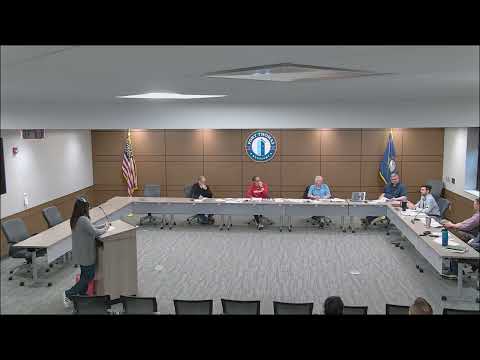
Fort Thomas panel approves storefront exterior work using LP SmartSide, with grant options discussed
Summary
The Fort Thomas Design Review Board approved a plan to paint siding above a storefront, install LP SmartSide board-and-batten on the storefront, add three barn lights, place a planter and hang a new sign; board members and staff discussed historic-district rules and eligibility for a local GROW grant during the review.
The Fort Thomas Design Review Board on an undisclosed date approved exterior alterations to a commercial storefront, including painting the original siding above the storefront, installing LP SmartSide board-and-batten siding on the storefront, adding three barn lights and a planter beneath a window, and hanging a new sign from the soffit.
Board and staff discussion focused on whether the building’s designation as a “contributing” or “non‑contributing” resource in the historic district affected the application of the board’s Design Review Guidelines and whether the proposed materials would be acceptable. Staff and board members said the proposed LP SmartSide product is a composite, factory‑manufactured wood‑appearance product that can be ordered with extended warranties and that it presents a vertically oriented profile similar to the existing vertical T1‑11 panels on the building.
The applicant and board members also discussed local small‑business façade funding. Staff described a local GROW grant (local program name variously pronounced in the meeting) that typically requires a cost share from the applicant and has a program cap of $20,000. Staff said applicants generally split project costs roughly 50/50 with the grant and that higher total project costs can permit reaching the full cap; staff said specific project‑value thresholds for the full cap would be provided to the applicant after the meeting. Staff also said the program typically opens a cycle in October with an application deadline around April 1.
Board members noted the Design Review Guidelines (packet, page 16, section 4.1) state that wood clapboard siding should match the existing material and run in the same direction, and that siding should not be used to cover original building materials. Members and staff observed that the storefront’s existing wood siding is vertically oriented and that the LP SmartSide board‑and‑batten option would preserve the vertical orientation called for by the guidelines, whereas a proposal to use vertical vinyl had been rejected as inconsistent with the guidelines.
During discussion the board clarified the scope of work: painting of existing vinyl in visible front elevations, installation of LP SmartSide board‑and‑batten on the storefront, three front barn lights, one planter approximately six feet beneath a window, and a hanging sign attached to the soffit (not a freestanding post). The applicant indicated the rear of the building would likely not be painted because it is not visible to the public.
A motion reflecting those items and referencing findings of fact in the packet was made, seconded and approved by voice vote. The motion, as stated at the meeting, specified: paint the original siding above the storefront; install LP SmartSide board‑and‑batten on the storefront; add three barn lights on the front; install one planter approximately six feet under the window; and install a hanging sign from the soffit. The motion explicitly excluded use of vinyl siding and identified the LP SmartSide option as the intended board‑and‑batten material.
Board and staff recommended that the applicant may pursue the GROW grant for additional or expanded exterior improvements and said applicants sometimes obtain board approval first and then apply for grant funding in an upcoming cycle. Staff also noted that for larger projects an applicant may still need to return to the board for design review, but a successful grant application can satisfy some program steps.
The board did not request an external report for this case; one participant requested that Wes Cunningham (identified in discussion as an expert) be consulted or that the item be tabled to obtain Cunningham’s formal review, but the board proceeded to vote after clarifying the findings of fact to be incorporated into the motion.
The board’s approval was procedural (voice vote) and recorded as passed; no individual vote tallies were recorded in the meeting transcript.
AI generated
The text on this page is AI generated. Summaries, highlights, analysis, and video transcripts are all produced from the original source material.
AI can make mistakes, so if you spot one, and we will fix it for everyone.
Note: the source content is unaltered by us. Any content source we link to, be it a video, an audio recording, or a document, is presented exactly as its publisher released it. That publisher is usually a government body, sometimes an individual official or another organisation.