
Holyoke officials report smaller FY26 budget gap after health‑insurance and enrollment updates
Get AI-powered insights, summaries, and transcripts
Subscribe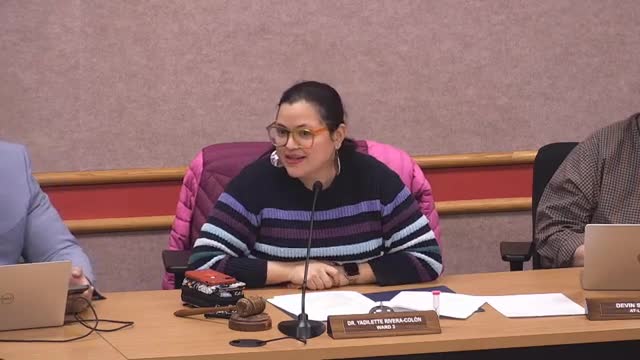
Summary
Superintendent and staff told the School Committee the projected FY26 budget gap has shrunk to about $1.5 million after updated enrollment allocations, lower health‑insurance projections and other adjustments; transportation and other costs remain concerns.
The Holyoke School Committee received an updated FY26 budget outlook on March 21 that showed the district’s projected gap has narrowed to roughly $1.5 million following updated enrollment figures and a lower health‑insurance projection.
Superintendent (unnamed) and district presenter Sean provided the update. "Our initial budget gap was at 3,900,000.0," Sean said, and after state aid and other adjustments "it closed the gap significantly down to about 1,900,000.0," before more recent changes that "gets our gap down to 1,500,000.0." The presenters said three main changes reduced the projection: updated enrollment allocations added about $150,000 in positions, projected health‑insurance premiums dropped by roughly $440,000 after the district reviewed its self‑insured plan data, and utilities projections were lowered after an analysis of current usage and recent energy‑efficiency work.
District leaders said they realized about $400,000 in near‑term savings in health benefits and are compiling cabinet members’ proposed 10% reductions to identify what could be implemented with the least impact on students. A newly formed budget advisory group that includes teachers, paraprofessionals, a school committee member and principals will dig into priorities such as transportation, which the district flagged as a growing cost driver.
Administrators also reported the district is monitoring federal grant risks. The superintendent said there were "rumblings" about Title III funding for English‑learners but no confirmed losses; district staff said federal grants (including food services) represent roughly 10% of the district’s budget when included. The presentation noted a separate $7 million school‑bus grant for electric buses in another district; Holyoke staff said their own bus grant remained intact as of the update but that scope or timing changes remain a contingency risk.
Separately, district officials cited student‑achievement investments: a multi‑year partnership on early‑literacy professional development now in its third year showed strong mid‑year STAR gains, with the district reporting it reached 46% of its target in early grades against an end‑of‑year target of 50%. The district also said it received a competitive PRISM planning grant of $20,000 to develop a five‑year literacy plan and that the Davis family donated $850,000 to fund high‑dosage tutoring in early grades.
Ending: The committee heard the update and scheduled further budget review in April with the finance committee and school hearings; staff emphasized ongoing monitoring of state and federal funding and planned to avoid reductions that directly affect classrooms where possible.