Get Full Government Meeting Transcripts, Videos, & Alerts Forever!
Get email alerts on the Open Meeting Law topic
No spam. Unsubscribe anytime.
Town counsel briefs committee on open meeting law: notice, quorum and remote participation rules
Summary
Town counsel Doug Heim and legal administrator Catherine Freen gave the Andover School Committee an extended training on Massachusetts open meeting law, emphasizing notice, quorum rules, limits on off‑line deliberations and executive session procedures.
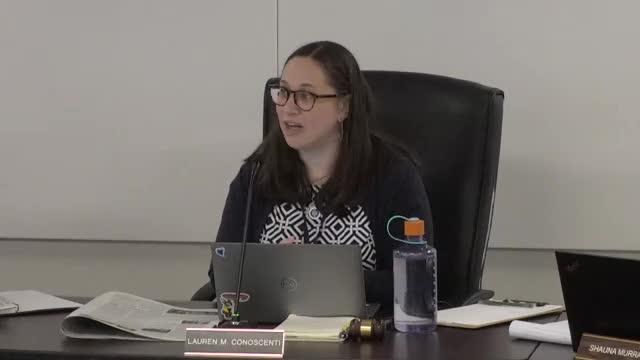
Town counsel Doug Heim and legal administrator Catherine Freen provided a training session on the Massachusetts Open Meeting Law during the April 3 Andover School Committee meeting, reviewing rules and best practices for transparency and public access.
Key points covered: - Notice and agendas: Meeting notices must give date, time and location and be posted with the town clerk at least 48 hours before the meeting (excluding weekends and legal holidays). Agendas should be specific enough that the public can decide whether to attend. - Quorum and definition of a meeting: A meeting is a deliberation by a quorum of a public body on matters within its jurisdiction. For the five‑member committee, a quorum is three members. - Deliberation outside meetings: Committee members may not use email, group chats, Google Docs or social media to deliberate a matter among a quorum. Distribution of agenda materials is allowed but members must not exchange opinions outside a posted meeting. - Executive session: Executive sessions must be noticed with a specific statutory purpose, entered by roll‑call vote and, if minutes are kept confidential, periodically reviewed to determine whether they may be released later. - Public comment and decorum: The presenters summarized Barron‑style guidance (case law) limiting the use of civility rules to restrict public criticism; the committee may still enforce time limits and remove disruptive individuals, but broadly prohibiting uncivil speech is legally risky. - Remote participation: Remote meetings and remote participation remain permitted under temporary/extended rules post‑2020; remote access must be offered equally to the public and to members, roll‑call votes are required when members vote remotely, and posted meeting notices must explain how the public can connect.
Counsel advised practical risk‑mitigation steps such as routing official correspondence through the committee’s official email, using staff to distribute agenda materials, and consulting counsel on potentially sensitive topics. Counsel warned that open meeting law violations are against the public body (not only an individual member) and can prompt public remedies, including compelled minutes release or civil penalties.
Why it matters: The training reinforced procedural steps the committee must follow to keep meetings transparent and defensible under state law and provided immediate guidance for the newly sworn‑in committee members.
What’s next: Counsel offered continued availability for questions and recommended routine review of executive session minutes and adherence to posting practices.