South School families object to redistricting plan; committee defends E6/M5 choice
Loading...
Summary
A South Elementary parent told the Andover School Committee the March 20 redistricting vote split her school without sufficient public input. Committee leaders said the E6/M5 plan balanced capacity, walkable routes, cost and demographics and that implementation details will be discussed at a later meeting.
A South School parent criticized the Andover School Committee on April 3, saying the committee’s March 20 vote on a new redistricting scenario split the South Elementary neighborhood and lacked transparency.
"From the very start of this process, the stated goal was to keep groups together, including neighborhoods and elementary schools as they transition to middle school while also prioritizing students' social and emotional well-being. So why was this not the case for the students of South School?" Eliana Basserman said during public input, adding that South was the only elementary school being split and that a new scenario (E6, M5) had been introduced days before an election.
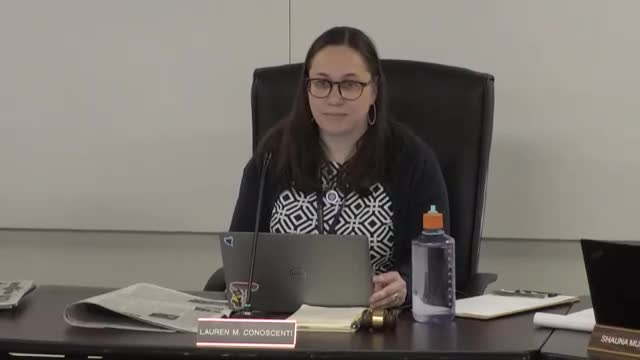
The committee responded in a public reply at the meeting. The chair said the E6/M5 selection "did seek to balance a variety of factors that included but were not limited to functional building capacity, safe walkable routes to school, transportation routes and costs, student demographics, and increasing the size of student groups moving on to middle school." The chair also said the district had reviewed more than 1,500 submissions of feedback and worked with consultant Dillinger Rad on multiple models.
Committee members reiterated that implementation will be handled by the Redistricting Advisory Council and that the committee will return to the matter for implementation discussion at its next meeting. Committee leadership said a district decision stands unless new, substantive information—such as a building becoming unusable—emerges.
Why it matters: The parent complaint highlights community concern over boundary changes that affect school cohorts and travel patterns. Committee leaders said capacity, demographics and transportation costs were major drivers of the decision and encouraged continued engagement during the implementation phase.
What’s next: The committee plans to revisit implementation at its next meeting and encouraged South families and other residents to participate in that process.