Get Full Government Meeting Transcripts, Videos, & Alerts Forever!
Get email alerts on the Student Graduation topic
No spam. Unsubscribe anytime.
District clarifies "unclassified" student counts; administrators cite attendance and credit recovery challenges
Summary
Sumter School District officials told trustees that promotion standards were revised to align with state calculations and reported hundreds of students across cohorts who remain short of required credits; administrators said attendance, course sequencing and credit-recovery capacity are factors.
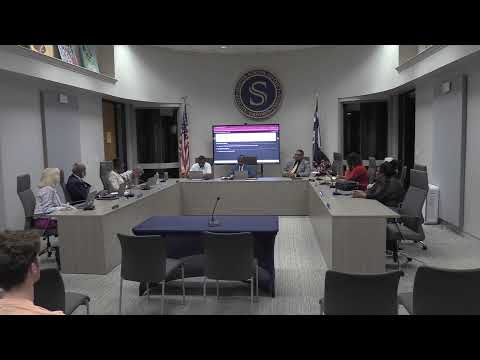
At the April 7 meeting the Sumter School District administration presented changes to promotion and classification standards and gave a snapshot of how many students across cohorts are not on track for graduation.
Dr. Tabitha Harriott and Dr. Shirley Gamble said the district updated its promotion standards to align with state calculations used by the Education Oversight Committee and the South Carolina ‘‘9GR’’ cohort method. Officials said that cohort alignment affects how students are classified (freshman, sophomore, junior, senior) for accountability and reporting.
Using data dated April 4, administrators reported that some students who entered high school in 2022 remain below the 18 credits needed for graduation under the updated standards. The district said roughly five students in the cohort were still classified as ninth-graders for lack of required credits, about 21 as sophomores, and roughly 50 students were counted as juniors with fewer than the required credits. Staff emphasized the counts are fluid because students are actively engaged in credit recovery, content-recovery and other pathways.
Administrators cited attendance as a driver: state rules that limit allowable absences can generate an FA (fail for attendance) that prevents earning credit unless the student completes recovery steps. Dr. Harriott explained that students who receive an F are recorded as a 50 in the grade book under the state uniform grading scale practices referenced in the meeting.
Trustees raised concerns that credit recovery is frequently delivered via virtual platforms and questioned whether that approach serves students who have been out of school or chronically absent. District leaders said credit recovery is assigned with a staff supervisor and that for many students it is effective, but they acknowledged staffing shortages in some schools and that the district is rolling out tracking systems and an expanded “director of student success” role to better monitor cohorts, attendance and interventions.
Why it matters: Students who do not earn credits on schedule may remain in school longer and graduate late; cohort counts feed state accountability and funding indicators. Attendance and access to effective recovery options affect equity across schools.
What’s next: District officials said they will continue to refine tracking systems, train counselors and administrators and pursue targeted interventions; they plan to return with updated cohort data and interventions.