Get Full Government Meeting Transcripts, Videos, & Alerts Forever!
Get email alerts on the Grading Policy topic
No spam. Unsubscribe anytime.
Public speakers oppose 50% grading floor; board motion to reinstate it fails
Summary
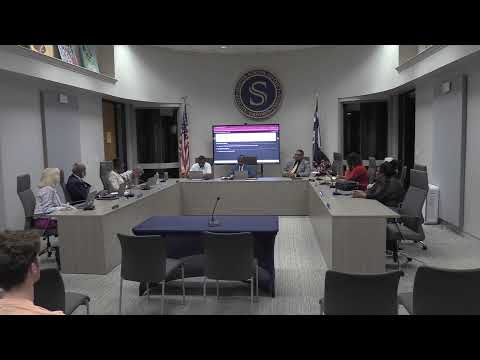
At the April 7 Sumter School District board meeting, students, teachers and community members urged the board not to adopt a 50% grading floor. The board later considered a motion to reinstate the 50% floor in district policy; the motion failed after debate.
At its April 7 meeting, the Sumter School District Board of Trustees heard multiple public comments urging the board not to implement a 50% grading floor and considered a motion to reinstate the 50% floor in district policy. The motion did not pass.
The most prominent public comments came from Sumter High senior Kelly Griswood, who said the floor would “assure any kind of accountability that a student can have” and argued it would lower standards and encourage students to avoid effort. Griswood said, “By shielding our students from failure sets them up for greater struggles.”
A retired special-education teacher who identified herself as Debbie Sisson told trustees she opposed the 50% floor because it sends a message that the district “doesn’t even believe in them yourself” and that unearned minimum grades would hurt students who work hard. Business owner and former school-board member Dan Palumbo also spoke against the change, calling the policy a “safety net” that “ultimately undermines the integrity of [the] educational process” and raising concerns about whether the policy drives families to private schools.
Board discussion later returned to the issue during the action portion of the meeting. A board member argued the 50% language had been added recently and that grading manuals and district practice should be decided by educators; the speaker called for striking the current language to restore the district’s prior practice. Other trustees raised concerns about the district’s grading manual, alignment with the state uniform grading scale and the need for a committee of educators to recommend grading rules for next year.
When trustees voted on a motion “to reinstate the 50% grading floor and remove the language from the associated policy,” the motion failed. The board did not record individual tallies in the public minutes; the clerk announced, “Vote does not pass at this time.”
Why it matters: Grading-floor policy affects classroom grading, transcript records and how failing course grades are recorded for state accountability and graduation-rate calculations. Trustees and administrators repeatedly referenced alignment with state measurement rules, credit recovery and the district grading manual during the discussion.
What’s next: Trustees and administration said they would return to the issue through the district’s policy and grading-manual process and that any manual changes should be developed by educators with board oversight.