Get Full Government Meeting Transcripts, Videos, & Alerts Forever!
Get email alerts on the School District Realignment topic
No spam. Unsubscribe anytime.
Sumter board debates sequencing of master plan and school realignment; superintendent recommends 2026–27 implementation
Summary
Board members debated whether to delay a district realignment until a formal master plan is completed. Superintendent William T. Wright Jr. presented a timeline and recommended targeting implementation in the 2026–27 school year to avoid rushed data work and operational strain.
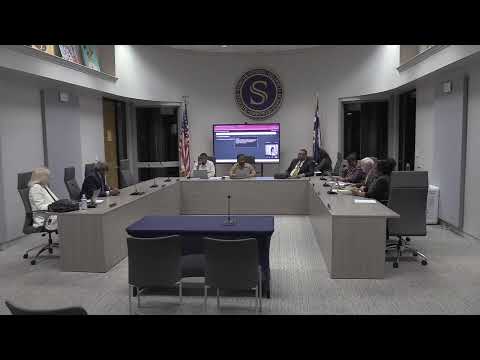
Sumter School District Board Chairman Sean Reagan and district leaders debated whether to proceed with student realignment immediately or wait for a formal master plan, after Superintendent William T. Wright Jr. presented a timeline recommending implementation in the 2026–27 school year.
The debate matters because realignment would redraw school attendance zones, affect transportation routing and staff assignments, and could interact with a future facilities bond and construction schedule. Wright told the board his staff and executive leadership team identified roughly 46 tasks that must be completed and that key data work in PowerSchool could take up to three months to verify. "It seems that proper implementation of realignment should be targeted for the 2627 school year," Wright said.
Wright outlined the sequence and timing the district would need: PowerSchool verification, an update of mapping and zone data by Cropper GIS Consulting (Cropper estimated about one month of work and an approximate cost of $18,000), coordination between academics and human resources to preserve teacher certification during moves, special‑education reviews (about eight weeks to examine individual student needs), and transportation route audits (five to six weeks once accurate addresses are available). Wright said starting the bulk of the work July 1, 2025, would allow materials to be ready by Feb. 1, 2026, for a 2026–27 rollout, and that attempting to force implementation for 2025–26 would place “additional strains on employees and other district resources.”
Board members split on how to proceed. Reverend Kenny (board member) said, "I don't think that we can do an adequate job of realignment without a master plan," arguing realignment decisions could be wasted if a later facilities study recommended consolidation of existing schools. Several other board members, including Brian Austin, vice chairman, said the district needs both efforts in tandem: realignment to address current overcrowding patterns and a master plan for long‑term facilities decisions. Austin noted construction timelines and costs — citing vendor estimates of $30 million to $40 million for a new elementary school and about $60 million for a new high school — and warned that bond referenda and county support would be necessary.
Other board members flagged different risks. One member said the district currently has enough seats overall but that moving students from schools that are making progress into schools that are not could disrupt gains. Several speakers emphasized that open enrollment, athletics, and program continuity (for example, International Baccalaureate or AP cohorts) would need specific protections during any rezoning. Wright said those operational issues — open enrollment rules, course sequence protections, and athletics — would be topics for the board to decide as mapping and schedules are developed.
Wright described his team's two initial meetings and recommended a deliberate schedule rather than rushing for the 2025–26 school year. The board did not adopt a motion to change the timeline during the March 24 meeting. Instead, Wright said staff will proceed with the identified planning steps and provide further details to the board.
Board members asked for more detail on specific dependencies, including what would trigger a change in Title I eligibility for schools and how open enrollment requests and hardship or athletic continuity would be handled. Wright said Title I funding impacts would take effect in 2026–27 and that Finance would examine staffing and budget effects once utilization and zones were finalized.
Less urgent details and next steps: Wright and staff will continue the PowerSchool verification; Cropper GIS Consulting would be asked to update online maps and school utilization handouts if the board approves funding for that contract. The board will be asked in coming meetings to adopt timelines and, if necessary, funding requests for any mapping or outreach work recommended by staff.