Get Full Government Meeting Transcripts, Videos, & Alerts Forever!
Get email alerts on the Mtss topic
No spam. Unsubscribe anytime.
Board hears MTSS overview; members press district on secondary supports and data
Summary
District staff presented an overview of Multi-Tiered Systems of Support (MTSS), explaining required screening, tiered interventions and professional development; board members raised concerns about resources at middle and high schools, use of digital platforms, and asked for data on tier distributions and monitoring cadence.
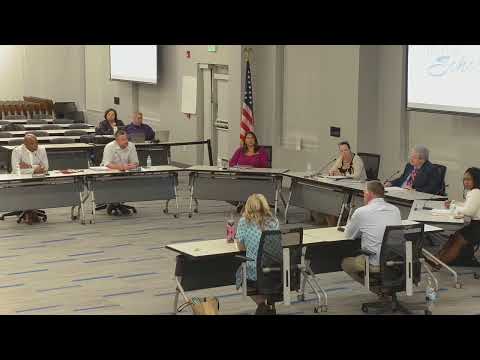
Rock Hill School District staff presented an overview of Multi-Tiered Systems of Support (MTSS) to the board on March 5, emphasizing the framework’s role in early identification, data-driven intervention and coordinated academic and behavioral supports.
Katie Barber, executive director of elementary education, told the board MTSS is a framework—not a curriculum—and said a 2018 state law requires districts to implement MTSS components, including universal literacy screening for kindergarten and first grade and regular professional development for intervention staff. “This is a framework. This is not a curriculum,” Barber said.
Barber described the three tiers: Tier 1 is universal core instruction for all students; Tier 2 is small-group intervention for roughly 10–15% of students; Tier 3 is individualized, intensive support for a smaller share. She said elementary schools have academic interventionists on site and use research-based literacy and math interventions, with fidelity monitoring and progress checks every six to eight weeks.
Board members challenged the district on secondary implementation. Several trustees said middle and high schools have fewer dedicated interventionists and rely more on teacher-led supports. Barber and other staff said a district-built early-warning system is used in secondary schools, and that district MTSS leadership teams meet regularly at every school. The district also piloted digital platforms in some schools (references were made to DreamBox and to previous pilots of a digital platform called i-Ready in certain classrooms), but leadership noted digital options vary by school and funding.
Trustees asked for specific metrics. Barber said she would provide the proportion of students currently in Tier 1, Tier 2 and Tier 3 and that school leadership reviews MTSS implementation using the SAMS (self-assessment of MTSS) tool three times per year. Board members also asked for details about teacher training and secondary professional development; the board requested a fuller report at an upcoming meeting focusing on secondary supports and professional development offerings.
Concerns raised in public discussion included whether the district’s emphasis on Tier 2 and Tier 3 might divert attention from strengthening Tier 1 core instruction, and whether digital platforms and consumable workbooks were effectively supporting families without reliable home internet or devices. Barber and district staff said the intended effect of MTSS is to reduce special-education referrals and close learning gaps when implemented with fidelity.
Trustees said they want a follow-up packet with the current distribution of students across tiers, the list of intervention programs in use at each level, and an outline of professional development plans for secondary teachers.
No formal board action was taken on MTSS at the March 5 meeting; the presentation and subsequent questions were recorded for follow-up.