Get Full Government Meeting Transcripts, Videos, & Alerts Forever!
Get email alerts on the Library Hours And Funding topic
No spam. Unsubscribe anytime.
Belgrade resident warns new library hours could drop city below state minimum; city cites funding and staffing limits
Summary
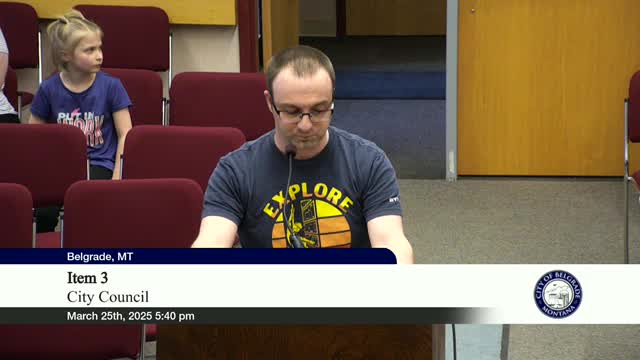
Ben Nielsen, a Belgrade resident and department head of adult programming and outreach at the Bozeman Public Library, told the Belgrade Community Library Advisory Board that the planned permanent closure of the new library on Wednesdays could drop Belgrade below the state’s 40-hour minimum for libraries serving more than 10,000 people and risk state funding.
Ben Nielsen, a Belgrade resident and department head of adult programming and outreach at the Bozeman Public Library, told the Belgrade Community Library Advisory Board on a public-comment agenda item that the library’s planned permanent closure on Wednesdays could cause Belgrade to fall below the state’s published minimum operating hours for libraries serving more than 10,000 people.
Nielsen said the reduced hours would be “an embarrassment for the city of Belgrade” and warned it “will cause a loss of state funding for the library.” He urged the board to advise city management to restore Wednesday public hours or add a half-day elsewhere in the week so the library meets the state minimum of 40 hours per week.
The comment came during a public-comment period before advisory-board business. Nielsen identified himself as a frequent library user and said he is “currently the department head of adult programming and outreach at the Bozeman Public Library,” giving his professional perspective on library operations and attendance patterns.
Board members and city officials discussed the concern during the meeting. Greg, Belgrade’s city manager, responded that his understanding was the library does meet the state minimum threshold for funding and that the state funding amount “is literally roughly $7,000” (as discussed during the meeting). He characterized the decision on hours as a response to limited operating funds and staff availability after opening the larger new building.
Kathleen, a library advisory board member, and other board members raised the apparent discrepancy between the city’s stated policy and the planned hours. A board member noted that a city policy (adopted in 2022, according to the discussion) states the library should be open 40 hours a week; meeting speakers acknowledged a difference between that policy language and the hours the city intends to staff the building after the move.
City officials said staff will continue to work in the building on the day it is closed to the public, but the doors would be locked because there would not necessarily be enough staff on hand for public service. Officials said increasing operating hours without additional funding would require hiring or expanded volunteer coverage; council and city staff reported an effort to recruit volunteers to support expanded service.
No formal vote or policy change occurred during the meeting. Board members suggested the topic could be placed on a future agenda for fuller discussion; a staff summary of public comment will be included in the meeting notes. The city manager and board members also discussed longer-term options such as an operational levy or other funding sources but said next steps would depend on upcoming state legislative outcomes and budget decisions.
How this matters: If the city’s operating hours fall below the state minimum and the state chooses to enforce that standard, the library could see a reduction in state grant funds. City officials said the state funds are modest relative to total operating costs and emphasized staffing and budget constraints as the deciding factors for the currently planned schedule.
A summary of the board’s next steps included: recording the public comment in the meeting notes, the possibility of adding the item to the next agenda for a fuller discussion, and continuing volunteer recruitment as a potential short-term mitigation for limited staffing.