Get Full Government Meeting Transcripts, Videos, & Alerts Forever!
Get email alerts on the Lake Mitchell topic
No spam. Unsubscribe anytime.
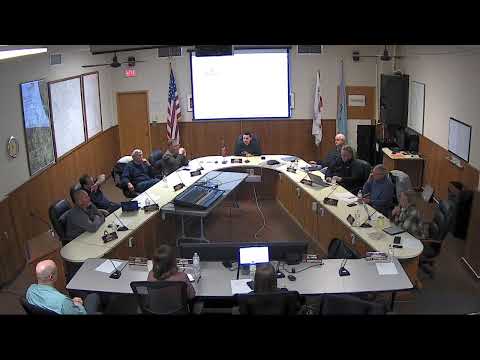
Mitchell council hears update on Lake Mitchell drawdown, Army Corps permitting and bidding timeline
Summary
Public works director Joe Schroeder told the Mitchell City Council the city is awaiting Army Corps direction on whether a nationwide permit will apply; if so, the city expects to put the drawdown work out to bid in late spring or early summer 2025 and the dredging work in winter 2026.
Joe Schroeder, public works director, told the Mitchell City Council that the city is working with Barr on permitting for the Lake Mitchell project and expects to know within “the next couple weeks” whether the Army Corps of Engineers will allow use of a nationwide permit or require an individual permit. "We're right now, we're looking at, our options for a nationwide permit and what the Army Corps will consider," Schroeder said. "If we do need to go for an individual permit, it is gonna take longer."
Schroeder gave the council a timeline tied to that permit decision: if the Corps allows a nationwide permit, the city could bid the drawdown work — lowering the water and cutting a hole in the spillway — in late spring or early summer of 2025. He said the larger lake dredging project would be bid later, in the winter of 2026, with an anticipated start when conditions suit the contractor. "Given we get to move forward with the nationwide permit, we do feel that the project for the drawdown itself could be bid, late spring, early summer, for starting in the fall," Schroeder said. "And then we would bid the actual lake project, winter, early spring of '26."
Council members pressed Schroeder on scope and budget risks. He told the council that current bid prices are favorable — "the best they've been since before COVID" — but that hauling and fuel costs will heavily affect final bids. If bids come in above the voter-approved parameters, Schroeder said the council would decide whether to proceed, consider value engineering, or renegotiate items with contractors. "In the end, whatever's determined through there, it's a council decision before I move from there," he said.
Schroeder described ongoing site work: contractors are coring the spillway to determine what lies below the waterline so they can plan shoring when the hole is cut. He also said the council previously approved moving forward with the drawdown structure regardless of whether the broader lake dredging moves forward; that would allow the city to place the drawdown structure and then let the lake fill again if the full dredge is deferred. "So if you get to bidding the lake project and council then decides that they don't want to move forward with that, we would move forward with putting the draw down structure in place, and allowing the lake to fill back up," Schroeder said.
Council members asked whether the drawdown could be used to manage high inflow events. Schroeder said the discharge through the planned pipe (discussed in the meeting at roughly 36 to 48 inches in diameter) would likely be small compared with water coming over the spillway and might only give a short lead time in some events. He cautioned that in extreme Jim River flooding, lowering the lake could be counterproductive.
Schroeder said the drawdown would also allow shoreline and maintenance work that benefits property owners and the city and would let contractors survey exposed material before final bidding for dredging, reducing bid uncertainty. He projected regional contractors would bid the dredging work and estimated the overall project would extend into 2027–28 for wrap-up, depending on contractor schedules.
Next steps: Schroeder said the city expects Barr to advise within a couple of weeks whether the Corps will accept a nationwide permit; staff will return to council with an overall lake project update and, if permitting allows, a procurement schedule for the drawdown work.