Get Full Government Meeting Transcripts, Videos, & Alerts Forever!
Get email alerts on the Board Superintendent Relationship topic
No spam. Unsubscribe anytime.
Bridgeport board holds training on board–superintendent relationship, committee structure and short‑term goals
Summary
At a special April 7 training session, Bridgeport Board of Education members and state technical advisers discussed trust, data sharing, committee structure and a timetable to adopt board performance goals and update mandated policies.
Jennifer Red, chair of the Bridgeport Board of Education, opened a special board training session on Monday, April 7, saying, "This is a special meeting, the Bridgeport Board of Education. Today is Monday, April 7, and it is 06:40PM." The session, led by outside facilitators with the state technical assistance team, focused on clarifying the board’s role, improving communications with the superintendent’s office and setting near‑term governance priorities.
The training aimed to reduce friction between elected board members and district leaders by defining “lanes” of responsibility, improving meeting and communication norms, and producing board performance goals the state has requested. Facilitators also urged the board to prioritize a small set of actionable goals and a timetable for completing mandated policy updates.
Facilitator Nick (the session lead) framed the evening around practical changes the board and superintendent can make to rebuild trust and reduce surprises at public meetings. He asked members to consider “what the optimal board–superintendent relationship looks like” and led small‑group exercises to surface board expectations. Dave Irwin, a member of the state technical assistance team, said he brought experience from district leadership and higher education: "I've been a superintendent ... in Connecticut for 25 years," he told the board.
Several recurring themes dominated the discussion: clearer, reciprocal communication; limits on informal communications that can create misunderstandings; a shared expectation for how the board will request and use district data; and how to reconfigure committees so staff time is used efficiently. Nick urged direct, concise communications to reduce confusion—"If you can't write an email in two sentences, pick up the phone," he said—while facilitators warned that an excess of informal channels can reduce clarity and increase distrust.
Board members and facilitators discussed a backlog of required and recommended policy updates, the district's committee structure, and how the board should use committees to do much of the preparatory work so regular board meetings are shorter and more decisive. Participants described the current committee arrangement as a source of strain on staff: several members said too many standing committees had resulted in duplicate work and repeated presentations to the full board.
Facilitators recommended a smaller set of standing committees with focused charges and the use of time‑limited ad hoc groups when needed. Members expressed a range of preferences; one facilitator suggested three to six committees could be a reasonable target for a board of this size, and several members said the board should adopt a written committee policy to clarify purpose, membership and expectations.
The session also introduced the instructional‑core framework (teacher, content, student) as a tool for the board to think about its role. Facilitators urged the board to treat the instructional core as the element it exists to protect while using its powers—budget, policy and community relationships—to support classroom learning.
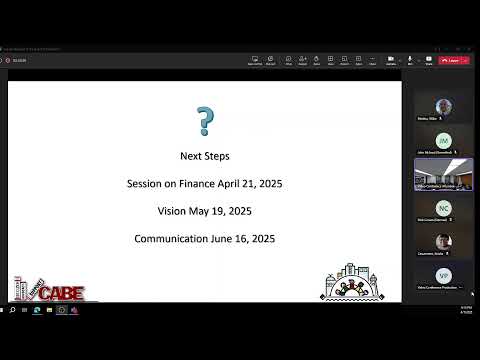
On next steps, facilitators and board members agreed to circulate revised board performance goals to the board and the state. The workshop recorded two scheduling targets: the state’s office asked the board to provide goals in the week of April 14, and facilitators and some members indicated the board would aim to finalize an action plan in a forthcoming meeting (participants referenced May 19 as the target to begin goal development in public sessions). The policy committee will draft a timetable for reviewing and adopting required and recommended policies; committee chairs and staff were asked to bring a plan to the board for review.
The training was expressly framed as learning and relationship building rather than decision‑making: no formal votes or personnel actions were taken during the session. Facilitators said they would produce a revised draft of the proposed board performance goals and a recommended timeline for policy review and committee restructuring and circulate those drafts to board members and staff for comment by the end of the next business day.
The board and facilitators closed with a recognition that restoring consistent, constructive interaction between the board and the superintendent is a multi‑step process that will require clearer norms, shared expectations for data use, a smaller number of committee responsibilities, and a short list of measurable goals to guide the superintendent’s work and the board’s oversight.