Get Full Government Meeting Transcripts, Videos, & Alerts Forever!
Get email alerts on the Housing Affordability topic
No spam. Unsubscribe anytime.
Bozeman planners stress zoning's role in housing supply as board presses on affordability and vacancy trends
Summary
Board members questioned how the UDC update would influence housing affordability, density and the city's response to state pressure; planners described the city's strategy to encourage greater density as a means to support services and noted that median new-house prices remain high.
Board members pressed staff on how the UDC update would influence housing affordability and density as Bozeman continues to grow.
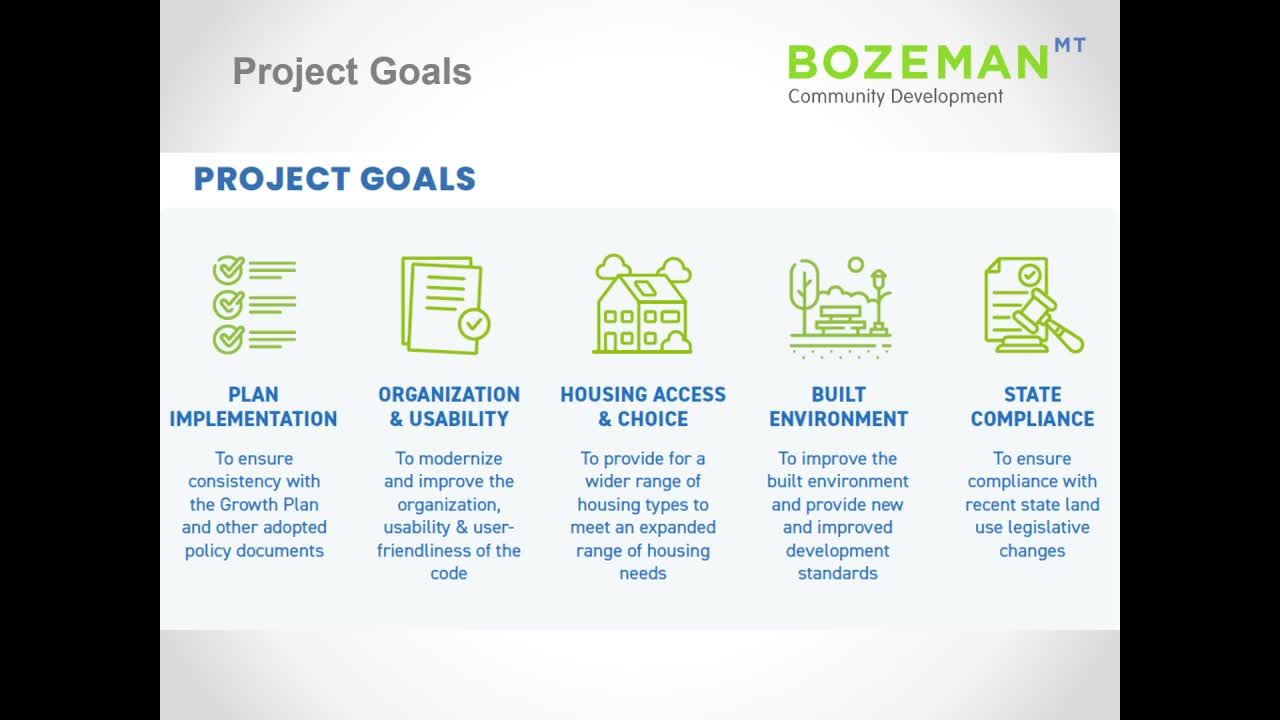
Tom Rogers said the UDC is a primary tool to implement the community plan's housing goals and noted that the state has pushed new policy through a governor's housing task force and recent legislative action. "A big part of that is, of course, the governor's, housing task force, to try to promote housing construction and development throughout the state," he said.
Board member Isabella asked how zoning changes accounted for vacancy rates and whether continuing development pressure risked undermining other community goals like environmental protection. Rogers replied that the city aims to provide a range of housing types and support mixed-use, transit and compact neighborhoods to reduce per-person land consumption and infrastructure costs. He noted apartment construction had increased as a financially viable product and that vacancy rates had risen from under 2% ("which is incredibly unhealthy") to more normal levels; he also said median prices for new houses remain high, calling the current median for a new house "approximately $800,000." Rogers added that the city does not build housing but creates regulatory conditions for development, while developers decide product type and price.
Members asked for more analytical detail on engagement demographics and for clearer links between the UDC choices and affordable-housing outcomes. Rogers said the outreach was self-selected and not a randomized statistical sample; the city does run other community-wide surveys for broader performance metrics. The board indicated interest in continued, substantive input on how zoning tools can balance growth pressures and sustainability goals.